


Blogia

MATEO MATHAUS: THE WORLD NOW

El enésimo plan anticrisis: "Too little, too late?"


Álvaro Anchuelo Crego (Madrid, 1964) es Catedrático de Economía Aplicada en la Universidad Rey Juan Carlos de Madrid. Intenta ser coherente con el nombre de su área de conocimiento. Por eso, le apasiona ayudar a comprender nuestra realidad económica de una forma accesible para todos. Comprenderla es el primer paso hacia el objetivo último, aún más ambicioso, de mejorarla.Y en eso coincidimos de blog a blog.

@Álvaro Anchuelo - 08/12/2010 06:00h

Sería un error analizar propuesta a propuesta el último paquete de medidas económicas, como se pretende que hagamos. Lo importante es no perder la perspectiva, entender porqué se han tomado y evaluar si pueden lograr el objetivo propuesto. La cuestión no reside en si tiene algún efecto positivo el que 1.500 nuevos orientadores asesoren a los parados en su búsqueda de empleo.

Estas medidas se han tomado en medio de una situación dramática, estando ya entre la espada y la pared. La prima de riesgo ha llegado estos días a sobrepasar los 300 puntos básicos, un diferencial mayor que el alcanzado en la grave crisis de mayo, mientras la Bolsa sufría un fuerte correctivo. La mirada de los mercados financieros, es decir, de nuestros acreedores a los que necesitamos seguir pidiendo más préstamos, se centra en España. La pregunta correcta es, por tanto, si las medidas adoptadas lograrán restaurar la confianza en el futuro de la economía española y de sus cuentas públicas.

Empecemos por el asunto de la confianza. Como sucede en las relaciones personales, se trata de algo con un fuerte componente psicológico, que resulta más fácil perder que recuperar. El procedimiento seguido la semana pasada para anunciar las medidas no creo que haya tranquilizado a nadie. Ha sido otro ejemplo de la forma de gobernar del sr. Zapatero, de la que lleva dando muestras ininterrumpidas en sus seis años de mandato. Su larga permanencia en el poder no parece haberle ayudado a madurar como estadista. Unas horas antes decía que no era preciso tomar ninguna medida adicional, pues las existentes bastaban. ¿No habría sido mejor decir que se estaba reevaluando la situación? ¿Contribuye la mentira a cimentar la confianza? De repente, se anunciaron las medidas a borbotones en el marco inadecuado de una pregunta en el Congreso. Con ello se logró sorprender al líder de la oposición, es decir, a la misma persona a la que se debió consultar (junto al resto de líderes políticos) para lograr el mayor respaldo posible. Posteriormente se suspendió el viaje presidencial a una importante cumbre internacional. Tras el Consejo de ministros del viernes, sin embargo, el presidente no compareció ante la prensa, y las medidas aprobadas fueron las mismas ya anunciadas anteriormente (con el añadido de la subida de los impuestos al tabaco). ¡Como para transmitir confianza!

Respecto al contenido de las medidas, una vez más no forman parte de ningún plan global, son una sarta de ocurrencias más o menos afortunadas. Pueden ordenarse en tres grandes apartados. El primero de ellos agrupa un conjunto de medidas privatizadoras, que afectarán al 49% de AENA y al 30% de Loterías. Se espera recaudar 9 000 millones en el primer caso y 5 000 en el segundo. Además, los aeropuertos de Madrid y Barcelona operarán en régimen de concesión. Quedan muchos flecos por aclarar sobre cómo van a articularse estas operaciones. También resulta discutible que vayan a recaudarse esas cantidades, que en las actuales circunstancias podrían pecar de optimistas. En cualquier caso, estas medidas equivalen a lo que haría una familia endeudada, con dificultades para seguir pidiendo préstamos, que optase por vender un piso de su propiedad. La ventaja a corto plazo es que tiene que endeudarse menos; el inconveniente a largo plazo es que se queda sin el piso y los alquileres que proporcionaría en el futuro. En este caso, parte de los ingresos futuros son los que proporciona la lotería cada año de manera bastante segura.

El segundo bloque de medidas tiene que ver con el mercado laboral. De ellas, la principal consiste en no renovar a partir de febrero la ayuda de 426 euros mensuales a los parados que carecen de otras prestaciones. Se trata de una medida de ahorro, que pretende enviar una señal de dureza a los mercados. Pero el ahorro es bastante limitado, de unos 500 millones de euros semestrales, y la dureza raya en la crueldad. Resulta indecente iniciar el ahorro por los más desfavorecidos, existiendo la posibilidad de lograr recortes mayores mediante la reducción del gasto superfluo que plaga todas las administraciones (tanto la central, como las autonómicas y locales) y los miles de entes que las rodean. El resto de medidas son de menor enjundia. Lo referente a las agencias privadas de colocación ya se incluía en la reforma laboral. Añadir 1 500 orientadores para que orienten, junto a los 1 500 ya existentes, a 4 600 000 parados casi parece una broma de mal gusto. El que los nuevos funcionarios formen parte del régimen general de la Seguridad Social termina con la incoherencia de una administración que parecía no confiar en que los servicios públicos fuesen lo bastante buenos para los propios funcionarios, pero no supondrá un ahorro significativo, si es que logra alguno.

Finalmente, el tercer conjunto de medidas busca reanimar la actividad empresarial. Esto tiene sentido, pues nuestras pobres perspectivas de crecimiento son una de las razones principales de las dudas sobre las posibilidades de hacer frente a la deuda. Más discutible es que pueda lograrse este objetivo sólo mediante reducciones del impuesto de sociedades, sin ocuparse del conjunto del sistema fiscal ni emprender otro tipo de reformas. La medida de mayor calado es la libertad de amortización hasta 2015. Se amplía también el número de empresas que puede acogerse al tipo mínimo del 25%, elevando la facturación permitida de 8 a 10 millones de euros, e incrementando de 120 000 a 300 000 euros el tramo de base imponible que tributa al tipo reducido. Lo de crear empresas en 24 horas estaba en la Ley de Economía Sostenible y lo creeremos cuando lo veamos. Lleva años diciéndose, mientras que en los informes internacionales se recogen plazos mucho más largos, junto a un empeoramiento progresivo del problema. Las administraciones autonómicas y locales tendrían que participar en la solución. Eliminar las cuotas obligatorias a las Cámaras de Comercio supone terminar con un anacronismo inadmisible, pero debería evitarse la desaparición de las labores de formación y fomento de la exportación que las Cámaras realizan.

Como las medidas de estímulo fiscal tienen un coste presupuestario, se compensan con la subida de impuestos al tabaco, que espera recaudar 780 millones de euros. La ministra Salgado, insultando la inteligencia de los sufridos ciudadanos, justificó la decisión por motivos de salud, no recaudatorios. Para al 28 de enero se anuncia unilateralmente una medida muy importante, la reforma de las pensiones, ignorando (como en el caso del régimen de los nuevos funcionarios) la existencia del Pacto de Toledo.

Ojalá todo esto pudiera bastar para reconducir la situación. Sin embargo, el respiro que ha acompañado al anuncio de las medidas no se ha debido a ellas, sino a la compra de deuda por el Banco Central Europeo, así que no debiéramos caer en una relajación similar a la que siguió a las medidas de mayo. El ambiente de fin de ciclo comienza a resultar demasiado agobiante como para soportarlo durante un año y medio más. Donde el gobierno está demostrando una mayor creatividad es en la búsqueda de chivos expiatorios que le permitan eludir sus propias responsabilidades: igual sirve el PP, que los especuladores, Alemania o, en cualquier momento, el difunto Cid Campeador.
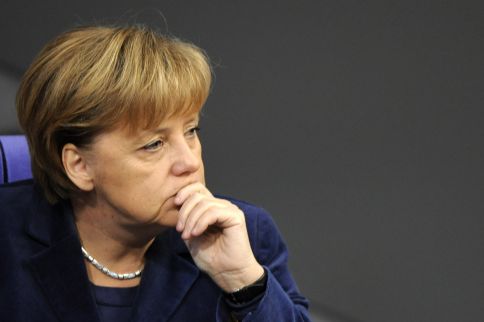
Kanzlerin Merkel muss sich beim Euro entscheiden

Meinung|

Währungsunion

(43) Drucken Bewerten   Autor: Jan Dams| 06.12.2010

Die Euro-Sorgenkinder

Wolfgang Schäuble ist kein Mann, der mit seinen Reden große Säle mitreißen kann. Dafür ist er meist nicht emotional genug. Trotzdem aber ist der Bundesfinanzminister ein Meister der geschliffenen Rede, schon weil er es versteht, seine wahre Botschaft hinter ellenlangen Sätzen mit einer Unzahl an Kommata zu verstecken. Deshalb ist es in Interviews auch nur selten möglich, den Minister so festzunageln, dass ein Ja bei ihm ein Ja und ein Nein auch ein Nein ist.

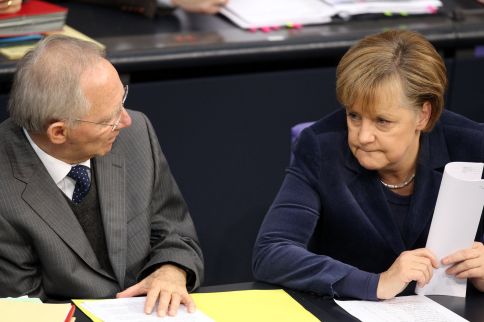
Bundestag Merkel Schäuble Foto: dpa/DPA Während Bundesfinanzminister Wolfgang Schäuble klare Ansagen macht, ziert sich Bundeskanzlerin Angela Merkel
Wichtige Stationen der Eurokrise

Die Europäische Einheitswährung steht seit Herbst 2008 unter Druck.
Welt Online hat die wichtigsten Stationen zusammengestellt...

Entsprechend vorsichtig muss man bei der Exegese von Schäuble-Äußerungen sein. Das gilt auch für jenes Interview, dass er der „Financial Times“ gab. Schäuble sagt dort im Zusammenhang mit der Eurokrise nicht nur, dass nationale Souveränität allein nicht das Instrument des 21. Jahrhunderts sei. Er macht auch klar, dass er sich vorstellen könne, den Bundestag davon zu überzeugen, Budgetrechte an die EU abzutreten – vorausgesetzt, man habe einige Monate Zeit, daran zu arbeiten und die EU-Partner würden mitziehen.

Sicher, in dieser Aussage sind zwei Wenn versteckt. Deshalb lädt auch sie zum Spekulieren ein. Für Schäubles Verhältnis sind die Sätze trotzdem relativ deutlich. Schließlich diskutiert der Minister damit Maßnahmen, die die Regierung im Streit um die Lösung der Eurokrise bislang nicht erwogen hat.

Daraus lassen sich zwei Dinge ableiten. Erstens hat sich mit Schäuble endlich ein Spitzenpolitiker über den Zustand der Eurozone Gedanken gemacht, die weit über die Kurzatmigkeit bisheriger Krisentreffen hinausgehen.

Zweitens hat er erkannt, dass es für die Partner im Währungsraum nur zwei Alternativen gibt. Entweder stirbt der Euro, weil der schwache institutionelle Rahmen die Unterschiede in der Währungszone nicht mehr klammern kann. Oder die Mitgliedsländer verzichten auf das Recht einer eigenständigen Finanzpolitik. Dazu gehört auch die unangenehme Wahrheit, dass die Starken die Schwachen für eine lange Zeit finanziell stützen müssen. Welchen Weg Schäuble bevorzugt, lässt sich nach dem Interview erahnen. Jetzt wäre es an der Kanzlerin, endlich ihre Präferenzen offen zu legen.

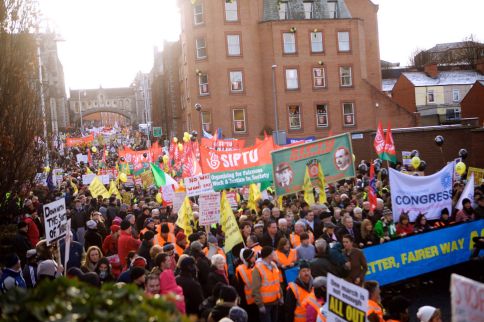
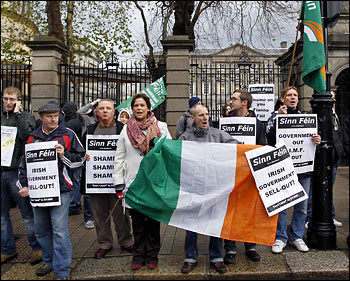
Iren protestieren gegen Sparpolitik
Zehntausende protestieren gegen irisches Sparpaket Foto: dpa Einen Tag vor der Einigung der EU-Staaten auf ein Hilfspaket für Irland waren in der irischen Hauptstadt Dublin Zehntausende Menschen auf die Straße gegangen...


The future of the euro : Don't do it .

The future of the euro

Don't do it

The euro is proving horribly costly for some. A break-up would be even worse

Dec 2nd 2010 | From The Economist print edition

BOND markets have scorned the €85 billion ($113 billion) bail-out offered to Ireland on November 28th. Yields have risen not just for Ireland but for Portugal, Spain, Italy and even Belgium. The euro has fallen—again. As one botched rescue follows another, solemn vows from European Union leaders that a break-up of the single currency is unthinkable and impossible have lost their power to convince. And that is leading many to question whether the euro can survive.

The case against it is that European citizens can no longer live under its yoke. In Europe’s periphery some are yearning to be spared the years of grinding austerity that may be needed for wages and prices to become competitive. In the German-dominated core they are fed up with paying for other countries’ fecklessness and they fear that, as creditors, they will suffer if the European Central Bank (ECB) inflates away the laggards’ debts. Deep down lurks the sullen suspicion that this is a drama that the euro zone may be condemned to relive time and again. So why not get out now?

The rock and the hard place

Financial history is littered with events that turned from the unthinkable to the inevitable with breathtaking speed: Britain left the gold standard in 1931, Argentina abandoned its dollar peg in January 2002. But a collapse of the euro would bring with it unprecedented technical, economic and political costs (see article).

A break-up might happen in one of two ways. One or more weak members (Greece, Ireland, Portugal, perhaps Spain) might leave, presumably to devalue their new currency. Or a fed-up Germany, possibly joined by the Netherlands and Austria, could decide to junk the euro and restore the D-mark, which would then appreciate.

In either case, the costs would be enormous. For a start, the technical difficulties of reintroducing a national currency, reprogramming computers and vending machines, minting coins and printing notes are huge (three years’ preparation was needed for the euro). Any hint that a weak country was about to leave would lead to runs on deposits, further weakening troubled banks. That would result in capital controls and perhaps limits on bank withdrawals, which in turn would strangle commerce. Leavers would be cut off from foreign finance, perhaps for years, further starving their economies of funds.

The calculation would be only slightly better if the euro escapee were Germany. Again, there would be bank runs in Europe as depositors fled weaker countries, leading to the reintroduction of capital controls. Even if German banks gained deposits, their large euro-zone assets would be marked down: Germany, remember, is the system’s biggest creditor. Lastly, German exporters, having been big beneficiaries of a more stable single currency, would howl at being landed once again with a sharply rising D-mark.

If the economics of pulling apart the euro look dubious, the politics risks detonating a chain reaction that would threaten the fabric of the single market and the EU itself. The EU and the euro have been Germany’s post-war anchors. If it abandoned the currency, at huge cost, and left the rest of the euro zone to fend for itself, its commitment to the EU would be in serious doubt.

If a weaker country left, risking not just European banks but also the currency, it would become a pariah exporting its pain to its neighbours. Once capital controls were in place Europe’s financial markets would be in tatters and it would be hard to preserve cross-border European trade. The collapse of the single market, which has done more than anything else to knit Europe together, would threaten the EU itself.

However much countries may now regret joining the euro, leaving it does not make sense. But the fact that it ought to survive does not mean that it will. And unless Europe’s leaders move further and faster, it might not.

Salvaging a single currency

Europe’s leaders have been slow and timid in response to market pressures. Greece and now Ireland have forced them, reluctantly, into bail-outs. Only belatedly have they recognised that some countries are not just in need of bridging loans to tide them over, but may be unable to repay their debts. That means that some pain will have to be inflicted on bondholders.

This will be easier to achieve now that euro-zone governments have agreed that sovereign-debt issues after 2013 should contain collective-action clauses, which stop hold-out investors blocking deals. The Irish have already imposed “haircuts” on subordinated-debt holders in their banks, though they were stopped from doing this for senior bondholders (see article). Such talk is inevitably unpopular in the markets. Yet losses must be possible if investors are to distinguish between sovereign-debt issuers.

The crisis should also have brought home to weak deficit countries the high cost of their failure to make the reforms to labour and product markets, and to welfare systems, necessary to restore their lost competitiveness. Even if they left the euro, they would have to take such steps to thrive. Within it, reform would not just revive moribund economies, but also create the chance of future growth to safeguard the single currency. Reform would be easier if surplus countries (ie, Germany) did more to boost their own domestic demand.

Lastly, if the euro is to survive, creditor countries need to give more aid to deficit countries. They could do this directly, or the ECB could provide liquidity to banks or buy up government bonds before they fall too far. It has indicated it may start doing the latter again. Germany hates the idea of more aid to debtor countries (see article)—hence its slowness to accept bail-outs and its determination to penalise bondholders. Its unwillingness to subsidise the weak and profligate is understandable; but the alternative is worse.

Breaking up the euro is not unthinkable, just very costly. Because they refuse to face up to the possibility that it might happen, Europe’s leaders are failing to take the measures necessary to avert it.

ECB Delays Exit, Buys Bonds to Fight ‘Acute’ Tensions

Dec 02, 2010 12:02 pm ET

(Adds economist comment in fifth paragraph.)

Dec. 2 (Bloomberg) -- The European Central Bank delayed its withdrawal of emergency liquidity measures and bought more government bonds as President Jean-Claude Trichet pledged to fight “acute” financial market tensions.

Under pressure from investors to lead the charge against the spreading sovereign debt crisis, Trichet said the ECB will keep offering banks as much cash as they want through the first quarter over periods of up to three months at a fixed interest rate. As he spoke, ECB staff embarked upon a new wave of purchases, triggering a surge in Irish and Portuguese bonds.

“Uncertainty is elevated,” Trichet told reporters after the ECB’s Governing Council left its benchmark interest rate at 1 percent today. “We have tensions and we have to take them into account.”

While the ECB chose not to deploy new crisis-fighting tools, Trichet managed to avoid sparking another market selloff four days after traders gave a vote of no-confidence to a bailout of Ireland. He kept up pressure on governments to fight the crisis by saying that “benign neglect” is not enough and indicated they could expand Europe’s rescue fund amid concern it’s not large enough to finance any bailout of Spain.

“The ECB is doing what it can up to its limits,” said Nick Kounis, chief euro-region economist at ABN Amro NV in Amsterdam. “The ball is back in the court of governments to take bold action.”

Yield Drop

The yield on Portuguese 10-year bonds dropped 50 basis points to 6.13 percent and Irish yields fell 37 basis points to 8.76 percent. The Spanish 10-year yield declined 22 basis points to 5.07 percent. The euro traded at $1.3228 at 5:41 p.m. in London compared with $1.3152 before Trichet started talking.

The ECB will keep offering banks unlimited loans through the first quarter over periods of seven days, one month and three months. That marks a shift from last month, when Trichet said that the ECB could start limiting access to its funds.

Signaling disagreement within the 22-member council, Trichet said an “overwhelming majority” of officials backed the ECB’s Securities Market Program and that a “consensus” supported maintaining the status quo on providing liquidity. Bond purchases will continue to be offset to keep the money supply unchanged, in contrast to the Federal Reserve and the Bank of England, he said.

“It’s not quantitative easing, we’re withdrawing all the liquidity,” he said.

Some strategists said the ECB’s refusal to follow the Fed and the Bank of England may soon end the rebound in bonds.

‘Meaningful Size’

“The compression in spreads could prove temporary as Trichet has stressed that the SMP is not QE,” said Matteo Regesta, a fixed-income strategist at BNP Paribas SA in London. “In the scenario where SMP eventually increases to a meaningful size, weekly full sterilization of the stock will become a non- trivial task. The only way to avoid such a jam is to keep the program at a low scale.”

The ECB is facing calls to devise new crisis measures amid concern that contagion from the region’s debt crisis will soon engulf Spain. Trichet, who has said new European Union fiscal rules are too weak, signaled that the ECB is already doing its bit and the onus is now on governments.

“They are learning that benign neglect cannot be practiced in this domain,” said Trichet in an interview with Bloomberg Television. Asked whether the euro region’s 750 billion-euro ($992 billion) rescue package should be expanded, he said that “this facility has to be commensurate with the difficulty of the time.”

U-Turn

Trichet has changed tacked before. Earlier this year, he initially resisted demands to temper the Greek budget crisis only to tear up the ECB’s rule book by buying bonds in May in a decision which also split the council.

The ECB may have been reluctant to go even further to support Spain, Greece, Ireland and Portugal for fear of being viewed as a bailout tool for politicians, damaging its independence. Bundesbank President Axel Weber, a leading contender to replace Trichet at the bank’s helm next year, opposed the decision to start buying bonds in May and has since called for the program to be cancelled. He says it poses “stability risks” and that there is no evidence it works.

Weber, who spoke at a separate event in Frankfurt today, said he had nothing to add to Trichet’s remarks.

The ECB has already stepped up its activity, last week buying the most bonds in two months. Overall purchases nevertheless total 67 billion euros so far, well below the amounts bought by the Bank of England and the Fed.

The ECB left unchanged its forecast for economic growth next year at about 1.4 percent, while raising its estimate for inflation to about 1.8 percent from 1.7 percent. Releasing its 2012 outlook for the first time, it predicted growth of 1.7 percent and inflation of 1.5 percent.

--With assistance from Jim Neuger in Brussels, Francine Lacqua and Simone Meier in Frankfurt, Simon Kennedy, Scott Hamilton and Jennifer Ryan in London and Mark Deen in Paris. Editor: John Fraher, Matthew Brockett

Debt crisis tests German ties to euro


Gallery

The 16-nation euro currency zone is beset by fissures between strong economies such as Germany and weaker ones such as Greece, Ireland and Portugal, which risk being engulfed by historic levels of government debt.
 

Network News

By Anthony Faiola
Washington Post Staff Writer
Wednesday, December 1, 2010; 11:03 PM


BERLIN - The deepening woes of Europe's weakest economies are raising fresh doubts about the euro. But the future of the world's most ambitious monetary experiment will be decided not in troubled Ireland, Greece, Portugal or Spain, but here in Germany - Europe's economic powerhouse.

This Story

The Germans surrendered their mighty deutsche mark in 2001, their stalwart economy anchoring a union of 16 European nations sharing a common coin: the euro. But with fiscal turmoil escalating across much of the euro zone, the currency has entered an uncertain period.

Although it reversed some of its recent declines against the dollar on Wednesday amid hopes that the European Central Bank will aggressively intervene to prop up the bonds of ailing European nations, some still fear that the currency could destabilize in the coming weeks and months.

The key question now is: How long will the Germans prop it up? In one poll released this week, almost half of the Germans surveyed said they were growing weary of the euro.

To defend the currency, the notoriously frugal taxpayers here have already had to cover the largest share of the cost to rescue profligate Greece, and, now, Ireland. As pressure mounts for billions more to shore up Portugal and Spain, and perhaps even Italy, Germany's growing tab, analysts say, is posing the greatest test yet to German willingness to remain in the euro union.

It has come down to a numbers game, many here say. Germany, along with the International Monetary Fund and the 15 other nations that share the euro, set up a trillion fund this year to contain Europe's debt crisis and protect the euro. Although the fund may be enough to bail out Portugal and Spain, throwing a lifeline to Italy - the world's seventh-largest economy - would require far more cash. Even bailing out Spain - the fourth-largest economy in the euro zone - could leave the fund so depleted that Chancellor Angela Merkel may have no choice but to go back to parliament here in a highly charged bid for more German support.

Merkel and other German officials have steadfastly stuck by the euro, and most still consider any move to leave the currency highly unlikely. But analysts say Merkel would probably face a surge of opposition if she is forced to seek additional German money to save the euro.

Others say there may be different ways to shore up the currency without more German aid. Nevertheless, analysts say the prospect of a German withdrawal from the euro, an event that probably would doom the currency, is becoming less and less unthinkable.

ad_icon
// // ') ;
}
// ]]>

"I think it is quite politically dangerous for her to go back for more," said Thomas Mayer, chief economist with Deutsche Bank in Frankfurt. "The government has to be careful not to trigger a grass-roots political movement here, like the tea party in the United States, against the euro. You can already feel it."

Spain Banks Face Funding Hurdle Amid Bailout Threat

Nov 30, 2010 5:57 am ET

(Updates prices from third paragraph, adds Citigroup note in seventh paragraph.)

Nov. 30 (Bloomberg) -- Spain’s banks may struggle to refinance about 85 billion euros ($111 billion) in debt next year as costs surge on concern continental Europe’s fourth- biggest economy may need an Irish-style bailout.

“There’s a universal dumping of Spain going on,” said Andrea Williams, who helps manage about 623 million pounds ($968 million), including shares in Banco Santander SA, at Royal London Asset Management. “The fear is that Portugal, Spain and Italy are now in line after what happened in Ireland.”

Anxiety over Spain’s ability to bring down the euro- region’s third-highest budget deficit after Europe handed Ireland an 85 billion-euro aid package has driven up financing costs for the country’s lenders already battered by rising bad loans and falling revenue. The average yield investors demand to hold euro-denominated Spanish bank bonds, relative to government debt, rose 141 basis points to 385 basis points in November -- the biggest monthly jump on record, according to data compiled by Bank of America Corp.

As the cost of insuring the country’s debt against default rose to its highest level, Spanish lenders now pay the biggest premium ever on their debt relative to other banks in Europe. Spreads on Spanish bank bonds in euros rose to a record 166 basis points more than the average for all lender debt denominated in the currency, up from a gap of 63 basis points on Oct. 31, according to Bank of America data.

‘Big Elephant’

The risk for Europe is that Spain’s economy is twice as big as that of Greece, Ireland and Portugal combined, meaning the euro region’s 750 billion-euro bailout fund may not be big enough if the country resorts to aid. Spain’s 10-year government bonds slid yesterday by the most since the euro’s debut. The extra yield investors demand to hold the securities instead of benchmark German bunds widened to euro-era records.

“The big elephant in the room is not Portugal but, of course, it’s Spain,” Nouriel Roubini, the New York University professor who predicted the global financial crisis, said at a conference in Prague yesterday. “There is not enough official money to bail out Spain if trouble occurs.”

The European Central Bank may have to step up purchases of Spanish government bonds and backstop its banking system if the country runs into financing difficulties, Willem Buiter, Citigroup Inc.’s chief economist, said in a note to investors yesterday. “Once Spain needs assistance, the support of the ECB will be critical,” Buiter wrote.

Bond Sales Fall

Spanish financial companies sold 300 million euros of bonds in Europe this month, excluding debt with government guarantees, compared with 2.37 billion euros in the same period a year earlier, according to data compiled by Bloomberg.

Spain says the government’s finances and the country’s banks are sound. The lenders are “fundamentally healthy,” Jose Luis Malo de Molina, chief economist of the Bank of Spain, said in a news conference in Madrid yesterday. “The Spanish financial system does not have a problem of deep frailty such as the Irish economy has.”

The country’s lenders have about 30 percent of their medium- and long-term debt maturing by December 2012, according to the Bank of Spain’s October financial stability report. The report says the fact that 50 percent of maturities fall after 2013 “softens” the refinancing needs of the lenders, even as it advises them to rely more on debt with longer maturities.

Cajas at Risk

“Asking the Spanish banks how they are going to meet these refinancing needs is absolutely a fair question for them,” Claire Kane, a banking analyst at MF Global in London, said in a phone interview.

Four months after the Bank of Spain said publication of stress tests of Spanish lenders “confirm the soundness” of the country’s banking system, investors are again driving up their financing costs. Investor concerns are most likely to focus on the needs of Spain’s savings banks, said Daragh Quinn, an analyst at Nomura International in Madrid.

Savings banks, immersed in a restructuring process that will see their number shrink by almost two-thirds as the central bank coaxes them into cost-saving mergers, have about 30 billion euros of debt coming due next year, according to Bloomberg data.

The cost of insuring the five-year senior debt of Caja de Ahorros del Mediterraneo, an Alicante-based savings bank, is about 700 basis points compared with about 246 basis points for Santander, Spain’s biggest lender, which earns about 25 percent of profit from its home country as it boosts income from countries such as Brazil and the U.K.

Santander, BBVA

“The government and European policy makers must be looking at what they would need to do if the cajas were unable to refinance next year,” said Peter Chatwell, a fixed-income strategist at Credit Agricole CIB. “It’s at that point the situation would start to look like that which Ireland has suffered.”

Even in the toughest scenario, it’s unlikely funding would be cut off for the strongest Spanish lenders such as Santander, Banco Bilbao Vizcaya Argentaria SA or La Caixa, Quinn said.

Spanish lenders can pick among different strategies for bridging a prolonged period of being shut out from the debt markets, said John Raymond, an analyst at CreditSights Inc. in London. Those include tapping funding from the European Central Bank, stepping up the already stiff competition for retail deposits or scaling back lending, he said.

ECB Loans Decline

Spanish banks had loans from the ECB of 67.9 billion euros in October, a 30 percent drop from the previous month. Spanish ECB loans as a proportion of banking assets stand at about 2 percent, compared with about 7.8 percent for Ireland.

Santander, which has 27 billion euros in debt maturing next year, said it added 94 billion euros in customer deposits this year and also has as much as 100 billion euros in collateral it can use to tap funds from central banks.

A spokeswoman from Santander, who asked not to be named in line with company policy, declined to comment. The lender’s shares fell as much as 3 percent in Madrid trading today, dropping below their June lows to extend declines this year to 36 percent. Santander was trading at 7.47 euros at 11:54 a.m., a gain of 1.9 percent.

“If Santander were to go to the ECB for 50 billion euros then we really would be in crisis territory,” said Kane. She said that was highly unlikely because Santander can also sell debt through its non-Spanish subsidiaries.

--With assistance from Bryan Keogh and Gabi Thesing in London and Peter Laca in Prague. Editors: Steve Bailey, Frank Connelly.

Krugman :The others are tapas; Spain is the main course.

Op-Ed Columnist

The Spanish Prisoner

The best thing about the Irish right now is that there are so few of them. By itself, Ireland can’t do all that much damage to Europe’s prospects. The same can be said of Greece and of Portugal, which is widely regarded as the next potential domino.

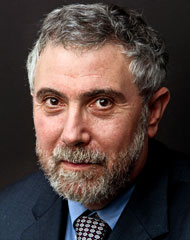
Fred R. Conrad/The New York Times

Paul Krugman

But then there’s Spain. The others are tapas; Spain is the main course.

What’s striking about Spain, from an American perspective, is how much its economic story resembles our own. Like America, Spain experienced a huge property bubble, accompanied by a huge rise in private-sector debt. Like America, Spain fell into recession when that bubble burst, and has experienced a surge in unemployment. And like America, Spain has seen its budget deficit balloon thanks to plunging revenues and recession-related costs.

But unlike America, Spain is on the edge of a debt crisis. The U.S. government is having no trouble financing its deficit, with interest rates on long-term federal debt under 3 percent. Spain, by contrast, has seen its borrowing cost shoot up in recent weeks, reflecting growing fears of a possible future default.

Why is Spain in so much trouble? In a word, it’s the euro.

Spain was among the most enthusiastic adopters of the euro back in 1999, when the currency was introduced. And for a while things seemed to go swimmingly: European funds poured into Spain, powering private-sector spending, and the Spanish economy experienced rapid growth.

Through the good years, by the way, the Spanish government appeared to be a model of both fiscal and financial responsibility: unlike Greece, it ran budget surpluses, and unlike Ireland, it tried hard (though with only partial success) to regulate its banks. At the end of 2007 Spain’s public debt, as a share of the economy, was only about half as high as Germany’s, and even now its banks are in nowhere near as bad shape as Ireland’s.

But problems were developing under the surface. During the boom, prices and wages rose more rapidly in Spain than in the rest of Europe, helping to feed a large trade deficit. And when the bubble burst, Spanish industry was left with costs that made it uncompetitive with other nations.

Now what? If Spain still had its own currency, like the United States — or like Britain, which shares some of the same characteristics — it could have let that currency fall, making its industry competitive again. But with Spain on the euro, that option isn’t available. Instead, Spain must achieve “internal devaluation”: it must cut wages and prices until its costs are back in line with its neighbors.

And internal devaluation is an ugly affair. For one thing, it’s slow: it normally take years of high unemployment to push wages down. Beyond that, falling wages mean falling incomes, while debt stays the same. So internal devaluation worsens the private sector’s debt problems.

What all this means for Spain is very poor economic prospects over the next few years. America’s recovery has been disappointing, especially in terms of jobs — but at least we’ve seen some growth, with real G.D.P. more or less back to its pre-crisis peak, and we can reasonably expect future growth to help bring our deficit under control. Spain, on the other hand, hasn’t recovered at all. And the lack of recovery translates into fears about Spain’s fiscal future.

Should Spain try to break out of this trap by leaving the euro, and re-establishing its own currency? Will it? The answer to both questions is, probably not. Spain would be better off now if it had never adopted the euro — but trying to leave would create a huge banking crisis, as depositors raced to move their money elsewhere. Unless there’s a catastrophic bank crisis anyway — which seems plausible for Greece and increasingly possible in Ireland, but unlikely though not impossible for Spain — it’s hard to see any Spanish government taking the risk of “de-euroizing.”

So Spain is in effect a prisoner of the euro, leaving it with no good options.

The good news about America is that we aren’t in that kind of trap: we still have our own currency, with all the flexibility that implies. By the way, so does Britain, whose deficits and debt are comparable to Spain’s, but which investors don’t see as a default risk.

The bad news about America is that a powerful political faction is trying to shackle the Federal Reserve, in effect removing the one big advantage we have over the suffering Spaniards. Republican attacks on the Fed — demands that it stop trying to promote economic recovery and focus instead on keeping the dollar strong and fighting the imaginary risks of inflation — amount to a demand that we voluntarily put ourselves in the Spanish prison.

Let’s hope that the Fed doesn’t listen. Things in America are bad, but they could be much worse. And if the hard-money faction gets its way, they will be.

Alemania defiende al euro hasta el máximo dolor.

Teure Rettung

(191) Drucken Bewerten   Autor: Jan Dams und Jan Hildebrand| 27.11.2010

Deutschland kommt beim Euro an die Schmerzgrenze

Widerstand gegen die Euro-Rettung: Politiker aus FDP und CDU wettern gegen die Idee einer "Transferunion", bei der Deutschland Milliarden überweisen müsste.

Die Diskussion um eine Vergrößerung des Euro-Rettungsschirms strapaziert zunehmend die deutsche Hilfsbereitschaft. Führende Politiker der schwarz-gelben Koalition haben vor weiteren Belastungen gewarnt. „Es kann nicht sein, dass die Steuerzahler für Strukturprobleme in verschiedenen europäischen Staaten ständig aufkommen und ins Risiko gehen“, sagte der finanzpolitische Sprecher der Unionsfraktion, Leo Dautzenberg (CDU), der „Welt am Sonntag“.

Bundestag Foto: dapd/DAPD Unter Druck: Bundeskanzlerin Angela Merkel muss sich mahnende Worte aus den Reihen von CDU und FDP anhören

Es sei „wagemutig, bereits heute von einem Aufstocken des Schutzschirms zu reden, ohne den Bundestag einzubinden“.

Dautzenberg reagierte damit auf eine Äußerung von Bundesbank-Chef Axel Weber, der eine Erhöhung ins Spiel gebracht hatte (hier). In der EU-Kommission wird sogar über eine Verdoppelung des 750 Milliarden Euro schweren Rettungsschirms nachgedacht. Deutschland trägt an dem Hilfsmechanismus, der von der Pleite bedrohte Staaten mit Bürgschaften stützen soll, den größten Anteil.

Die Euro-Sorgenkinder

Die FDP lehnt einen größeren Rettungsschirm ab. „Das führt zu einer Transferunion, da machen wir nicht mit“, sagte Volker Wissing, finanzpolitischer Sprecher der FDP-Fraktion. Jedes Land müsse für seine Schulden selbst verantwortlich bleiben. „Daran halten wir eisern fest.“ In einer Transferunion müssen die starken die schwachen EU-Staaten unterstützen, ähnlich wie beim Länderfinanzausgleich der Bundesrepublik. Im Extremfall würde das Deutschland 260 Milliarden Euro jährlich kosten, hat der Ökonom Kai Konrad vom Max-Planck-Institut in München für die „Welt am Sonntag“ berechnet (hier).

Statt eines unbegrenzten Schutzschirms schlägt die Bundesregierung einen permanenten Krisenmechanismus vor, der auch eine finanzielle Beteiligung von privaten Gläubigern bei möglichen Staatspleiten beinhaltet. Banken müssten dann auf einen Teil ihrer Forderungen verzichten. „Das durchbricht den gegenwärtigen Teufelskreis und schafft klare Bedingungen“, sagte Unionsfraktionsvize Michael Meister. Auch liege „darin das gebotene Signal gegen eine Transferunion“.

Der Druck auf Bundeskanzlerin Angela Merkel steigt: In der Koalition wird gefordert, dass sie eine weitgehende Beteiligung von Gläubigern durchsetzt. Dagegen aber regt sich in der EU Widerstand. Selbst mit dem bisherigen Euro-Verbündeten Frankreich ist sich die Regierung in Detailfragen nicht einig.