Blogia

MATEO MATHAUS: THE WORLD NOW

Unless it is a lot bolder, the euro zone risks being overwhelmed by the markets.

Charlemagne

Fighting fire with fire

Unless it is a lot bolder, the euro zone risks being overwhelmed by the markets

IT WAS the Great Fire of 1666 that prompted the establishment of London’s modern fire brigade, organised at first by private insurers, but later coming under public management. In Paris, on the initiative of Louis XV, the pompiers have been fighting fires since 1733. Few Europeans today could imagine a city without a public firefighting service, or a home without fire insurance. But when the architects of the single currency built the euro, they thought that sharing the risk of disaster might merely encourage recklessness and even arson. Better than this moral hazard was to make each country master of its own fate. Why should those living in brick houses save the feckless in their wooden huts?

Now that a great financial blaze has taken hold, the euro zone is facing its 1666 moment. Unless tamed, the conflagration might not spare anybody. The interconnectedness of Europe’s banks (see article), encouraged by the single currency, is acting as a combustible channel for flames to travel from building to building. Greece and Ireland have already gone up in smoke. The flames are licking at Portugal and Spain; Italy and Belgium worry that they might be consumed too. Despite the cries for help, Germany, the great lord in town, does not want to spend more treasure saving its neighbours. Yet even German bond yields are starting to rise.

“We have to stop the bush fires turning into a Europe-wide forest fire,” declares Olli Rehn, the European Union’s economics commissioner. Prevarication makes matters worse. The euro zone’s actions have been hesitant and haphazard. It belatedly improvised to contain the blaze in Greece this spring and then put together €750 billion ($980 billion) in bail-out funds, now being drawn on for Ireland. The EU urges all to protect themselves by cutting budget deficits. It plans closer scrutiny of national budgets and economic policies, and tougher sanctions for miscreants. Yet a better fire code in future may not quench today’s fire.

Angela Merkel, Germany’s chancellor, has taken to denouncing fleeing investors, threatening to make them pay. Her menaces only make them run faster. Their panic is caused not just by fear that some countries cannot repay their debts, but also by scepticism about politicians’ ability to do very much to help. One can almost hear London’s Lord Mayor in 1666, as recorded in Pepys’s diary: “Lord, what can I do? I am spent. People will not obey me. I have been pulling down the houses. But the fire overtakes us faster than we can do it.”

Jean-Claude Juncker, the prime minister of Luxembourg, certainly looked spent when, after chairing a meeting of euro-zone finance ministers on December 6th, he said he had “no new decisions” to announce. Only hours earlier, Mr Juncker had surprised his colleagues in an article co-written with Italy’s finance minister, Giulio Tremonti, urging euro members to issue collective Eurobonds. Such “E-bonds” might eventually account for up to 40% of the euro zone’s GDP.

The idea is a variation on a proposal made in May by the Bruegel think-tank in Brussels, which suggested a limit of 60% of GDP for pooled “blue” bonds. These would clearly reduce interest rates for weaker countries, but even stronger ones might benefit from the existence of a larger and more liquid market. “Red” bonds over the debt threshold would become especially risky, encouraging discipline without causing outright collapse.

Mr Juncker and Mr Tremonti suggested that their plan would “send a clear message to global markets and European citizens of our political commitment to economic and monetary union and the irreversibility of the euro.” Instead the Germans, Dutch and Austrians sent the authors a clear message to shut up. The most creditworthy countries in Europe do not want to muddle their debt up with that of the biggest credit risks. Another idea that went unheeded was the call, made quietly by the IMF and more loudly by Belgium, for the bail-out fund to be enlarged. “We can’t have a new debate every week,” complained Germany’s Wolfgang Schäuble. Better to complete the measures in hand and see if they work. But in the view of the IMF’s boss, Dominique Strauss-Kahn, such a piecemeal approach is dangerous. A “comprehensive solution” is needed.

Trichet le pompier

For the moment the task of fighting the flames is falling largely to Jean-Claude Trichet, president of the European Central Bank. The Frenchman has been dousing the financial system with liquidity and buying up the government bonds of troubled countries. To critics, including some members of his own board, this risks stoking inflation and turning the ECB into a “bad bank” in which rotten assets just pile up. To supporters, though, Mr Trichet is the hero of the hour for resorting to unorthodox policies even as others dither. He has been chosen as the winner of the Charlemagne prize, conferred by the German city of Aachen for outstanding contributions to European unity. It was bestowed on the euro in 2002. Now Mr Trichet is being honoured for trying to save it.

Using the ECB to back sovereign debt might be seen in some quarters as another stealthy step towards fiscal union. One more foundation stone quietly being laid is the first issuance next year of common bonds, for Ireland, by the European Financial Stability Facility. One way or another, say enthusiasts, a Eurobond is just a matter of time. That might provide an insurance policy for the future. But what of the current inferno?

Some say that in the end a radical step may be needed: to restructure the debt of banks and governments alike. This would be like the garrison in the Tower of London bringing out gunpowder in 1666 to blow up nearby houses so as to create a true firebreak. That action, Pepys notes, “at first did frighten people more than anything, but it stopped the fire where it was done”.


from PRINT EDITION | Europ

Euro Bailout — Will U.S. Have to Step Up to the Plate?

December 13, 2010


In a crisis, worst-case scenarios can be dangerous because they distract the public and policymakers from the mundane task of wrestling with immediate problems. However low the probability, if the European sovereign debt crisis rapidly cascades from bad to worse, the United States could be called upon for help  in another massive bailout.

If efforts to stem the current bleeding in Europe fail; if Portugal, then Spain, and perhaps others need outside assistance, existing European bailout funds may be stretched too thin. Europe may be forced to look for more help from the International Monetary Fund (and by extension the U.S. Treasury), the U.S. Federal Reserve and China. How Washington reacts could have grave foreign policy and economic consequences.
 
In May, the 16 countries that use the euro established the European Financial Stability Facility, which amassed roughly $579 billion in pledges that can be used in conjunction with $79 billion backed by the EU budget and $329 billion from the International Monetary Fund, creating a $1 trillion pot of money available for lending to beleaguered European states.


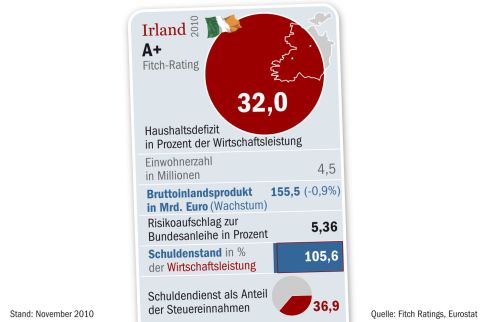
The question now is whether this financial safety net will be sufficient. Both the Greek rescue package late last year and the recent Irish bailout cost more than first advertised. Some initial estimates put Dublin’s needs at $100 billion. Its final price tag was $112 billion.

And Europe’s costs may continue to grow. The repayment schedule for Greece’s $145 billion loan may be extended, effectively raising the cost to lenders.

Assumptions about future demands could be too optimistic or too pessimistic. But Nomura, the Japanese investment bank, estimates that bailouts of Portugal and Spain could total more than $660 billion, leaving no cushion for other contingencies. 

“You can never use your last dollar, or euro … Markets would immediately come to the conclusion that there was no money left,” warned Kenneth Courtis, founding partner of Themes Investment Management. “Markets would then riot.”

“The more countries need access to it, the less capital is available, because every time a country is a recipient of funds, it drops out of the pool that contributes to the loan guarantees.”

The adequacy of the European safety net to deal even with Spain assumes that the European Financial Stability Facility could lend up to or near its limit and still maintain its triple-A bond rating. In reality, it would likely lose that rating and the ability to lend at reasonable rates before it ran out of funds.

Pledges backing Europe’s current pot of bailout money come from some governments, such as Spain and Italy, that could soon become borrowers themselves, effectively depleting available resources. “There is an imbedded contradiction in the way the EFSF has been structured,” said one international financial official.

“The more countries need access to it, the less capital is available,
because every time a country is a recipient of funds, it drops out of the pool
that contributes to the loan guarantees.”


“The more countries need access to it, the less capital is available, because every time a country is a recipient of funds, it drops out of the pool that contributes to the loan guarantees.”

It could get worse. “If Spain and Italy have to be bailed out,” said Courtis, “immediately France and Germany would be on the firing line. They do not have the type of resources required to bail out Spain and Italy without themselves getting into very, very serious financial trouble.” In the face of such demands, Europe’s bailout fund could prove woefully inadequate.

European economists are now speculating about ways to give their financial authorities more ammunition. Klaus Zimmerman, president of the German Institute for Economic Research in Berlin, has suggested doubling available resources to $2 trillion. Axel Weber, the German member of the European Central Bank’s Governing Council, has said that if available funds prove insufficient, “I am convinced euro zone states will do what is necessary to protect the euro.

Eurokrise kann Deutschland nicht viel anhaben.

Konjunktur

Drucken Bewerten   Autor: Anja Ettel und Martin Greive| 18.12.2010

Eurokrise kann Deutschland nicht viel anhaben

Die Schuldenkrise erschüttert den Euro-Raum, ganze Staaten fürchten die Pleite. Nur Deutschland geht es prächtig. Kann das so weitergehen?

Was für ein Kontrast: Während in Brüssel die Staats- und Regierungschefs Ende dieser Woche darum rangen, wie das Jahrhundertprojekt Euro zu retten sei, strotzt Deutschland – immerhin die größte Volkswirtschaft des angeschlagenen Euro-Raums – nur so vor Kraft. Der Ifo-Index als wichtigstes Stimmungsbarometer deutscher Unternehmen stieg in dieser Woche zum siebten Mal in Folge und erreichte den höchsten Stand seit der Wiedervereinigung.

Foto: dapd Der deutschen Wirtschaft geht es trotz Eurokrise glänzend

„Die Konjunktur ist das reinste Wintermärchen“, jubelte Ifo-Chef Hans-Werner Sinn. Ähnlich eindrucksvoll präsentierte sich der Einkaufsmanagerindex des Informationsdienstes Markit, der als guter Frühindikator für die Industriekonjunktur gilt. Nach einer Schwächephase im Spätsommer kletterte der Index diese Woche wieder auf ein Niveau, das in den Nullerjahren nur ein einziges Mal – im April 2000 – erreicht worden war. Katerstimmung, Krisensorgen? In den Vorstandsetagen deutscher Konzerne und Mittelständler findet sich davon keine Spur.

Im Gegenteil: Zuletzt schien es fast so, als würde die Krise der Gemeinschaftswährung die deutsche Wirtschaft sogar beflügeln. Steigende Industrieproduktion, wachsende Auftragseingänge und eine schier überbordende Stimmung bei Unternehmen und Verbrauchern stehen in scharfem Kontrast zur Misere vieler Euro-Partner. Doch daraus nun zu folgern, Deutschland sei womöglich sogar ein Gewinner der Krise, wäre ein Trugschluss.

Konjunktur

Zugegeben – ein wenig schmeichelt es schon, dass Deutschland, einst als „kranker Mann Europas“ verlacht, in diesem Jahr zum „Powerhouse Deutschland“ geworden ist, wie das britische Wirtschaftsmagazin „Economist“ unlängst titelte. Knapp vier Prozent dürfte das Wachstum 2010 hierzulande betragen, fast doppelt so viel wie im Rest der Euro-Zone. Für 2011 erwarten die Ökonomen zwar ein gedrosselteres Tempo, die Spitzenposition unter den großen Euro-Mitgliedern wird das Land aber so schnell wohl nicht abgeben.

„Deutschland steht vor einer Reihe fetter Jahre mit einem kraftvollen Aufschwung, sinkender Arbeitslosigkeit und sinkenden Schulden“, sagt Carsten-Patrick Meier von Kiel Economics. Das Land, das im vergangenen Jahr noch in der tiefsten Rezession der Nachkriegszeit steckte, profitiert dabei durchaus auch von der Schwäche der anderen.


Vielen Euro-Mitgliedern geht es schlecht

Da es über Irland und Griechenland hinaus vielen Euro-Mitgliedern wirtschaftlich eher schlecht geht, muss die Europäische Zentralbank (EZB) die Leitzinsen weiterhin auf dem Rekordtief von einem Prozent halten. Für den Euro-Raum insgesamt mag das angemessen sein. Auf die boomende deutsche Wirtschaft wirken die extrem günstigen Finanzierungsbedingungen allerdings wie ein zusätzlicher Treibstoff, der Investitionen, Stellenaufbau und letztlich auch das Wachstum weiter befeuert.

Wie weiter mit dem Euro?

Auch der Wechselkurs spielt der deutschen Wirtschaft in die Hände. Zwar ist der Kurs des Euro längst nicht so schwach, wie man es angesichts der Fülle von Krisengipfeln vielleicht denken könnte – zuletzt lag der Wechselkurs bei 1,32 Dollar und damit fast zehn Prozent höher als zu Beginn der Schuldenkrise im Mai. Doch solange Europa schwächelt, ist das Risiko einer deutlichen Aufwertung begrenzt. Deutschland als Export-Vizeweltmeister profitiert davon, denn ein günstiger Wechselkurs verbilligt die Ausfuhren.

Gleichzeitig wirkt sich die Krise vieler Euro-Partner bisher gering aus. „Bei Griechenland oder Irland ist der Anteil deutscher Exporte relativ klein, deshalb betrifft ihre Schwäche die hiesige Wirtschaft nicht so stark“, sagt Andreas Rees, Chefökonom Deutschland von Unicredit. Wichtiger sei, dass das Land die Exporte nach China oder Indien ausgeweitet habe. Die größte Hoffnung aber dürfte Deutschland wohl daraus schöpfen, dass erstmals seit Jahren die Binnenkonjunktur in Gang gekommen ist.

In Griechenland beginnt die dramatische Eurokrise

Das sind die wichtigsten Etappen der Eurokrise...

Mit knapp drei Millionen Jobsuchenden ist die Zahl der Arbeitslosen so gering wie seit 1992 nicht mehr. Die sinkende Furcht vor dem Jobverlust und die Aussicht auf steigende Löhne und Gehälter beflügeln den privaten Konsum. „Die mageren Jahre sind vorbei“, sagt Holger Schmieding, Chefökonom der Berenberg Bank. „Wir kommen zurück zum Normalfall. Und der ist, dass auch in Deutschland der private Verbrauch ordentlich wächst.“ Kiel Economics rechnet damit, dass die Lohntüte der Arbeitnehmer zwischen 2010 und 2015 um ein Fünftel größer wird.

Was gerade Politiker aus dem Ausland schon lange fordern – Deutschland müsse sein Geschäftsmodell stärker auf den Konsum ausrichten – könnte also Wirklichkeit werden. Das Land würde tatsächlich zur Konjunkturlok Europas. Doch es gibt – neben den üblichen Risiken etwa durch steigende Rohstoffpreise oder einen Einbruch Asiens – eine Gefahr, die alle konjunkturellen Traumszenarien für Deutschland überschattet: die Staatsschuldenkrise. „Kurzfristig hat Deutschland von der Euro-Krise profitiert“, warnt Michael Heise, Chefvolkswirt der Allianz. „Aber daraus den Schluss zu ziehen, Deutschland sei ein Gewinner der Krise, wäre absurd.“


Deutschland ist vom Euro-Raum abhängig

Das verrät schon ein Blick in die Zahlen. Denn trotz der Expansion in die Schwellenländer und trotz aller Erfolge beim Konsum: Über 40 Prozent seiner Exporte liefert Deutschland nach wie vor in den Euro-Raum. Eine Rezession in Spanien, Italien oder gar Frankreich würde schnell auch das hiesige Wachstum bremsen. Einen Vorgeschmack darauf könnte 2011 liefern, wenn die Sparprogramme vieler Euroländer erst richtig greifen und die dortige Nachfrage dämpfen.

„Die deutsche Wirtschaft könnte noch viel stärker wachsen, wenn die Betriebe mehr in die betroffenen Länder exportieren könnten“, sagt Gustav Horn, Direktor des Instituts für Makroökonomie und Konjunkturforschung (IMK). Zudem besteht nach wie vor die Gefahr, dass die Euro-Krise – ähnlich wie das Finanzdesaster um Lehman Brothers vor zwei Jahren – doch noch eskaliert. Wenn etwa das kriselnde Spanien fällt, könnte das Europas Finanzwelt ins Wanken bringen. Deutsche Institute blieben davon nicht verschont.

Gut möglich, dass die Unsicherheit über die Zukunft des Euro schließlich auch die gute Stimmung der deutschen Unternehmen und Verbraucher zerstört. An den Finanzmärkten jedenfalls steigen die Zinsen auf deutsche Staatsanleihen inzwischen wieder, weil Investoren fürchten, dass Europa zur Transferunion wird – zulasten Deutschlands. Spätestens 2013 dürfte sich entscheiden, ob wir zur Kasse gebeten werden.

Dann wird der europäische Rettungsschirm in einen dauerhaften Krisen0mechanismus umgewandelt, und Länder wie Irland müssen beweisen, ob sie ihre Sparversprechen einhalten können oder einen Schuldenerlass brauchen. In diesem Fall würden die Garantien Deutschlands fällig werden. Auch eine Umschuldung könnte Sparer und Banken Milliarden kosten. Die Folge wäre womöglich eine Finanzkrise, die auch die Konjunktur in den Abschwung reißen könnte.

Die Ökonomen gehen in ihren Prognosen für die kommenden zwei Jahre nicht von solchen Szenarien aus. Die Wette lautet: Die gute Stimmung im Land wird nicht so schnell abebben – wenn die Euro-Krise nicht weiter eskaliert. Und wenn die Krisenländer ihre Nothilfe und sonstigen Schulden zurückzahlen. Das freilich sind zwei große Wenns.

Die Daten der Euro-Länder

Europe's financial contagion.

http://www.washingtonpost.com/wp-srv/special/business/financial-crisis-in-europe/

Europe’s financial contagion


Europe’s financial contagion

By Neil Irwin

Greece sneezed, and now most of Europe has a cold. The European debt crisis has already spread like a virus from Greece to Ireland, and other countries are now at risk: Portugal, Spain, and Italy are probable candidates for financial problems. Economists call this the “contagion effect.” How does this spread? Some of it has to do with confidence. When investors see one country encounter financial problems, they may doubt the health of other countries that seem to share economic or even political characteristics.

Contagion also has much to do with actual economic links among countries. Researchers have identified financial ties in particular as responsible for the “fast and furious” spread of crisis from one country to another. Trading activity between countries, however, can propagate economic sickness more slowly.

    Who's exposed?

  • Through banking
  • Through trade

When an ailing country becomes over extended and unable to handle its debt, banks and other financial firms that have lent it money could be exposed to major losses. This could unsettle the home country of the banks or even spread the troubles to a third country. That can occur, for instance, because banks may try to cover their losses in one country by calling in loans in another.

Loans extended as a percentage of GDP

Taking their temperature

When investors begin to lose confidence in a country’s ability to pay off its debt, they demand higher interest rates on the country’s bonds to cover the risk of loaning it money. When its borrowing costs rise, an ailing country has an even harder time raising money to pay off the debts it has. Borrowing costs are up this year in European countries considered more vulnerable as investors look to put their money somewhere they think is safer.

Borrowing costs 10-year bond yield spreads over benchmark German bonds

NOTE: Bank loan figures are the total outstanding as of June 2010. Export figures are annual, 2009.
SOURCES: Global Trade Information Services, CIA World Factbook, Bank for International Settlements.
GRAPHIC: Wilson Andrews and Alicia Parlapiano / The Washington Post - Dec. 3, 2010.

El Banco Central de Europa rescata a España pero esto no va a ser bastante.

El Banco Central de Europa rescata a España pero esto no va a ser bastante.

14 de diciembre de 2010

El Banco Central de Europa rescata a España

Printer-friendly versionSend to friend Comparte esto

por Lorenzo Bernaldo de Quirós

Lorenzo Bernaldo de Quirós es presidente de Freemarket International Consulting en Madrid, España y académico asociado del Cato Institute.

El Banco Central Europeo ha decidido prolongar las medidas extraordinarias adoptadas a raíz de la crisis financiera. Ahora, ante el peligro de contagio del riesgo soberano irlandés al resto de los países de la periferia, el BCE ha activado el Securities Markets Programme, la compra bonosde los estados de la Eurozona, y ha reafirmado su oferta de liquidez a las entidades crediticias que lo necesiten. La primera iniciativa consiste en monetizar deuda pública, esto es, en utilizar la máquina de imprimir billetes para financiar el endeudamiento de los Estados. Esto constituye un flagrante incumplimiento de su estatuto fundacional, una convalidación de las políticas económicas de los países indisciplinados e incapaces de acometer las reformas estructurales y un precedente muy inquietante a la vista de cómo ha evolucionado la estrategia de quantitive easing instrumentada por la Reserva Federal de los EE.UU. En pleno proceso de deconstrucción institucional de la UE, le ha tocado el turno a la entidad presidida por Monsieur Trichet, último bastión de la constitución económica creada alrededor del euro.

La actuación del BCE tiene un objetivo único: Evitar una potencial suspensión de pagos de España. El European Financial Stability Facility tiene los recursos suficientes para rescatar a Grecia, a Irlanda o a Portugal pero no a la Vieja Piel de Toro cuyo PIB es superior al de esos tres países juntos. Además, las restricciones constitucionales y políticas impiden a Alemania ejercer el papel de prestamista de última instancia de la Eurozona. En este contexto, el contagio de la enfermedad irlandesa a Portugal y, lo fundamental, a España constituiría un torpedo a la línea de flotación del euro y, con él, a la estabilidad económico-financiera de Europa. Así lo habían descontado los mercados desde el inicio del programa de ayuda a Irlanda, convencidos de que los dos países ibéricos eran las siguientes piezas a caer en la diabólica partida de dominó, principiada con el rescate de Grecia hace año y medio. Si Portugal era intervenido, España iba detrás. Para evitar esta situación, el BCE ha acudido al rescate.

En este contexto, la estrategia de los banqueros centrales de Frankfurt supone asumir un criterio previo: La política económica del gobierno es insuficiente para estabilizar las finanzas públicas, relanzar el crecimiento y, por tanto, garantizar la solvencia del país en el corto, en el medio y en el largo plazo. En consecuencia existe el peligro de un súbito parón de los flujos de capital hacia España. Por ello, el Banco Central Europeo tiene que ofrecer a los mercados la confianza que el gabinete socialista no es capaz de obtener por sus propios medios. Esto significa que, por el momento, la economía española sólo tiene posibilidades de evitar una suspensión de pagos mientras se mantenga enchufada, de manera indefinida, al BCE. Aquí, el problema es la creación de una burbuja de deuda española y también la disminución de los incentivos del gobierno para acometer un plan de ajuste presupuestario riguroso e implantar las reformas estructurales necesarias para crecer y mejorar la competitividad. Si antes de contar con la red de seguridad del BCE, el gabinete liderado por el Sr. Rodríguez Zapatero no mostraba voluntad de caminar en esa dirección, es improbable que, ahora, convertido en el pilar sobre el que se sostiene la estabilidad de la Eurozona lo haga. La desaparición, temporal, de la amenaza de una intervención de la economía española por parte del FMI y la UE permite ganar tiempo al gobierno.

Dicho esto, la combinación “Rescate Multilateral/Financiación BCE” no constituye un punto final a los problemas. Grecia es de hecho insolvente a la vista de las recientes revisiones de sus datos de déficit, deuda pública y perspectivas de crecimiento. Antes o después habrá de reestructurar su endeudamiento. La asistencia externa a Irlanda no marca el fin de sus dificultades. Su endeudamiento consolidado y un sistema financiero quebrado la hacen también insolvente y candidata a reestructurar deuda en el medio plazo. Con los actuales tipos de interés y con unas previsiones de crecimiento planas, la solvencia de Portugal es cuestionable. En suma, las dos economías intervenidas hasta el momento, Irlanda y Grecia, y la firme candidata a seguirles por esa senda, Portugal, no tienen un problema de liquidez sino de solvencia y eso no se resuelve sólo con inyecciones de liquidez.

Guste o no, esa es en buena parte la situación de España: Un horizonte presupuestario incierto, siendo generosos, pese a las últimas medidas adoptadas; una ausencia de reformas estructurales capaces de estimular el crecimiento; una fuerte pérdida de competitividad acumulada; una enorme incertidumbre sobre las pérdidas reales y potenciales del sistema banca-cajas y, por tanto, la convicción de que su saneamiento y reordenación lleva un serio retraso; una tasa de paro del 20 por 100 y sin visos de reducirse…¿Con esos elementos es posible afirmar que España se enfrenta a una simple restricción de liquidez y que su solvencia está garantizada? Obviamente no y, por eso, porque sólo eso era posible, descartado por impracticable un rescate a la “griega, irlandesa o portuguesa”, el BCE ha actuado como lo ha hecho. Esto refleja la enorme gravedad de la situación española y la falta de credibilidad del socialismo reinante.

Un gráfico revelador: por qué Alemania tiene derecho a decirnos algo

Valor AñadidoS. McCoy

Un gráfico revelador: por qué Alemania tiene derecho a decirnos algo


@S. McCoy .-Experto financiero que escribe Valor Añadido. Es un incisivo analista que despertó el interés de nuestros lectores con sus brillantes y didácticos artículos sobre empresas, sectores y tendencias del mercado.

Leo en la prensa del lunes, y más en concreto en la Crónica de Casimiro García Abadillo en El Mundo, cómo nuestro gentil Presidente del Gobierno mantuvo el jueves víspera del caos aéreo que un servidor padeció estoicamente, una “larga y dura conversación con Angela Merkel”. Según comenta el articulista, “había que hacer entender a la canciller alemana que España estaba dispuesta a hacer sacrificios pero que Alemania debía poner de su parte”. Con un par. Es el problema de este “hombre de voluntad frágil, angustiado por la presión familiar que va a terminar haciendo bueno a Aznar”, como me lo definía un preboste patrio que le conoce bien con el que tuve ocasión de desayunar en la Ciudad de los Rascacielos: que no se entera de qué va esta fiesta y se dedica a comprar el discurso de la progresía más rancia, aquella que olvida la particular travesía en el desierto que pasó Alemania a cuenta de la integración de la parte oriental con crecimientos de su economía cercanos al 1% durante más de una década.

Como en el cuento de la cigarra y la hormiga, la llegada del invierno financiero ha provocado que un coro de plañideras llamen al Muro de Berlín en busca de auxilio, bien por acción, contribución al Fondo de Rescate comunitario y tolerancia frente a la emisión de Eurobonos (que… ¿quién respaldaría? Ah, vaya), u omisión, solicitud de que haga la vista gorda ante los excesos de déficit y deuda pública acumulados en los últimos tres años. Parecen olvidar que es precisamente la aplicación de unas recetas a la alemana, sacrificio acompañado de un cambio de modelo económico y/o productivo que siente las bases para una mayor estabilidad ante los vaivenes del ciclo, lo que muchos de esos países han de poner en práctica. Y que, como el holgazán de la moraleja infantil, sólo cuando la necesidad aprieta se puede doblegar la falta de voluntad de cambio de esa mediocridad política que rige tales estados, incapaz de ver más horizonte que la siguiente elección aferrada como está al sillón.

Es evidente que es Alemania la que más tiene que perder en el caso de una quiebra de la hasta ahora, fuera de la moneda única, entelequia europea. No hay que olvidar que es el principal acreedor de la Eurozona y que el balance de sus entidades financieras está repletito de deuda de la periferia comunitaria de modo tal que un quebranto sustancial de los deudores podría llevarse por delante a tales tenedores. No sólo eso, es la nación que más ha apostado por la construcción de la Unión, entre otras vías, a través de la financiación del desarrollo de sus regiones más pobres a fondo perdido… pese a sus propias dificultades internas. Una actitud, perseverante en el tiempo, de la que España ha sido una de sus principales beneficiadas. Sorprende como se acepta como lógica la asimetría entre su contribución, que se acepta a manos llenas, y su exigencia que se censura como ilegítima, como un atentado contra la soberanía nacional. ¿De qué estamos hablando?

Pues de esto. El cuadro lo tomo prestado de Credit Writedowns, el siempre interesante blog de Edward Harrison. Es de cierre de 2008, cuando la crisis se creía más financiera que soberana, matiz no poco importante para comprender lo que les quiero decir.  Fue el ejercicio de la caída de Lehman, aquél en que varios Landesbank y bancos cotizados alemanes estuvieron en la cuerda floja y su sistema bancario peligró por completo. Pues bien, miren cómo fueron las transferencias fiscales en el seno de la Unión. En la parte superior, los que aflojaban el bolsillo. En la inferior, los que ponían la mano. Alemania aportó más del doble de recursos que el siguiente en la lista, la endeudada Italia. Destacan igualmente Francia y Holanda. Por el contrario, Grecia, Polonia, España y Portugal fueron los principales receptores de la hucha común. Año de tremenda incertidumbre en el que economías más abiertas como la teutona vieron cómo se colapsaba su PIB. Y aún así. Después de esto, ¿no creen que se ha ganado el derecho, al menos, a decirnos algo? Pues va a ser que sí.


Más en 
http://twitter.com/albertoartero y en la cuenta de Alberto Artero en Facebook

El optimismo del mercado es mala señal


El optimismo del mercado es mala señal

[Arends]

Por Brett Arends

Todo el mundo sabe que la última década de Wall Street fue mala para los inversionistas.

Resulta que fue todavía peor de lo que pensábamos.

Un destacable nuevo trabajo de TrimTabs Investment Research muestra que los inversionistas comunes perdieron sin necesidad miles de millones de dólares más de lo que hubiesen debido en la bolsa. ¿Por qué? Es la historia de siempre: invirtieron más dinero en sus fondos de inversión de acciones durante los booms…. y los vendieron durante los pánicos.

Entonces aunque Wall Street terminó la década básicamente equilibrada (cuando se incluyen los dividendos), los inversionistas medios perdieron mucho. TrimTabs calcula que las pérdidas llegaron a US$39.000 millones. De acuerdo con sus cálculos, los inversionistas de los fondos de inversión compraron cuando el índice Standard & Poor's 500 promediaba los 1.434 puntos. Eso está cerca del nivel récord de 1.565 puntos. Si los inversionistas hubiesen comprado en otros momentos aleatorios, su precio promedio de compra hubiese sido de 1.171 puntos.

"Les costó aproximadamente el 20% comprar alto y vender bajo", explicó Vincent Deluard, de TrimTabs.

Entonces aunque la bolsa está hoy cerca de su promedio de los últimos diez años, TrimTabs calcula que la mayoría de quienes invirtieron durante la década están sentados sobre enormes pérdidas.

¿Qué significan estas deprimentes noticias para usted, el inversor, ahora?

Extrañamente, significa casi exactamente lo opuesto de lo que Wall Street le va a decir que significa. La gente de Wall Street va a decir, como es habitual: "Mire, no puede predecir el mercado. ¡Exactamente como se lo dijimos! Así que dénos todo su dinero y simplemente vaya con la corriente".

Que estos consejos favorezcan los intereses económicos de Wall Street es, por supuesto, pura coincidencia. Sin embargo, los números de TrimTabs muestran, por el contrario, que en la última década en realidad fue muy fácil actuar en el mercado con sentido de la oportunidad. Todo lo que usted debía hacer era comprar cuando la gente estaba vendiendo y vender cuando la gente compraba.

Naturalmente, ir contra la multitud es más fácil de decir que de hacer. Por eso a los mejores inversionistas profesionales les gusta decir que invertir exitosamente es "simple pero no fácil".

Los seres humanos están programados para ir con la manada. Durante millones de años, cuando la manada protagonizaba una estampida, lo más inteligente no era quedarse por ahí y esperar para descubrir el motivo. Lo más inteligente era correr.

Y así es cómo actúan en la bolsa también. Pero cuando hablamos de invertir, es una mala idea. Sus sentimientos son una mala guía. Y no hay seguridad en los números.

A menudo me sorprende la forma en que la mucha gente todavía hace caso de sus instintos en estos asuntos. Durante el boom inmobiliario, todo lo que escribía cuestionando los precios de las casas automáticamente generaba reacciones severísimas. Hoy cualquier cosa que escriba que sea positiva respecto a comprar una casa genera una respuesta similar. (Confieso que de por sí esto me hace sentir optimista).

Cuando el mercado bursátil estaba en lo más profundo de su crisis y con precios muy bajos, a comienzos del año pasado, señalé que incluso las más sólidas de las acciones de primera línea se estaban vendiendo baratas. Mi casilla de correo electrónico se llenó de mensajes de gente que me decía que era un idiota, y que Kellogg (entonces a US$38, hoy a US$51) o Procter & Gamble (entonces a US$47, ahora a US$61) o Kraft Foods (que estaba a US$22 y hoy a US$31) estaban condenadas como todo lo demás.

Pero, como revela la investigación de TrimTabs, nuestros sentimientos son una guía terrible en estos asuntos. Incluso durante una década sin cambios, la gente podía ganar dinero simplemente yendo en contra de la manada. No necesitaban saber nada más. No necesitaban modelos cuantitativos, un doctorado en astrofísica del Instituto de Tecnología de Massachusetts (MIT), información confidencial o un acceso privilegiado a datos. ¿Todo ese dinero invertido en investigación sobre valores? Todo lo que necesitaba era mirar los más recientes números del Investment Company Institute, que mostraban si la gente estaba poniendo dinero en los fondos bursátiles o retirándolo. Y luego hacer lo contrario.

La semana pasada estuve en Londres, visitando a uno de los mejores inversionistas que haya conocido. Peter maneja dinero en representación de un pequeño número de clientes ricos.

Evita la publicidad (y pide que no mencione su nombre). Administra dinero desde hace 40 años. Hace diez años me dijo que vendiera acciones del Nasdaq y comprara oro.

Durante la cena, mientras reflexionaba durante su larga carrera, me dijo que a medida que pasaron los años ha aprendido que invertir bien es todavía más fácil de lo que solía pensar. Abandonó todo los trucos sofisticados que había intentado usar cuando era joven. Ahora se aferra al valor y va contra la corriente.

¿Qué le gusta ahora? Le gustan algunas acciones de primera línea, porque están razonablemente baratas y nadie más parece estar interesado en ellas. Evita los mercados emergentes que están de moda. Y ha estado construyendo lentamente una posición en Japón. ¿Por qué? "Porque todo el mundo lo odia", explica. "Hace veinte años que es un mercado bajista. Es barato. Y el típico administrador de fondos preferiría chupar un limón antes que invertir en Japón", sostiene.

La reacción de la mayoría de la gente probablemente sea encogerse de hombros y olvidarse del tema. Japón está tan terminado, después de todo. ¿Por qué querría usted invertir en Japón? Nadie quiere a Japón.

Constancio Urges ‘Flexibility’ on Use of European Bailout Fund

Constancio Urges ‘Flexibility’ on Use of European Bailout Fund

Dec 09, 2010 7:01 pm ET

Dec. 10 (Bloomberg) -- European Central Bank Vice President Vitor Constancio signaled European governments should be ready to increase the size and flexibility of their bailout fund as the ECB urges leaders to do more to fight the fiscal crisis.

Asked whether the fund could be used to buy government bonds, Constancio said in an interview that “more flexibility in the euro-zone resources would be helpful.” Constancio, who spoke to Bloomberg Television late yesterday, declined to speculate whether the rest of the ECB Governing Council would support such a move.

ECB officials are putting pressure on governments to step up their response to the market turmoil that last month forced Ireland to seek a bailout. While the ECB has bought government bonds to help stabilize markets, the policy has been criticized by Germany’s Axel Weber who says it threatens the ECB’s independence. Weber said last month that governments could increase the size of their rescue fund and Constancio said that such a move may be “helpful.”

Constancio, the ECB’s top official after President Jean- Claude Trichet, made the remarks after presenting the semi- annual Financial Stability Report. The central bank said a “small” number of banks depend too much on its emergency liquidity funds and the “overall economic and financial system is still fraught with risks.”

Officials are debating their next step after Ireland’s rescue failed to stamp out fears of contagion spreading through euro region bond markets. Attention is turning to the bailout pool set up in May after the Greek crisis threatened to destroy the euro. European Union governments have pledged 440 billion euros ($582 billion) to a European Financial Stability Fund.

ECB Pressure

While using the EFSF could take some pressure off the ECB, the move could be fraught with legal issues and the funds would need to be raised before they could be spent, says Carsten Brzeski at ING Groep NV.

Constancio’s comments “show clearly that the ECB doesn’t want to be the sole savior of the euro region,” said Brzeski, senior economist at ING Groep in Brussels. Still, “at the moment, the EFSF couldn’t do it because it doesn’t have any money. Even if governments decide to put in cash it will be tricky legally because of the no-bailout principle.”

The Maastricht Treaty says governments can’t directly take on the debt of other nations.

Investor concern about excessive deficits in some euro-area countries this year triggered a bond-market rout that forced Ireland and Greece to seek international bailouts to refinance their debt. That’s hampering some banks’ access to funding on financial markets, forcing them to rely increasingly on the ECB.

Too Reliant?

“A small number of institutions” are “excessively reliant on central bank liquidity” and account for “a substantial share of the overall refinancing volumes,” the ECB said yesterday in its report. “The main source of concern stems from the interplay between sovereign debt problems and vulnerabilities in segments of the euro-area banking sector.”

The central bank didn’t provide new estimates on the losses facing banks in coming years and didn’t identify the institutions that it views as being too dependent on its funds.

The ECB also urged government to take “swift and decisive steps” to defuse the risks created by a “limited” number of financial institutions.

“Action is needed by the responsible authorities in the form of restructuring, de-risking and, where necessary, downsizing of the balance sheets of such firms,” the ECB said.

Euro-region governments’ funding needs “will remain significant and there is a risk of increasing competition for funding,” the ECB said in its report. “Any additional requests to provide support to ailing banks may further exacerbate the risk of adverse feedback between the financial sector and public finances.”

--With assistance from Jann Bettinga in Frankfurt. Editors: John Fraher, James Hertling