Blogia

MATEO MATHAUS: THE WORLD NOW

Bond purchases by the ECB. Bundesbank chief warns of billion-risks.

Bond purchases by the ECB. Bundesbank chief warns of billion-risks.

Bond purchases by the ECB
Bundesbank chief warns of billion-risks
Federal Reserve Chairman Weidmann: "Risks must be redistributed"
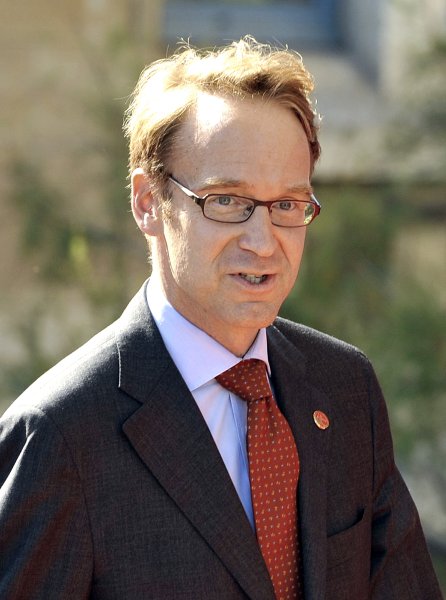
Jens Weidmann attacked his colleagues at the European Central Bank: Due to the repurchase of government bonds ailing countries indicates the Bundesbank President, in a SPIEGEL interview on huge risks for the German tax payer.

Bundesbank President Jens Weidmann dissociates from the reform policy of the European Central Bank (ECB). With its monetary policy measures to calm the markets it had "considerable risks" taken in its balance sheet. That would mean "of course at the same time that risks between individual countries will be redistributed to the taxpayers," he said in an interview with SPIEGEL. "We need to reduce these risks again because of the risks associated with 27 percent of the German tax payer right now."

The European Central Bank buys bonds since May 2010 € heavily indebted countries in order to lower market interest rates for these securities artificially. It was initially only to Greek, Portuguese and Irish bonds, widened the ECB, the program recently made in Italian and Spanish bonds. Overall, the Fed has been government bonds with a volume of more than 140 billion € in their Geschäftstbüchern.

If a state does not repay his debts, this would be huge holes in the balance sheet of the ECB tear. In the worst-case scenario, the 17 euro countries, which carry the bank, put up more new money. Germany would be involved in this case according to its share of the central bank with 27 percent of the total.

Weidmann wants to preserve "stability-political principles"

In order to avoid further risks, Weidmann had voted in the Council of the Federal Reserve, along with ECB chief economist Juergen Stark against the purchase of government bonds. The Germans, however, were largely isolated, Stark explained why on 9 September resign. For him, the former State Secretary, Federal Ministry of Finance, Jörg Asmussen, move up in the Governing Council. Experts doubt that he will speak out strongly against the similar bond purchases as Weidmann and Stark.

DISPLAY
Weidmann will at least remain steadfast. He sees himself "in the tradition of political stability principles of the Bundesbank, which is also supported by the German public." He would bring this position further in the Governing Council. The Federal Bank chief considers it wrong, "referring to a general state of emergency all the proven principles to throw the monetary policy board." Monetary policy Jumps only one time, there will always be reasons speak supposedly for a continuation of this measure. "

Also in order to end the conflict in their own ranks, the ECB seeks to leave the bond purchases in the future the European rescue fund EFSF. In principle, this also had the euro-zone nations agreed at their emergency summit in July. How accurate are the possibilities of EFSF should be designed, but it is still unclear. Economists had proposed to equip the emergency fund with a bank license, so that he, like other banks also could get fresh money at the ECB for its bond purchases.

Weidmann also rejects this option. To secure its political independence, the central bank should not be used to finance government debt - "whether directly or via a detour," the Federal Bank chief said on Saturday after the meeting of EU finance ministers and central bank chiefs in Wroclaw.

http://www.spiegel.de/wirtschaft/soziales/0,1518,786847,00.html

Rubalcaba es como seguir montado en una bicicleta sin saber mantenerla derecha...

El candidato

Miren a Rubalcaba

Bernd Dietz

2011-09-15

Rubalcaba, hoy un sufrido figurante, incluso más que bajo el GAL o el Faisán, es como un danzarín grotesco que continúa ensayando cabriolas cuando la música hace bastante tiempo que ha dejado de sonar. De su boca brotan recetas y diagnósticos que, si jamás fueron creíbles, ni siquiera para sus emisores, ahora resultan clamorosamente zafios. Estomagantes incluso para un tonto del montón. Para el destinatario sociológico según sus burdos cálculos, al que tal candidato ofende llamándolo inteligente, con ese recochineo típico del caciquismo izquierdista.

Pero esto es como seguir montado en la bicicleta sin saber mantenerla derecha, ni tener suelo sobre el que evolucionar y hasta sin que exista bicicleta. Los políticos al uso están acostumbrados al pedaleo virtual, se han habituado a la credulidad popular, tienen motivos contrastados en la práctica para fiar sus expectativas al engaño bonito. Sin embargo, hay algo en el rictus de Rubalcaba, en sus inflexiones de voz y en su desgarbado lenguaje corporal, ese que es crecientemente incapaz de llenar sus trajes de impostor asténico, que indica una tribulación perturbadora. Él carece de esa fe en el autoengaño, condición previa para lograr mentir con alegre desparpajo, que tornó exuberante dentro de su ya explícita patología y contando con la riqueza que no había generado él, a Zetapé. El cántabro conoce las limitaciones de la química y la física. Sabe que, llegado el punto de ruptura, hasta la estructura de cristal más imponente estallará en pedazos. A abandonarnos como un desodorante justo cuando menos nos conviene apestar. Que incluso entre nosotros, que vivimos por tradición picaresca de gorra y de prestado, la mentira encandiladora puede llegar a fallar. Actúa el galán en ese instante del final de la fiesta, entre imprevistos abucheos, comenzando a ser incapaz de creerse que el patético montaje que le ha designado como jefe tenga visos de asegurar su compostura.

¿Qué pasará con la ecuación del 11-M, que tantas tardes de gloria, ciertamente mugrienta, le concedió al PSOE? ¿Que consintió que tantos advenedizos tocaran moqueta, se hicieran un sabroso patrimonio y repartieran favores y juguetes caros entre la parentela extensa? ¿Admitirán las reglas de lo no escrito, ni investigable, ni punible judicialmente, que podamos rehacernos? ¿Consentirán que venga una derecha en horas bajas, desmochada de ínfulas, representada ante todo por mujeres decentes, brillantes y excepcionales, para adecentar los establos de Augías que han engorrinado los chorizos y los cantamañanas de la ceja? ¿Tendrán licencia estos pobreticos burgueses del PP para introducir un mínimo y módico contingente de medidas destinadas a impedir que nuestra sociedad arda en holocausto caníbal?

Esa es la gran pregunta. ¿Qué dice aquella antigua computadora que glosara Vicent en los albores felipistas, cuando la suciedad parecía menor? España es un digno y resplandeciente país, lleno de gente cuerda y expectante, pese al progresismo de burbuja infantil. Femeninamente aguardamos la respuesta, al no poder albergar una confianza adulta en el transparente turnismo democrático, según pasa en Occidente. Pues esto no es que llegue un guapete entrenador de fútbol, armado de trucos y ropa de diseño, para que nos invite a madrugar. Esto es aspirar a saber si la nación puede, por una vez, erguirse sin ataduras y ser ella misma a pesar de su mafia dirigente. Y, sobre todo, a pesar de los que mueven los hilos de nuestra nomenclatura corrupta. El pueblo espera escéptico, ante el televisor. La zarrapastrosa fotogenia de Rubalcaba comporta un augurio siniestro. No sabemos aún de qué. 

Bernd Dietz es catedrático de Filología Inglesa y escritor

US in last-ditch effort to divert Palestinian UN bid


Clinton warns Palestinians: The route to a lasting solution lies in Jerusalem and Ramallah, not in New York • Dennis Ross and David Hale return to hammer out deal acceptable to PA, Israel and the EU, but Palestinians say it's "too little too late."

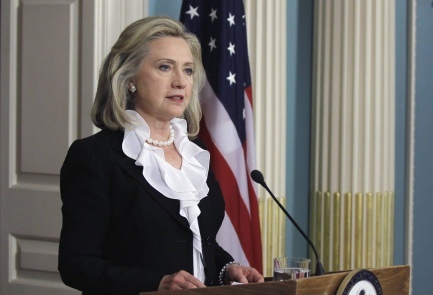
U.S. Secretary of State Hillary Clinton: "The route to peace lies in Jerusalem and Ramallah, not in New York,”
|
Photo credit: AP
U.S. Secretary of State Hillary Clinton: "The route to peace lies in Jerusalem and Ramallah, not in New York,”
|
Photo credit: AP

U.S. Secretary of State Hillary Clinton reiterated on Tuesday the U.S.'s stance against the unilateral Palestinian bid for statehood at the U.N. later this month, while representatives from around the world convened in Israel in an attempt to find a last-minute formula to convince the Palestinians to return to direct negotiations.

“The only way of getting a lasting solution is through direct negotiations through the parties and the route to that lies in Jerusalem and Ramallah, not in New York,” Clinton told reporters. “We are redoubling our efforts with not only both sides but with a broad cross-section of the international community to create a sustainable platform for negotiations that can produce the two-state solution that we seek.”

“Our hope is that we get the parties back into a frame of mind and a process where they will actually begin negotiating again,” Clinton said.

U.S. envoys Dennis Ross and David Hale returned to Israel on Wednesday in a last-ditch attempt to dissuade the Palestinians from proceeding at the U.N. They will be joined by EU foreign policy chief Catherine Ashton and former British prime minister and current special envoy to the Quartet Tony Blair. German Foreign Minister Guido Westerwelle was also in Israel this week. All parties have arrived to try to convince the Palestinian Authority to drop its unilateral bid for statehood and instead return to direct negotiations. One way to bring the Palestinians back to the negotiating table, the international mediators believe, would be an Israeli declaration of a building freeze on all settlements for the duration of negotiations. Officials in Israel rebuffed the suggestion, citing the fruitless 10-month freeze that ended last year.

A senior aide to Palestinian President Mahmoud Abbas told Reuters the plan was still to seek full U.N. membership for a Palestinian state, despite the new U.S. mission.

Reuters reported that Senator John Kerry, the Democratic chairman of the Senate Foreign Relations Committee who is close to the Obama administration, said there was little chance of stopping the Palestinian bid.

“I think the only thing that might change the dynamic now is a major proposal by Israel on the table with respect to the peace process,” Kerry told reporters.

Meanwhile, Washington has warned both Israel and the Palestinians not to make rash decisions “the day after” Sept. 20., when Palestinian Authority President Mahmoud Abbas is expected to ask the U.N. General Assembly to recognize Palestinian statehood. U.S. Ambassador to the U.N. Susan Rice said on Tuesday that she hoped the Palestinians' plans would include “the day after.” Rice was apparently referring to the Palestinian intention of using the “observer state” status it would acquire from winning the General Assembly vote to pursue criminal charges against Israel at the International Court of Justice.

In Jerusalem, officials have drawn up a long list of potential punitive measures against the Palestinians' unilateral move, but no particular course of action has been chosen. “If the Palestinian leadership opts to make unilateral gestures, Israel will consider changing the status of east Jerusalem and the settlements in Judea and Samaria,” Deputy Foreign Minister Danny Ayalon said on Tuesday at a forum in Beersheba. Another option being weighed is to halt the transfer of the Palestinian Authority's tax revenue, which Israel collects and then transfers to the Palestinian Authority. The U.S. has specifically asked Israel not to take either step, or any other measure that could prevent negotiations in the future.

Foreign Minister Avigdor Lieberman on Wednesday said that all the concessions Israel had made to the Palestinians were taken for granted and were not interpreted as gestures of good will.

Speaking at an agriculture conference at Kibbutz Revivim about the steps taken by the Palestinian Authority to obtain recognition of statehood, Lieberman said that he can say "with full confidence" that as soon as a unilateral resolution at the U.N. passes, there will be "serious and harsh ramifications," Israel Radio reported.

The foreign minister expressed his hope that common sense would prevail regarding the statehood bid and that Israelis and Palestinians would be able to move forward in negotiations.

Meanwhile, The New York Times reported on Tuesday that Palestinian negotiator Saeb Erekat said the Palestinian leadership was weighing the strong urging of both the Arab states and the Europeans to turn only to the U.N. General Assembly, where the Palestinians are certain to have majority support, and not to the U.N. Security Council, where the U.S. could veto any resolution.

Erekat told a strategy session of the Arab League that Abbas “said that if we receive something from the Arabs and the Europeans we will put it to the leadership to study it.” But he said the Palestinian Authority had not yet committed itself to a course of action, The New York Times reported.

Erekat also said Abbas would fly to Amman, Jordan, on Wednesday for a meeting about the issue with Blair. Blair and the Europeans “said they have some ideas and we are waiting to see the ideas formulated,” Erekat said. “We don’t intend to confront the U.S. or anyone else for that matter,” he said. “We want to present the U.N. vote as an opportunity for all of us to preserve the two-state solution.”

54 percent, the export rate in Switzerland.Financial expert believes in the economic future..

54 percent, the export rate in Switzerland.Financial expert believes in the economic future..

Financial expert believes in the economic future of Switzerland
René Zeyer in conversation with Dirk Müller

54 percent, the export rate in Switzerland. By the rise of the Franks suffered some parts of the economy and competitive advantages were lost, says René Zeyer, author and financial expert from Zurich. And yet, 20 years ago, the decision not to join the European Economic Area, had been very good.

Dirk Mueller: That's a paradox, at least at first glance. As a country has a strong, internationally-respected currency, and threatens to carried away this is why the downward spiral to be. We are talking of Switzerland, Francs. Were German tourists, for example, several years ago for a good one even € 50 francs in the hands, was the exchange rate during the summer holidays almost slipped one to one, thus a € a franc. That was too much accustomed to success for the Confederates: significantly fewer tourists and a lot less exports. Depression! The Fed has pulled the emergency brake then, now there is a minimum exchange rate. For one, there are now at least € 20 a dollar, and this is guaranteed. Thus, the euro crisis has long since become even a Swiss crisis. - Furthermore, we now want to talk with René Zeyer, author and financial expert. Good morning to Zurich.

René Zeyer: Good morning back!

Müller: Mr. Zeyer curse that the Swiss €?

Zeyer: I would not go that far, but I must also correct the same thing initially. The Swiss export economy is booming and will increase. It is now more a wail to a high level, what you hear here from Switzerland. It is true that the German tourist in Switzerland has suffered quite, but apart from the tourism industry in Switzerland it is still dazzling.

Müller: We have some of the misunderstood here, because many have complained so trade associations and industry groups, the fact that it is increasingly difficult to export.

Zeyer: We must stop this, unfortunately, never forget that Switzerland actually - I'm sorry to say that Germany - the real world export champion is. More than half of the gross domestic product of Switzerland is generated in the export industry. On the other hand we have to see, too, that Switzerland is of course a resource-poor country. This means that is most of what is processed, imported. And if it is imported from the euro area, which is obviously beneficial for Switzerland. That is, in the so-called net balances, as for the exchange of EU-Switzerland, Switzerland has in fact just as many advantages as disadvantages of the strong franc.

Müller: We'll talk again about the export quota. They have announced it. 54 percent did, I read, the export rate in Switzerland. In comparison, Germany is "only" 48 percent. As you say, but if the industry is, when the economy is complaining about it, it wails at a high level, so not really true.

Zeyer: There are some parts industry - tourism, you have already mentioned, of course: This is terrible for the Swiss hoteliers, and all those standing around the Matterhorn. On the other side: the export industry in Switzerland, of course, has difficulties due to the high francs by losing competitive advantage. On the other hand, Switzerland has been so for many years on high-tech products, as selected segments of the engineering industry, pharmaceuticals and so on, concentrated, and the areas it is also partially unrivaled.

Müller: We have Mr. Zeyer, yes, the Greece-talk radio this morning in Germany already developed further discussed. To what extent is it a big issue for Switzerland?

Zeyer: It is of course an issue so far, that this lower limit, which has established the Swiss National Bank at 1.20 to one euro, always depends on how the euro will continue. One must never forget that the franc is not too strong, but that the euro is weakening, is ailing, or perhaps even to the death camps. And if there are looming cruel further developments, the Swiss National Bank is of course faced with the problem that she has announced, for holding this course, she's ready to throw in unlimited extent Swiss currency on the market.

Muller: Do you think this is right?

Zeyer: I think it is foolhardy, because one can never forget, when we look at the international situation even now, only a number: Each day, worldwide, worth $ 72 billion francs and euros back and hergetauscht. That said, this is a huge speculative market, as well as in other financial scene, and when should now decide, for example, some large hedge funds and shadow banks and other speculators, the test out, as they say, if the Swiss franc in fact to 1.20 remains, or whether it might not get back down, for example, you must keep up the small Swiss National Bank, of course, with giants, and whether they can and what implications this has for, really is not foreseeable.

Muller: So it could be, Mr. Zeyer, Switzerland sometime Finanzspielchen with these, as you said, with the speculation, is overwhelmed by the devaluation?

Zeyer: That's exactly the problem of today's financial market. Normally yes expresses a ratio of one currency called Purchasing Power Parity. That is, on both sides of the two currencies for the same money you can buy the same amount of goods. This is the beautiful old theory. The new world of financial markets is so that all derivatives, leverage and other speculative elements has gone completely out of control, and what will happen there in the future, which is in the best sense of the word, and even in the worst unpredictable.

Muller: And you say, normally, but you also say the same, this is usually there most likely never again.

Zeyer: As it stands right now. Since there is the collected governments of the industrialized countries have not succeeded, the speculators, banks, gangsters and so on, to rein in, make the further detail, and of course now suffers at the moment then perhaps even the Swiss National Bank.

Mueller: You say that hedge funds are to blame. Are the banks fault?

Zeyer: Yes of course! If we return to the Euro-zone, so the problem lies not only in the you mentioned Greece, which is self-evident failure, but it is indeed the fact that European banks continue to have so many Greeks papers in their books, they can artificially rate much higher than they are actually worth. And if European banks assess these papers only on the current market value would, they would collapse again, or would again, "Help, state, come here and give me money" call.

Müller: How big is because of political freedom in Switzerland?

Zeyer: Well, yes, Switzerland has such a small island position: on the one hand, the island of the blessed, on the other island in Europe. And that the other countries of Europe do not look with favor on Switzerland, but also with envy is, yes absolutely clear. And again: Switzerland and the Swiss National Bank is now economically speaking, of course, in Europe no giant but a dwarf who has tangled with the Goliath, namely the euro.

Muller: And are you sure that Switzerland remains an island?

Zeyer: I think it's a very wise decision. There were in Switzerland in the early 90s, a big discussion over whether to join the then European Economic Area or not, and the Swiss population, which may vote on such things like that, decided majority, not to do that. And I think now, 20 years later, the vast majority of Swiss people are very happy about this decision.

Mueller: ... Because on the continent, it can not?

Zeyer: It has surely shown clearly that the European Union is politically absolutely unable to get the various fiscal policies and monetary policies of various countries to somehow in some way in the handle. When I again would point to Greece: "Greece is a problem - but not at all!" If you just wondered that was a half years ago in Europe more generally, consensus, - And that was exactly 18 months - and today the first politicians are already talking of it, that maybe you should let go but bust Greece.

Müller: Would that be good?

Zeyer: I think that would be the right thing! I mean, it's like in the economy. If a company can not even pay the interest on their debt - and so far so Greece is - then the end of the flagpole. And a so-called orderly liquidation, that is, they say reboot, all creditors have to cut something to his leg, but the good news is, then everyone knows where he stands, and the Greek economy has the ability to bounce would be the only solution to this problem.

Mueller: I do not know, René Zeyer, whether you have noticed that, whether it's been discussed in the Swiss media. In the past week, Chancellor Angela Merkel said in her speech in the Bundestag, the example of Switzerland, you see how it can go one state, if you're not part of this convoy is European. That must sound a bit like a joke to you?

Zeyer: Well said, let's say, Mrs. Merkel has also said yes, the euro fails, Europe fails. I think Mrs. Merkel has unfortunately there is little known that the statements she makes about the European Union and Switzerland, are now really so wrong that not even the opposite would be true.

Muller: And finally we want to keep: You mean to stay, Switzerland needs to Switzerland?

Zeyer: Switzerland will remain in Switzerland. Whether the franc will remain the Franks? The effects of such monetary policy are, of course, the medium in the first place, namely a possibly hyperinflation if the Swiss National Bank also has to produce too much foreign exchange. But I am actually quite honestly, if you ask me so optimistic as far as the future of Switzerland as far as what the future of the EU area.

Müller's book author and financial expert René Zeyer with us this morning in Germany radio. Thank you for your time and good-bye.

Zeyer: Here you go!

Statements of our interlocutors do not necessarily reflect their own views. Germany Radio makes remarks to his interlocutor in interviews and discussions, not our own......

Delectable Lie: A liberal repudiation of multiculturalism.

Delectable Lie: A liberal repudiation of multiculturalism.

Official multiculturalism as practiced in Canada and by other Western democracies is destructive to the liberal ideals of individual rights and freedoms.
 
By replacing the core liberal value that individuals are entitled to equal rights with the false notion that all cultures are of equal value and deserve equal treatment, official multiculturalism undermines the principles of Western democracy.
 
Worse, it is being used by adherents of Islamism to undermine liberal democracies from within, by attacking such key principles as freedom of speech and the separation of church and state.
 
These are the foundational arguments of a bracing new book by Sun Media columnist Salim Mansur — Delectable Lie: A liberal repudiation of multiculturalism.
 
As Mansur explains: “My point is that although multiculturalism once seemed a very good idea, at least to politicians and others smitten with the ambition for unity, it is increasingly shown to be a lie — a delectable lie perhaps, yet a lie nevertheless — that is destructive of the West’s liberal democratic heritage, tradition and values based on individual rights and freedoms.


Video of Doctor Mansur: http://www.youtube.com/watch?v=0qg4c0XICaY

"There was not this green wave in my time..."..

"There was not this green wave in my time..."..

Maria Nelly Diaz Suffice
The Green Wave

In line at the supermarket, the cashier told a lady who should bring their own shopping bag because plastic bags were not good for the environment.

The lady apologized and explained:
... "There was not this green wave in my time."
The employee replied:
"That's our problem now. Your generation does not
took sufficient care to preserve our environment. "
He was right - that our generation did not go green at the time.
Back then, milk bottles, soda bottles and beer were returned to the store. The store sent them back to the plant to be washed and sterilized before refilling, so could you use the same bottles over and over again. So, actually recycled.
But we did not go green in our times.
We climbed the stairs, because there was no escalators in each trade and office.
We walked to the store instead of riding in our vehicle 300 horsepower whenever needed to go two blocks.
But he was right.
We did not go green today.
By then, we washed the diapers of babies because there was disposable.
Clothes on clotheslines dried ourselves, not in these energy-shaking machine at 220 volts - solar and wind energy really dried our clothes.
The boys wore the clothes of their older siblings, not always new outfits. But that lady is right:
did not have a green wave today.
At that time we had a television or radio in the house - not a TV in every room. And had a little screen TV the size of a handkerchief (remember?), Not a pantallota the size of a stadium.
In the kitchen, ground and beat by hand because there was no electrical machines do everything for us.
When we packed something fragile to mail, we used crumpled newspaper to protect it, not plastoformos or plastic pellets.
In those times there lighting a gasoline engine and burn them just to cut the grass.
We used a lawnmower that ran on muscle.
He worked out at work, so we did not need to go to a gym to run on tracks that run on electricity mechanical. But she is right:
in those days there was a green wave.
We drank from a fountain when we were thirsty, rather than use plastic cups or bottles every time you had to drink water.
The fountain pen ink Recargábamos, instead of buying a new, we changed the razor blades instead of throwing away all the razor blade just because he lost his edge.
But we had a green wave at the time.
In those days, people take the tram or a bus and the boys were on their bikes or walked to school, instead of using the mother as a taxi service 24 hours.
We had an outlet in every room, not a bank of outlets to power a dozen artifacts.
And we did not need an electronic device to receive signals from satellites miles away in space to find the nearest pizza parlor.
So is not it unfortunate that the current generation is lamenting how old we were oddballs for not having the green wave in our time?

El HSBC pronostica "recesión del -0,7%" para España en el tercer trimestre de este año.

El HSBC pronostica "recesión del -0,7%" para España en el tercer trimestre de este año.

13:40 - 09-09-11
DJ HSBC baja previsiones EEUU, UE; ve a España en recesión.


2011-09-09 06:50 DJLL002473N/DJSW N/EDJ N/LL N/ADR / R/CH R/EC R/EU / I/


LONDRES (Dow Jones)--HSBC (HSBC) bajó el viernes su
previsión de crecimiento tanto de Estados Unidos como de la eurozona
y dijo que España volverá a entrar en recesión este año.
El banco revisó a la baja sus previsiones de Producto Interior
Bruto de Estados Unidos en 2011 al 1,6% desde el 2,5% y las de 2012 al
1,7% desde el 2,9%. HSBC indicó que los estancados mercados de
empleo, el disfuncional mercado inmobiliario y los elevados niveles de
deuda de los hogares se mantendrán en la mayor economía mundial
en los dos años que cubren las previsiones.....
El banco también cree que España volverá a entrar en recesión.
"Esperamos que la contracción comience en el
tercer trimestre de la mano de un descenso de la industria y las
exportaciones".El banco cifra la contracción del PIB español en un -0,7%.

-Por Eva Szalay, Dow Jones Newswires; +44 (0) 20 7842 9305;
eva.szalay@dowjones.com

(END) Dow Jones Newswires
September 09, 2011 06:50 ET (10:50 GMT)

Sobre imbéciles y malvados....

Patente de corso, por Arturo Pérez-Reverte

 
  Sobre imbéciles y malvados


No quiero, señor presidente, que se quite de en medio sin dedicarle un recuerdo con marca de la casa. En esta España desmemoriada e infeliz estamos acostumbrados a que la gente se vaya de rositas después del estropicio. No es su caso, pues llevan tiempo diciéndole de todo menos guapo. Hasta sus más conspicuos sicarios a sueldo o por la cara, esos golfos oportunistas -gentuza vomitada por la política que ejerce ahora de tertuliana o periodista sin haberse duchado- que babeaban haciéndole succiones entusiastas, dicen si te he visto no me acuerdo mientras acuden, como suelen, en auxilio del vencedor, sea quien sea. Esto de hoy también toca esa tecla, aunque ningún lector habitual lo tomará por lanzada a moro muerto. Si me permite cierta chulería retrospectiva, señor presidente, lo mío es de mucho antes. Ya le llamé imbécil en esta misma página el 23 de diciembre de 2007, en un artículo que terminaba: «Más miedo me da un imbécil que un malvado». Pero tampoco hacía falta ser profeta, oiga. Bastaba con observarle la sonrisa, sabiendo que, con dedicación y ejercicio, un imbécil puede convertirse en el peor de los malvados. Precisamente por imbécil.

Agradezco muchos de sus esfuerzos. Casi todas las intenciones y algunos logros me hicieron creer que algo sacaríamos en limpio. Pienso en la ampliación de los derechos sociales, el freno a la mafia conservadora y trincona en materia de educación escolar, los esfuerzos por dignificar el papel social de la mujer y su defensa frente a la violencia machista, la reivindicación de los derechos de los homosexuales o el reconocimiento de la memoria debida a las víctimas de la Guerra Civil. Incluso su campaña para acabar con el terrorismo vasco, señor presidente, merece más elogios de los que dejan oír las protestas de la derecha radical. El problema es que buena parte del trabajo a realizar, que por lo delicado habría correspondido a personas de talla intelectual y solvencia política, lo puso usted, con la ligereza formal que caracterizó sus siete años de gobierno, en manos de una pandilla de irresponsables de ambos sexos: demagogos cantamañanas y frívolas tontas del culo que, como usted mismo, no leyeron un libro jamás. Eso, cuando no en sinvergüenzas que, pese a que su competencia los hacía conscientes de lo real y lo justo, secundaron, sumisos, auténticos disparates. Y así, rodeado de esa corte de esbirros, cobardes y analfabetos, vivió usted su Disneylandia durante dos legislaturas en las que corrompió muchas causas nobles, hizo imposibles otras, y con la soberbia del rey desnudo llegó a creer que la mayor parte de los españoles -y españolas, que añadirían sus Bibianas y sus Leires- somos tan gilipollas como usted. Lo que no le recrimino del todo; pues en las últimas elecciones, con toda España sabiendo lo que ocurría y lo que iba a ocurrir, usted fue reelegido presidente. Por la mitad, supongo, de cada diez de los que hoy hacen cola en las oficinas del paro.

Pero no sólo eso, señor presidente. El paso de imbécil a malvado lo dio usted en otros aspectos que en su partido conocen de sobra, aunque hasta hace poco silbaran mirando a otro lado. Sin el menor respeto por la verdad ni la lealtad, usted mintió y traicionó a todos. Empecinado en sus errores, terco en ignorar la realidad, trituró a los críticos y a los sensatos, destrozando un partido imprescindible para España. Y ahora, cuando se va usted a hacer puñetas, deja un Estado desmantelado, indigente, y tal vez en manos de la derecha conservadora para un par de legislaturas. Con monseñor Rouco y la España negra de mantilla, peineta y agua bendita, que tanto nos había costado meter a empujones en el convento, retirando las bolitas de naftalina, radiante, mientras se frota las manos.

Ojalá la peña se lo recuerde durante el resto de su vida, si tiene los santos huevos de entrar en un bar a tomar ese café que, estoy seguro, sigue sin tener ni puta idea de lo que vale. Usted, señor presidente, ha convertido la mentira en deber patriótico, comprado a los sindicatos, sobornado con claudicaciones infames al nacionalismo más desvergonzado, envilecido la Justicia, penalizado como delito el uso correcto de la lengua española, envenenado la convivencia al utilizar, a falta de ideología propia, viejos rencores históricos como factor de coherencia interna y propaganda pública. Ha sido un gobernante patético, de asombrosa indigencia cultural, incompetente, traidor y embustero hasta el último minuto; pues hasta en lo de irse o no irse mintió también, como en todo. Ha sido el payaso de Europa y la vergüenza del telediario, haciéndonos sonrojar cada vez que aparecía junto a Sarkozy, Merkel y hasta Berlusconi, que ya es el colmo. Con intérprete de por medio, naturalmente. Ni inglés ha sido capaz de aprender, maldita sea su estampa, en estos siete años.