Del Bail-Out al Bail-In, Europa debe prepararse para el default


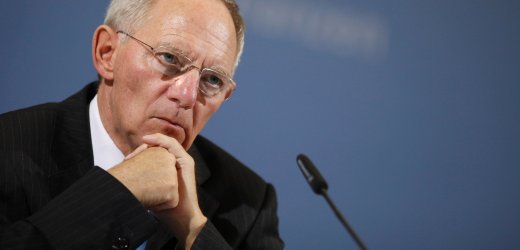
SPIEGEL: Minister Schäuble, how well do you get along with your American counterpart, Treasury Secretary Timothy Geithner?
Schäuble: Mr. Geithner is an excellent minister. We have a good personal relationship.
SPIEGEL: Nevertheless, he constantly criticizes government officials in countries that are achieving high export surpluses and not doing enough to stimulate their domestic economies. He's referring to you, isn't he?
Schäuble: It would appear that way. That's why I tell him again and again that I think his point of view is incorrect in this regard.
SPIEGEL: All the same, the value of goods Germany sold to the United States exceeded imports from that country by almost €14 billion ($19.8 billion) last year. Can't you understand that the American treasury secretary is concerned about this?
Schäuble: No, because since we introduced the euro in Europe, the determining factor is no longer US trade with Germany, but US trade with the totality of countries in the euro zone. And in that respect the balance of trade tends to be even. So what's the problem? After all, we don't complain about the export successes of individual American states.
SPIEGEL: But the German economy benefits from the fact that German industry has focused primarily on foreign markets and wages have hardly gone up in years. The Americans see this as unfair.
Schäuble: The German export successes are not the result of some sort of currency manipulation, but of the increased competitiveness of companies. The American growth model, on the other hand, is in a deep crisis. The United States lived on borrowed money for too long, inflating its financial sector unnecessarily and neglecting its small and mid-sized industrial companies. There are many reasons for America's problems, but they don't include German export surpluses.
SPIEGEL: The US government sees it differently. It wants to see German exports to the United States curtailed in the future once they reach a certain threshold. Will you give in to the pressure?
Schäuble: The proposal is not acceptable for Germany under any circumstances. If we were to introduce such measures, we would be restricting international competition. But for years we, together with the Americans, have believed that world trade needs to be opened up further. We should stick to that approach and, for example, press ahead with the Doha round to promote world trade. This would stimulate global growth far more effectively than a bilateral agreement on quotas.
SPIEGEL: Last week, the US Federal Reserve Bank decided to flood the economy with $600 billion in new money. Will this stimulate the economy as hoped?
Schäuble: I seriously doubt that it makes sense to pump unlimited amounts of money into the markets. There is no lack of liquidity in the US economy, which is why I don't recognize the economic argument behind this measure.
SPIEGEL: The US wants to depress the value of the dollar in this way, so that it can sell its products abroad more easily. In light of the ailing US economy, isn't that a completely reasonable strategy?
Schäuble: No. The Fed's decisions bring more uncertainty to the global economy. They make it more difficult to achieve a reasonable balance between industrialized and emerging economies, and they undermine the US's credibility when it comes to fiscal policy. It's inconsistent for the Americans to accuse the Chinese of manipulating exchange rates and then to artificially depress the dollar exchange rate by printing money.
SPIEGEL: The G-20 nations will meet in South Korea this week to discuss the condition of the world economy two years after the deepest financial and economic crisis since the war. When the crisis erupted, the international community reacted with astonishing unanimity. But now many countries are trying to achieve advantages by influencing their exchange rates. Are you worried about a worldwide currency war?
Schäuble: I don't believe in such belligerent terms, but it's obvious that the global economy is in a tough situation. This is due to the enormous national debts many countries have taken on while fighting the crisis. Reducing these deficits is the primary objective, as the G-20 countries decided at their most recent summit in Toronto, where everyone, including the United States, agreed to cut their deficits by half by 2013. We should stick to these decisions, and if we do we will be able to curb unrest in the markets.
SPIEGEL: But the United States isn't the only country that's responsible for unrest in the markets. The euro crisis also continues to smolder. The risk premiums for government bonds from the crisis-plagued countries Ireland and Greece have gone up again. How much longer will it take before Europe has to issue new state guarantees?
Schäuble: I'm not that pessimistic in this regard. Although the Irish have accumulated huge debts to bail out their banks, they are making good progress in cleaning up their economy. And I also have great respect for the Greek government's resolve. A few months ago, hardly anyone would have believed that the Greeks would manage to implement such a drastic austerity program. They're moving in the right direction now.
SPIEGEL: Conditions in Europe are not as orderly as you describe. Just two weeks ago, the European Council (the EU body in Brussels that includes the heads of state and government of the membber states) decided to introduce a new crisis mechanism for over-indebted euro nations. Are you satisfied with the result?
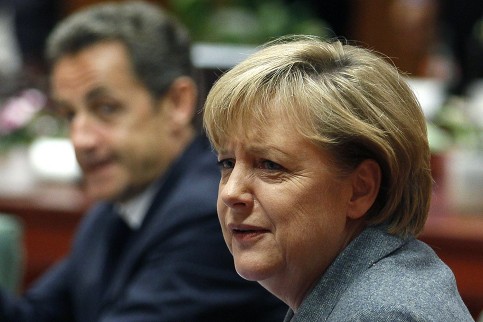
Schäuble: The Council's decisions are a great success. Only a few weeks ago, many predicted that France would never support Germany in its commitment to a European crisis mechanism. And that the French would be willing to change the European treaties to do so was seen as completely out of the question. But then Chancellor (Angela) Merkel and President (Nicolas) Sarkozy met in Deauville and achieved a historic breakthrough on both issues. It's completely in line with the approach we Germans have always supported.
SPIEGEL: You can't possibly believe what you're saying. Until recently, Germany was demanding automatic penalties for countries that violated the debt rules of the euro zone. That demand is now off the table.
Schäuble: In Europe, it just so happens that you don't always get everything you wish for. The overwhelming majority of EU members have made it clear that they would not accept automatic sanctions. Our response was: Instead of fighting for something you can't have, we'll try to achieve what's feasible.
SPIEGEL: That sounds like supreme statesmanship. But now there will be no change to the situation on the European Council, where the offenders and the watchdogs remain identical, as former constitutional judge Paul Kirchhof has said. The countries that don't have their budgets under control are helping to decide what penalties will be imposed for that. This isn't the way to come up with effective, prompt sanctions.
Schäuble: I disagree. It will be much easier in the future to enforce sanctions against deficit sinners. We will also be able to take preventive action earlier in the game. Besides, it didn't exactly advance the German position when the red-green government (the former center-left coalition of Social Democratic Party and Green Party that governed from 1998 until 2005), together with the French government, did serious, lasting damage to the Stability and Growth Pact by saying: The pact applies to everyone, just not to the two largest member states.
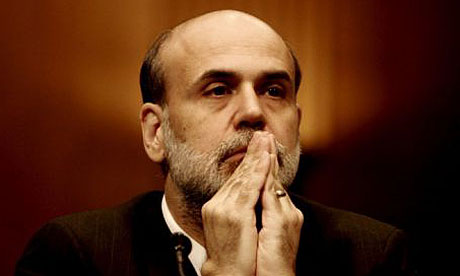
¿Alguien lee lo que dice y escribe Bernanke? Los gurús y expertos deberían estudiar más la realidad y dejar de hablar tanto de sus teorías.

El pasado 4 de noviembre, esto es, un día después de que la Fed diera a conocer un secreto a voces, Bernanke publicó un importante artículo en el Washington Post sobre la actuación de la Fed. ¿Alquien lo ha leído?
Para el que escribe, Bernanke es tan claro como el agua, ya que su actuación está dibujada desde que publicara su tesis de actuación (pincha), que ha seguido hasta hoy día.
La Fed tiene dos misiones fundamentales. Por un lado, promover un alto nivel de empleo. Por otro, mantener la inflación baja y estable.
La reciente decisión de la Fed, esto es, la política conocida como QE2, entre otros, viene como consecuencia de el alto desempleo norteamericano, alrededor del 10%, y de la baja inflación existente, sobre el 2%.
Por tanto, con alto desempleo y baja inflación, la Fed considera que debe actuar para apoyar la frágil situación de la economía. Algo que muchos inversores temen, ya que este tipo de medidas podrían aumentar la inflación en el futuro. Sin embargo, para Bernanke, como para Keynes, "todos estamos muertos en el largo plazo".
Además, la Fed considera que aunque la baja inflación es buena en términos generales, una inflación demasiado baja plantea riesgos para la economía actual, dada su extrama fragilidad. Incluso, en los casos más extremos, una inflación muy baja puede transformarse en deflación (caída de los precios y los salarios), contribuyendo a largos periodos de estancamiento económico.
Por todo ello, Bernanke cree que promover condiciones financieras "más fáciles" ayudarán al crecimiento económico. Por ejemplo, menores tasas en los "corporate bonds" fomentarán la inversión o la apreciación en los precios de las acciones aumentará la riqueza de los consumidores y con ello su confianza, que a su vez estimulará el gasto, dando con ello a mayores ingresos y ganancias que, en un círculo vicioso, seguirán apoyando la expansión económica.
En suma, tanto la Fed como la Casa Blanca reconocen que se están moviendo en un terreno poco estudiado y casi sin precedentes. Sin embargo, ese es el riesgo que se corre cuando se está en política, ya que las decisiones conllevan implicaciones prácticas.
Y es que 2+2 = 5
*Este post no está ni a favor ni encontra de la actuación de Bernanke.http://www.federalreserve.gov/BOARDDOCS/SPEECHES/2002/20021121/default.htm
Periodo difícil
Los recortes de gastos, la mayor desde la década de 1970, puede afectar el crecimiento económico de Portugal, que tiene un promedio de menos del 1 por ciento anual en la última década.El gobierno confía en que las exportaciones, tales como productos de papel y madera para apoyar el crecimiento.
"El país está atravesando un período difícil, y los acuerdos son necesarios para las políticas fundamentales", dijo Eduardo Catroga, un ex ministro de Finanzas que representó a la oposición de centro reformista en las conversaciones, el 30 de octubre. El gobierno socialista accedió a reconsiderar los gastos previstas, incluidas subvenciones a las asociaciones público-privadas, Catroga dijo, sin nombrar a proyectos específicos
http://washpost.bloomberg.com/story?docId=1376-LB5NBK1A1I4H01-2ULKB0315LS01JVJVH0PNE4USI
Un periódico nada sospechoso de propepero como es el "Cinco Días" del grupo Prisa se congratulaba en febrero del 2.003 , durante el gobierno del PP , que España hubiera DEJADO DE SER CONSIDERADA COMO UN PAÍS DE RIESGO para la inversión . De hecho se certificaba que la diferencia entre el Bono español y el Bono alemán era igual a cero patatero .
Cuatro años después , tras la pasada Zapatero , España tiene un "riesgo país" elevado y el bono español està 17 puntos por debajo del bono alemán.
Si a ello se le añade que en las preferencias de los inversores se ha bajado desde el puesto número 17 que se tenía con el gobierno PP al puesto 35 que se tiene con el gobierno ZP pues el que no se alarme es porque padece idiocía o cata algo de este gobierno de desastre.
Lo dicho si gana ZP derechitos al "corralito argentino"..Lo verán..Cuídense los bolsillos ahí fuera..
http://www.cincodias.com/articulo/economia/Espana/logra/eliminar/prima/riesgo-pais/Alemania/Francia/cdseco/20030224cdscdieco_1/Tes/
La canciller alemana, Angela Merkel, y el presidente de Francia, Nicolas Sarkozy, defendieron este lunes que la Unión Europea imponga sanciones a los Estados miembro que no adopten las medidas necesarias para recortar sus déficit presupuestarios, según una declaración conjunta divulgada durante una cumbre en la ciudad francesa de Deauville.
Ambos líderes están de acuerdo en que los castigos deberían ser "más automáticos". "Un país con déficit excesivo que no tome las necesarias medidas de corrección en seis meses será sancionado", afirmó Sarkozy al termino de su reunión con Merkel. París y Berlín incluso han abierto la puerta a confiscar el derecho de voto de los países que no controlen sus cuentas.
Las propuestas franco-germanas avanzan las reformas que deben estar listas para marzo del próximo año y que serían ratificadas ya en el 2013, según explicó Merkel.
Los ministros de Economía de los Veintisiete han alcanzado este lunes un acuerdo para suavizar las sanciones a los países de la eurozona con déficit y desequilibrios excesivos que había propuesto la Comisión Europea. Los nuevos castigos no serán casi automáticos como defendía Bruselas, sino que se deja más tiempo a los países incumplidores para corregir sus problemas y se da más peso a las decisiones políticas del Consejo Ecofin.
El acuerdo ha sido posible gracias al pacto alcanzado entre Alemania y Francia. Berlín, que defendía un mayor rigor para evitar nuevas crisis de deuda en la eurozona, se ha acabado sumando a las tesis de París, Madrid y Roma, partidarias de una mayor flexibilidad.
A cambio, la canciller Angela Merkel ha obtenido el apoyo del presidente francés para reformar el Tratado con el objetivo de crear un fondo de rescate que prevea las quiebras controladas de países y de poder retirar el derecho a voto en los Consejos de ministros de la UE a los países incumplidores.
http://www.welt.de/politik/ausland/article10619662/Wieviel-Merkel-beim-EU-Gipfel-wirklich-gewonnen-hat.html
El socialismo dejó a Rusia en la indigencia ...Ahora poco a poco se va recuperando pero solo en cuarenta años alcanzará al resto de Europa .Para qué sirvió la utopía socialista sino para causar 30 millones de muertos y mucha miseria?.
De: |
"Elena" |
| Para: | info@nzd.es |
| Fecha: | miércoles, 20 de octubre de 2010 21:54:45 |
| Tema: | Mensaje de Rusia |
| Texto del mensaje: |
Hola, Mi nombre es Elena, tengo 33 an~os y te escribo desde la provincia rusa. Yo trabajo en la biblioteca y despue’s de mi trabajo me permite el uso del ordenador siempre que sea posible. Me parece mu’ltiples lugares en Internet, y me decidi’ a escribirte esta carta. Tengo una hija de 9 an~os de edad, su padre nos abandono’ y vivimos con mi madre. Debido al clima insoportable calor durante este verano casi todas las patatas y verduras marchitas conseguir en nuestro jardi’n. Muchos bosques se quemo’. Esta’bamos condenados a la inanicio’n, y pasamos todos nuestros ahorros para comprar varios sacos de patatas para el pro’ximo invierno (que es terrible, porque el precio de la papa se convirtio’ en 2-3 veces ma’s caro que en el u’ltimo an~o). La crisis en nuestra regio’n que recientemente ha cerrado el trabajo de mi madre, y ahora nuestra situacio’n muy difi’cil. Gas y la electricidad son muy caros y no podemos darnos el lujo de calentar nuestra casa nunca ma’s. El invierno esta’ llegando y el clima se vuelve ma’s fri’o cada di’a en nuestra regio’n. La u’nica forma posible para calentar nuestro hogar es utilizar una estufa porta’til que el calor con la quema de madera. Tenemos madera de ahorro en nuestro granero y esta estufa se calienta nuestro hogar durante todo el invierno, sin costo para nosotros. Desafortunadamente no podemos comprar esta cocina en nuestro mercado local porque el valor de esta estufa es 7.880 rublos, y es muy caro para nosotros (equivalente de 196 euros). Rezo para que usted nos puede ayudar. Si usted tiene alguna estufa porta’til de edad, y si no lo use ma’s, estaremos muy agradecidos si usted puede donar a nosotros y organizar el transporte de la estufa para nosotros (que vivimos a 200 km de Moscu’). Estos hornos son diferentes, por lo general son hechas de hierro fundido y pesan alrededor de 100 kg. Saludos desde Rusia, Elena. PD Traduje este mensaje con el traductor de Google. No se’ el idioma espan~ol y le agradeceri’a si usted puede contestar a mi en Ingle’s, ya que he estudiado esta lengua en la escuela. Gracias. |
Will Spain avoid economic collapse?
Spain, in a sense, is the most worrisome situation at the moment. Its imbalances are actually not as extreme, by any stretch as those of Greece. Certainly its debt to GDP ratio is still relatively low, although it is rising very rapidly. Spain is a special concern because the total debt of Spain is over twice that of Greece—this is a significant economy.
The greatest vulnerability of Spain is that it has lost competitiveness, along with all the others, but at the same time, its economy has become far too dependant on what I would call the non-tradable sector, the sector that is sheltered from international competition—housing, services, restaurants, bars—activities that are generally non-tradable have become too big of a part of the economy and not enough of the economy is oriented toward external markets.
For these reasons, the collapse of the housing bubble and of domestic demand in Spain raises a profound question about the speed at which Spain can emerge from these problems.