Blogia

MATEO MATHAUS: THE WORLD NOW

Benghazi: Qaddafi knows that if his troops are in an inhabited, foreign aircraft may not beat them for fear of causing civilian casualties.
Benghazi: Qaddafi knows that if his troops are in an inhabited, foreign aircraft may not beat them for fear of causing civilian casualties.


March 20, 1911 - - Francesca Cicardi

CAIRO-The hope and fear mingled in the Libyan cities last night after it began international intervention designed to stop the atrocities committed by Colonel Muammar Gaddafi against his own people. He had fulfilled his promises and attacked Benghazi yesterday morning, when the rebels and citizens still awaiting the arrival of foreign forces, which was wait two days. French planes began patrolling the skies of Benghazi yesterday afternoon and, in the first attack of this international operation Libyan soil, destroyed several army tanks Qaddafi on the outskirts of the city. A U.S. official said the air defense system of the regime of Libyan leader was "gravely disabled" by a US-led bombing.

Militants clashed with the forces of Colonel in the streets of some neighborhoods in Benghazi, where sleeper cells appeared his followers, who had remained hidden until now. The rebels also tried to implement one of the very few and very old aircraft at their disposal, but could do little with their heavy artillery weapons against Gaddafi, who is using Grad ground-ground missiles against houses and cars, even against people when they are designed to be used against vehicles and military aircraft.

His forces shelled with mortar fire for hours some densely populated neighborhoods of the rebel capital, which is estimated to have between 700,000 and one million people, many of which launched yesterday to flee to safer areas, passed away yesterday after a 30 people, according to the TV station Al Jazeera, and dozens were wounded, including children. The fighting had stopped in Benghazi yesterday afternoon and the presence of foreign fighter offered its inhabitants a sense of relief and protection, but they remained on alert for a possible counterattack by the forces of dictator, which could come back early morning.

For its part, Libya called for an urgent meeting of the Security Council of the UN, while Gaddafi condemned the intervention, which he called "cross-colonialist" and said that from now on, the Mediterranean has become a field battle. The dictator is still challenging and threatening the international community and called on the Libyan people to bear arms. His regime maintained its intense propaganda offensive Monday and yet another press conference the day, a spokesman, Mohammed al-Zawya, was surprised international intervention after the Libyan government had reportedly declared a ceasefire on Friday, that the government defends Gaddafi at all times that is being respected. But the Army, in addition to launching the attack on Benghazi, continued yesterday with the punitive operations against the last rebel strongholds in the west of the country, especially Misrata, it takes days resisting a brutal siege by government troops.

Therefore, the third largest city was also targeted attacks target U.S. aircraft, began operations last night also on Gaddafi's hometown, Sirte and Tripoli, the capital, stronghold of the dictator and where he prepared to survive a new attack. Their headquarters and was bombed by the U.S. in 1986, Gaddafi was available yesterday to receive a new assault on the Bab Aziza, on the outskirts of the capital, reinforcing security and surrounding himself with his followers, which would serve as human shields : Colonel opened the doors of his fortified residence-secret, and allowed a demonstration attended by women and children.

This same strategy is behind the assault on Benghazi: Qaddafi knows that if his troops are in an inhabited, foreign aircraft may not beat them for fear of causing civilian casualties. Al Zawi, last night offered the first official reaction to Western intervention, claimed that the bombing by international forces, which began late in the afternoon, were causing damage to buildings and causing civilian casualties "and fill the hospitals." Beyond the lies and inconsistencies at the Gaddafi regime has used the world over the last few days, all parties are aware that military action carries risks and so-called collateral damage.

Malta airport "not open for Libya strikes" .With Germany dont want partipate .

Malta airport "not open for Libya strikes"

Malta's Prime Minister Lawrence Gonzi in front of a ship evacuating foreigners from Libya

Malta's Prime Minister Lawrence Gonzi in front of a ship evacuating foreigners from Libya

© Il-Gvern Ta'Malta/afrol News

20 March - Malta, Libya's closest European neighbour, denies its airport will be open for "any military strike against Libya" by the coalition preparing to implement the no-fly zone.

afrol News yesterday reported that ten nations already were ready to aid in an attack against the Ghaddafi regime, including Malta, which according to British military sources was among the main basis for British air operations against Libya.

Martin Bugelli for the Maltese Office of the Prime Minister today strongly denied this information in a protest note to afrol News.

"All references to Malta are incorrect as Malta is not hosting any military base, equipment or personnel for any military strike against Libya. These references are unfounded and have no basis of truth," Mr Bugelli stated.

Malta, a small island state in the Mediterranean and a European Union member, is the closest European neighbour to Libya, located only 350 kilometres north of Tripoli. This makes the country especially exposed to possible retaliation strikes by the pro-Ghaddafi air force.

The island's airport so far has been key in evacuation efforts by Western powers, with military aircrafts from, among other the UK, having taken off and returned on Valetta airport after evacuation operations in Libya.

For any military or humanitarian operations in Libya, Malta is strategically placed, but also exposed to counter-attacks.

The closest land bases in Europe for military strikes against the Ghaddafi regime therefore now are Italy and Greece, with the island of Crete lying very close to eastern Libya and Benghazi. Italy has already announced the opening of its bases and airports to the anti-Ghaddafi coalition. The support of Greece is still more uncertain.

Further away, France, with a special focus on the Mediterranean island of Corsica, and Spain have also allowed anti-Ghaddafi strikes to start from their airports.

Gaddafi orders storm of Benghazi in this night of saturday, 20 mars 00:01 pm

Gaddafi orders storm of Benghazi in this night.

de Mateo Mathaus Mateo Mathaus, el Sábado, 20 de marzo de 2011 a las 0:01

Gaddafi orders storm of Benghazi.


Muammar Gaddafi warned the rebel stronghold of Benghazi he would storm the city in the night showing no mercy, while the United Nations edged towards a resolution allowing air strikes on Libya to stop him.

"We will come zenga, zenga. House by house, room by room," he said in a radio address to the eastern city.

Thousands of residents of Benghazi gathered in a central square, waving anti-Gaddafi tricolour flags and chanting defiance of the man who has ruled the country for four decades.

"It’s over. The issue has been decided," Gaddafi said, offering pardon to those who lay down their arms. "We are coming tonight...We will find you in your closets.

"We will have no mercy and no pity."


Ten nations ready to attack Ghaddafi regime.Germany says "NEIN". 

British air force

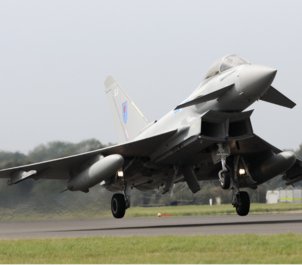
British air force "Typhoon" departing the Coningsby base


 19 March - A "coalition of the willing" is rapidly forming to strike back at any military advances of the Ghaddafi regime against the rebels and Libyan civilians. Ten nations already are ready to attack.

An immediate attack on pro-Ghaddafi forces after this night's UN Security Council resolution had been carefully planned, with many Arab and Western nations putting military vessels and aircrafts to the disposition of the operations.

So far, the US, UK, France, Spain, Belgium, Denmark, Italy, Malta, Qatar and another unnamed Arab country are prepared to participate in a strike against Colonel Ghaddafi's troops. The unnamed country is widely believed to be the United Arab Emirates.

The "coalition of the willing" originally had planned to strike against Mr Ghaddafi's troops already this afternoon, Western military sources indicate. However, the Libyan regime's unexpected unilateral announcement of a ceasefire delayed the strike. Now, an attack probably will come at the first documented break of this ceasefire.

The presence of allied military forces close to Libya is already impressing, documenting that a massive attack could come within hours or even minutes after the order is given.

The US military has already placed two squadrons with a total of 40 F-16 combat aircrafts in Aviano, Italy, ready for attack. Off the Libyan coast, the Americans have the helicopter carrier 'USS Kearsage', three destroyers, an amphibian landing ship and a nuclear-powered submarine - all heavily armed with missiles.

According to US military sources, even more powerful arms are underway towards the Mediterranean. This includes the new F-22 stealth aircrafts "Raptor", drones and the aircraft carrier 'USS Enterprise'.

The French armed forces are prepared on their military bases along the Mediterranean coast and the island of Corsica. The aircraft carrier 'Charles de Gaulle', carrying 35 air fighters, is already stationed close to Libya.

The British military has two frigates close to Libya. In addition, a large number of combat helicopters,

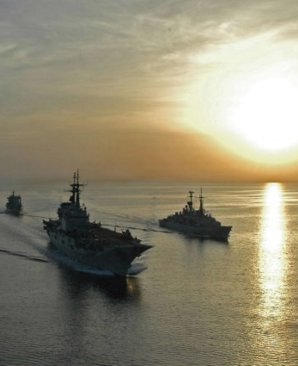
Italian warships approaching the Libyan coast

Italian warships approaching the Libyan coast


reconnaissance aircrafts, jets and bombers are ready for combat at a military base in Malta. Further military equipment, including Tornado and Typhoon fighter jets, is moved from the UK towards Malta, Italy and possibly Greece.

Spain has offered to send several combat aircrafts and marine vessels to assist in the operation. Further, Spanish military airports have been opened for the operation.

The government of Belgium today announced it would contribute with six F-16 combat aircrafts. Also Denmark announced it would send six F-16 fighters "to implement the no-fly zone." It is still unsure where the Belgian and Danish fighters will be stationed.

Italy and Malta, Libya's nearest European neighbours, so far have not officially committed military staff or equipment to an attack on Ghaddafi forces. However, both Mediterranean nations have opened their air bases and ports to the coalition, and air attacks on Libya will most likely take off from Malta and Italy.

The only Arab nation to officially announce its participation in the anti-Ghaddafi operation so far is Qatar. Another Arab nation - presumably the Emirates - is together with Qatar to play a vital role in monitoring the no-fly zone over Libya.

Further countries are indicating their willingness to assist in the military operations against the Ghaddafi regime. Greece and Cyprus may soon open their ports and military airports for operations against Libya. Norway and the Netherlands have indicated they may send combat aircrafts. Lithuania has offered a military transport plane. Sweden says it will offer help if receiving a NATO request.

Meanwhile, Libya's nearest neighbours are carefully avoiding active participation. Tunisia is not participating in the operation. Egypt also abstains, but is however providing the Benghazi-based rebels with arms and other supplies.

Germany have said "nein" to the attack for the risks and consequences.

Ghaddafi thanks Germany, Russia and China

Ghaddafi thanks Germany, Russia and China

Libyan leader Moammar Ghaddafi on state TV, reading from a law book

Colonel Moammar Ghaddafi on Libyan state TV

© Libya state TV

17 March - Colonel Ghaddafi today in an interview thanked the governments of Germany, Russia and China for opposing a no-fly zone over Libya, promising new oil contracts.

The G8 Foreign Minister meeting in Paris today, uniting the world's leading economies, failed to address the situation in Libya, where Colonel Ghaddafi is bombing his own people and committing war crimes on a daily basis, according to leaders from the same countries.

Following pressure from the Libyan protesters and the Arab League, France and Britain favoured a no-fly zone over Libya and the use of military power to implement it. A no-fly zone would have made the current advance of pro-Ghaddafi troops eastwards towards Benghazi, the rebel "capital", difficult.

France's Foreign Minister Alain Juppé said he had tried to convince other world leaders to agree to the use of military force to stop the Ghaddafi advance against the popular revolution. But with no result.

"If we had used military force last week to neutralise some airstrips and the several dozen planes that they have, perhaps the reversal taking place to the detriment of the opposition would not have happened," Minister Juppé stated. But that is the past. ... We have perhaps missed a chance to restore the balance."

Most other large powers, including the US, had been sceptical on a no-fly zone over Libya, fearing it could drag the countries implementing it into a wider war in North Africa. But also the US was open to accept a proposed no-fly zone, without presenting a veto in the UN Security Council.

Security Council members Germany, Russia and China - the two latter being veto holders - however strongly objected any military intervention in Libya, including a no-fly zone. The G8 meet

La canciller alemana Angela Merkel

German chancellor Angela Merkel is praised by the Ghaddafi regime

© Bundesregierung

ing therefore made no statement at all on how to treat the situation in Libya.

Colonel Ghaddafi in several interviews today praised the countries opposing military action, promising them future oil and other business deals in Libya. To the European broadcaster 'RTL', the Libyan dictator said he did not trust Western countries anymore.

As a consequence, future oil and business deals would go to Russia, India and China. But "the Germans have taken a very good position towards us, different from many other important Western countries," he told 'RTL'. Germany would therefore be considered in future business deals. Also, Mr Ghaddafi said, "Germany should have a permanent seat in the UN Security Council, not France."

German Chancellor Angela Merkel has not reacted to the hailing from the Libyan dictator. However, German media close to the Berlin government have described the situation as "very embarrassing" for Ms Merkel, possibly forcing her to take a tougher stance on Libya.

Also in the 'RTL' interview, Colonel Ghaddafi said that he was saddened by the position of French President Nicolas Sarkozy. "He is a friend of mine, but I think he has become a mental case," said the eccentric Libyan dictator, claiming he had sources among President Sarkozy's staff saying the French leader was mentally ill.

In another interview today, Colonel Ghaddafi said he and the Libyan army would "join Al Qaeda" if there would be a Western attack on the country. The Ghaddafi regime also on a daily basis accused the rebels in eastern Libya of being attached to Al Qaeda.

In Libya, Gaddafi’s forces mount heavy assault on strategic town.

In Libya, Gaddafi’s forces mount heavy assault on strategic town


AJDABIYA, Libya — Forces loyal to Libyan leader Moammar Gaddafi stormed into this strategic eastern city on Tuesday, deploying artillery, tanks and rockets to pummel rebel positions in a major effort to suppress a rebellion that once appeared poised to end Gaddafi’s 41-year-long grip on power.

Gallery: A mass exodus from the fighting in Libya: As fighting continues in Libya, tens of thousands of guest workers from Egypt, Tunisia and other countries are fleeing to escape the violence. The situation is quickly turning into a humanitarian emergency for the border country of Tunisia, which is being overwhelmed with migrant workers.

Hundreds of residents, mostly women and children, fled Ajdabiya with whatever they could carry. By Tuesday night, residents and rebel commanders reported that Gaddafi’s forces had withdrawn to the outskirts of the city, a tactic they have used in previous attacks. Still, it increasingly appeared that Libyan forces could soon be within striking distance of Benghazi, the rebels’ stronghold.

Libyan state television asserted that Ajdabiya had “been cleansed of mercenaries and terrorists linked to the al-Qaeda organization,” referring to the rebels.

The assault on Tuesday was the latest sign that the forces that have fueled the Arab spring over the past few weeks are coming under pressure that might prove insurmountable. In Bahrain, the government has declared a state of emergency and invited Saudi troops to quell unrest. In Yemen, police fired bullets and tear gas at protesters on Sunday, a day after security forces killed seven demonstrators in protests across the country.

In Libya, the rebels are up against a military force that is far superior and have been unable to persuade foreign powers to intervene militarily. On Tuesday, recommendations from France and Britain for a no-fly zone over Libya were rebuffed by foreign ministers from the Group of Eight countries.

French Foreign Minister Alain Juppe lamented that Western powers had “missed an opportunity to shift the balance.”

“If we had used military force last week to neutralize some runways and the several dozen airplanes at Gaddafi’s disposal, maybe the reversal that is happening now to the opposition’s disadvantage would not have taken place,” Juppe told Europe 1 radio.

The seizure of Ajdabiya by Gaddafi’s forces would deliver a severe tactical and psychological blow to the rebel movement and bring Benghazi, 99 miles north of Ajdabiya, within their sights. Ajdabiya sits at the nexus of highways that would allow Gaddafi’s forces to either mount a frontal assault on Benghazi or encircle and place a chokehold on it and other pro-rebel cities along the Mediterranean coast.

There were reports that Gaddafi’s forces had taken control of the road to Benghazi, cutting off the rebels’ primary path of retreat. But Khalid el-Saaya, a spokesman for the rebels’ military council, said that the road was still inside “free Libya” and that the rebels controlled it. He also insisted that the government had not taken Ajdabiya.

On the front lines, rebel fighters increasingly accused the movement’s leadership of not providing them with adequate military equipment or experienced officers to lead them, despite public promises by senior commanders. On Sunday, Abdul Fattah Younis, the head of the rebel armed forces and Gaddafi’s former interior minister, declared that conventional forces, most of them defected soldiers from Gaddafi’s army, were playing a significant combat role.

But they were nowhere to be seen Tuesday on what was perhaps the most pivotal battlefront of the rebellion.

“See the scars on my face. Since the morning, I have been fighting on the front. I am tired,” said Mohammed Gassar, 31, a former water company employee. “Where is the army? We need heavy weapons, we need leadership.”

Others expressed anger at the international community, accusing it of betraying their cause and leaving them to face Gaddafi on their own.

“These politicians are liars. They just talk and talk, but they do nothing,” said Mohammed al-Gunati, 30, a driver who stood behind a machine gun. “Where is America? Where are the Europeans? Even the Arabs, they are all just the same. They keep quiet. They just watch us as we die.”

Minutes later, fighters spotted two reconnaissance planes high in the sky and began to futilely fire their machine guns in the air, wasting scores of bullets.

One fighter looked up and started to pray: “I don’t have help except my God.”

By Tuesday afternoon, with plumes of black smoke rising over the desert from artillery and rockets, convoys of rebel vehicles fled from the front lines, along with ambulances and cars filled with civilians. “I could see them with my own eyes,” said Sherif Layas, 34, a marketing manager-turned-rebel fighter. “They have a big force coming.”

As the bombardment intensified and neared the western edge of the city, some fighters vowed to mount a last stand against Gaddafi’s forces, while others cursed in frustration at their inability to fight their enemy’s superior firepower and military capabilities.

“We can’t use our guns. They have tanks. We have nothing,” screamed a fighter atop a machine-gun-mounted pickup moments after they reached the outskirts of the city. “All we can do is pray to Allah.”

On Tuesday, Libyan government forces took control of two more rebel-held towns. State television showed pictures of Gaddafi’s fighters holding a victory rally in the center of Zuwarah, a small town 76 miles west of Tripoli, and footage of damage caused to vehicles in Brega, west of Benghazi, which had changed hands several times in the past few days.

In the capital, Tripoli, Gaddafi supporters honked their horns, fired automatic weapons into the air and set off fireworks to celebrate government assertions that Ajdabiya had fallen.

In an interview with the Italian newspaper Il Giornale, Gaddafi warned the rebels to “surrender or run away.” He said he was not like the Tunisian or Egyptian leaders, who fell after anti-government demonstrations. “I’m very different from them,” he said. “People are on my side and give me strength.”

Some rebel fighters declared that they would not give up Ajdabiya without a fierce battle, which could involve street-by-street, house-by-house combat.“We can’t fight Gaddafi because of his airplanes and heavy weapons. But if his forces enter this city, we’ll show how we can fight,” said Ali Abdullah Al-Shahi, 30, a driver-turned-guerilla fighter. “We will battle them in the streets until the very last drop of our blood.”

Israel intercepta un buque con armamento con destino a Gaza‏

Israel intercepta un buque con armamento con destino a Gaza‏

9:30 am/16/03/2.011


Israel intercepta un buque con armamento con destino a Gaza

En el día de la fecha, la armada israelí interceptó el buque de carga "Victoria" conteniendo distintos tipos de armamento en su interior, que se encontraba frente a la costa de Israel, en las aguas abiertas del Mar Mediterráneo. El abordaje se basó en informes que daban cuenta de que el buque llevaba en su interior armas destinadas a las organizaciones terroristas en la Franja de Gaza.

El contrabando ilegal de armas a la Franja de Gaza representa una amenaza directa e inminente para la seguridad del Estado de Israel y sus ciudadanos, que se encuentran bajo el ataque incesante de cohetes y fuego de mortero procedente de Gaza.

Cabe señalar que en el manifiesto de carga del buque Victoria no se reveló la existencia de armas en la embarcación, en violación de las disposiciones pertinentes de los convenios de la Organización Marítima Internacional y las normativas profesionales.

Este episodio constituye un caso más entre otros ya ocurridos donde la navegación comercial transnacional cae víctima de los Estados que patrocinan el terrorismo, como Irán, Siria y el Líbano, con el fin de facilitar el contrabando de armas a organizaciones terroristas en la Franja de Gaza.

Se adjuntan imágenes y link de acceso a fotos adicionales: http://www.flickr.com/photos/idfonline/sets/72157626272235856/show

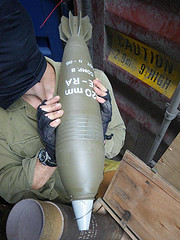
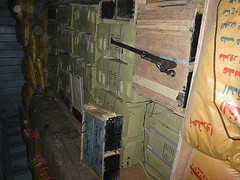
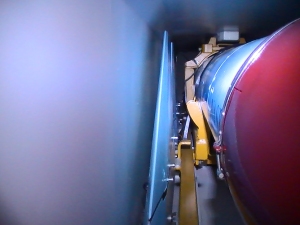
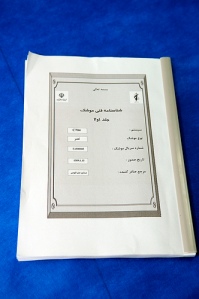
Esta de una de las armas (un missil anti-buques C C04) incautadas en el barco esc Israele001 5529319827_11876ecc2d_o


5529411893_57fcc952bb 1


2 2


3

Israel intercepta un buque con armamento con destino a Gaza‏

Israel intercepta un buque con armamento con destino a Gaza‏

9:30 am/16/03/2.011

                                        Israel intercepta un buque con armamento con destino a Gaza

                                           Israel intercepta un buque con armamento con destino a Gaza.


Israel intercepta un buque con armamento con destino a Gaza

En el día de la fecha, la armada israelí interceptó el buque de carga "Victoria" conteniendo distintos tipos de armamento en su interior, que se encontraba frente a la costa de Israel, en las aguas abiertas del Mar Mediterráneo. El abordaje se basó en informes que daban cuenta de que el buque llevaba en su interior armas destinadas a las organizaciones terroristas en la Franja de Gaza.

El contrabando ilegal de armas a la Franja de Gaza representa una amenaza directa e inminente para la seguridad del Estado de Israel y sus ciudadanos, que se encuentran bajo el ataque incesante de cohetes y fuego de mortero procedente de Gaza.

Cabe señalar que en el manifiesto de carga del buque Victoria no se reveló la existencia de armas en la embarcación, en violación de las disposiciones pertinentes de los convenios de la Organización Marítima Internacional y las normativas profesionales.

Este episodio constituye un caso más entre otros ya ocurridos donde la navegación comercial transnacional cae víctima de los Estados que patrocinan el terrorismo, como Irán, Siria y el Líbano, con el fin de facilitar el contrabando de armas a organizaciones terroristas en la Franja de Gaza.

Se adjuntan imágenes y link de acceso a fotos adicionales: http://www.flickr.com/photos/idfonline/sets/72157626272235856/show

Desde ya quedamos a su entera disposición para cualquier consulta.

Atentamente,

Departamento de Prensa

Embajada de Israel

press@buenosaires.mfa.gov.il

FIN DEL COMUNICADO -------------------------------------------------------

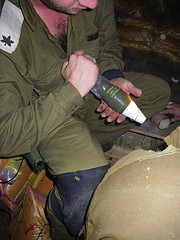
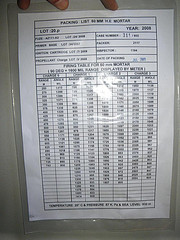
Las imágenes mostradas en el comunicado son las dos granadas de mortero que otros compañeros ya han publicado. En su lugar pongo estas de una de las armas (un missil anti-buques C C04) incautadas en el barco

esc Israele001 5529319827_11876ecc2d_o


5529411893_57fcc952bb 1


2 2


3


.

Bahrain: The threat of a cataclysmic.

Bahrain: The threat of a cataclysmic.

Bahrain: The threat of a cataclysmic.


Bahrain is a tiny dot far in the world. It is a land of lies, or banana, or artificial. Is a major U.S. naval base, the V Fleet, but Bahrain is not there for that. Djibouti is not the African or Caribbean Curaçao, whose natures are more dependent policies local geopolitics of its own history. Is an important region of ancient cultures, which currently dominates the Shi'a. But also:


Bahrain may be the beginning of a war of cataclysmic proportions.


We will try to explain.


When I was a child collect stamps (seals) of Bahrain, formerly known simply as its main city, Manama, because that was part of the UAE. When divided into the 70, the new Bahrain inherited from the UAE and Saudi Arabia, a dominant caste: Although 70% of the population is Shiite, like the Iranians, the Bahraini government, armed forces, ministries all important management positions in oil production, refining, alumina processing, tourism ... are controlled by Sunnis.


Shiites simply can not come to power. Only have access to Parliament. But as in other Muslim countries, a parliament is disabled, the shadow of the real power that resides in the oil revenue and holding the King Hamad bin Issa Al Khalifa. Descendant of the Sunni Al Khalifa UAE.


The Shiites have made clear for years: do not want to be dominated by Sunnis. And they are not alone. The Iranians have called for them not only their brotherhood with the Shiites, but the ownership of the archipelago of Bahrain. Iran's territorial claim has been discussed and settled several times, like a Pandora's box, always comes back.


Unlike the Shiite Hezbollah in Lebanon, or Iraq's Shi'ite militancy, the Shia of Bahrain calling for democracy. Such a democracy would allow them to control a country in which the majority and, of course, would undermine and arrinconaría Sunni power. This democracy was offered 8 years ago by the same King Hamad but nothing has happened since.


The point is that the Sunnis are not alone. The Saudis would not hesitate to intervene in Bahrain if the King is the situation out of hand. At least, that's the fear that the BBC transmits the analysis of Gala Riani (http://www.bbc.co.uk/news/world-middle-east-12471243).


Another trigger: Bahrain is one of the countries with the highest human development in the world, and with a high level of satisfaction with the functioning of their societal networks (http://hdr.undp.org/en/media/HDR_2010_ES_Complete.pdf). But make no mistake: no crime or civil strife ever born of poverty pure and simple. Not born of economic necessity, but the perception of inequality. The perception of inequality is associated with the trigger for excellence in every conflict: frustration [1].


Another trigger: To avoid the presence of Shiites in the police, their police Bahrain imported from other Sunni towns such as Yemen, Syria and Pakistan. This made them a sort of mercenary, soon involved with social dissent. The Bahraini on the street are repressed, injured and killed by foreigners.


Other: The repression does not look decrease but increase. At present some Shiite neighborhoods are flown by helicopters, and gunfire are heard repeatedly during the night. Repression is larger than that recognized international chambers.


One mitigating factor: Protests still have a liberal character produced by the convening youth and social networking. Bahraini Shiites share the road with the Sunnis who are also out of power. Both seem to understand that the benefits of a welfare state must include all Bahraini alike.


So these are the scenarios, the simplest, but at the moment, the most compelling:


Scenario 1: The Rise decides to promote changes that mean the transfer of power to the Shiite civil society. This causes annoyance in the UAE and Saudi Arabia. Internal balances are guaranteed to significant costs in their natural allies. Though the King to maintain its mandate (an increasingly unlikely scenario, but not impossible), the U.S. find that their fleet is stationed in a country with historical, ethnic and religious ties with Iran. The volatility is too dangerous for the alliance between the U.S. and Sunni kings.


This scenario would create a chain of events that must be analyzed at the time.


Scenario 2: The Rise yields to pressure from its allies and speed enforcement, despite all this raises fears in Western investors. The U.S. call for democracy, but they know that even a transition to Egypt would find it convenient. To the frustration of civil society, women dressed in black and bloody, Iran intervenes and offers political support. Bahrain Iran serves to channel domestic discontent by the urgency of solidarity intraethnic, atiimperialista supremacist. Sunni Kings take on the appearance of Israel, as appropriate macabre ghosts appear when the Arab dictatorships are weakened (a phenomenon that in some Arab commentators called "Israeli opium"). And the possession of the archipelago moved becomes the most important geopolitical XXI century ...


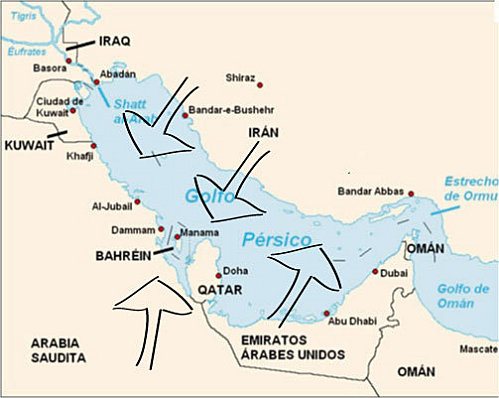
Consider the map:


Persian Gulf-to-Bahrein.jpg


The largest oilfield in the world is one that extends from the River Indus to the Euphrates, and sums the proximity of the Iberian Peninsula. All that oil passes through the Persian Gulf.


Check this step is essential for the balance of the entire global system. The maritime boundary in the Gulf and the Strait of Hormuz between Iran and the Arabian Peninsula is an extremely precarious balance that defines the nature of conflict in the Middle East, from Iraq to Palestine.


This very gently confronted border separates the economic system of two mortal enemies who have sought to annihilate since the overthrow of Mossadeq in 1953, the invasion of Iraq and the Israeli bombing of southern Lebanon, 56 years later.


The mere presence of Iran in Bahrain, helping unconditionally frustrated civil society, in the center of Sunni power in the middle of the oilfields in the world, on the island where the V Fleet stationed U.S., the U.S. would Sunni kings and the duty to stimulate extraordinary measures from negotiating with Bahraini movement (even without structure, making arrangements to have little strength in the political field) to its simple suffocation.


In addition, containment of this problem any longer, cause the radicalization of social, religious and political of the whole region of Shiite origin, multifaceted, and that have been nesting among the very many Shiites in Iraq, southern Lebanon Southern Saudi Arabia and Kuwait itself.


The sequence of these processes is not easily predictable, but the scenario of violence antisunita, anti-Christian and anti-Jewish history has many immediate. Antichiíta violence also has been brutal and often state, just as there are important precedents in the history of Islam since the time of the Ismailis in the tenth century and beyond [2].


Bahrain has everything to turn the world into a cataclysmic.


Egypt would not be more than a baby with the potential for conflict scenarios that are played in the small Bahrain.


[1] So Virgin Islands, Caribbean territory free of U.S. tax paradise for the purchase and sale of gold and where there is poor, however, the region with more crime per capita. Therefore there was more violence in the Balkans than in Burkina Faso.


[2] Only by remembering an anecdote: it was exactly in Bahrain radicals in 900 Ismaili take by force the black stone in Mecca, pilgrims massacred in their time of pilgrimage and loot Medina, and not returned as pillaged until 50 years later. When the stone finally returned to Mecca, is split into 7 pieces, until today (http://www.philtar.ac.uk/encyclopedia/islam/shia/qarma.html.).

The Iranians are heirs of Ayatollah mystical Ismailism spread throughout the Arab world in the following centuries.