Blogia

MATEO MATHAUS: THE WORLD NOW

African Union praises Ghaddafi "reform offer".

African Union praises Ghaddafi "reform offer"

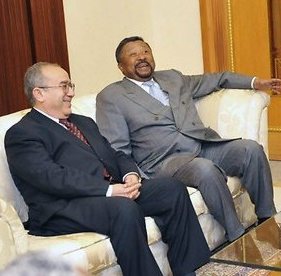
AU Commissioner for Peace and Security Ramtane Lamamra and African Commission chief Jean Ping

AU Commissioner for Peace and Security Ramtane Lamamra (l) and African Commission chief Jean Ping (r)

© US govt

14 March - The African Union (AU) has come out in support of Libya's Ghaddafi regime, opposing any military action against the regime and praising its "readiness" for "political reforms."

The surprise move comes after an ongoing meeting of the AU's Peace and Security Council, which is discussing the situation in Côte d'Ivoire and Libya. Libyan Foreign Minister Moussa Koussa was present in the meeting, as Libya is a current member of the Council.

Ramtane Lamamra, the AU Commissioner for Peace and Security, this morning announced the results of the meeting. While there were some vague statements over the AU's "deep concern" over the situation in Libya and a condemnation of the "disproportionate use of force," the resolution was tainted by Foreign Minister Koussa's defence of the Ghaddafi regime.

The statement for the most read out like a speech by the Ghaddafi family. The AU, it was learnt, was committed to the "respect of the unity and territorial integrity of Libya," following allegations by the Ghaddafi regime that the rebels were "separatists". No other source has made such allegations.

Equally in total support of the Ghaddafi regime and contrary to the expressed desire of the rebel government in Benghazi, the AU said it was firm in "its rejection

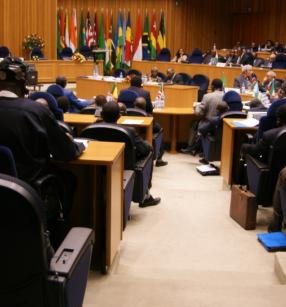
AU Peace and Security Council meeting 10 March 2011

AU Peace and Security Council meeting 10 March 2011


of any form of foreign military intervention." The strong statement could only be interpreted as an AU rejection of a no-fly zone in Libya.

Finally, in a passage that would shock most Libyans and in direct reference to Saif al-Islam Ghaddafi, the AU Peace and Security Council says it takes "note of the readiness of the government of Libya to engage in the path of political reforms." In continuation, Mr Lamamara expressed "the solidarity of the AU with Libya."

The statement cannot be read in any other way than an AU support for the Ghaddafi regime staying in power while some "democracy, political reforms" are decreed by the Ghaddafi family with the population at gunshot.

The resolution comes in what analysts have called a "shameful year" for the African Union, following its election of Teodoro Obiang Nguema as its chairman earlier this year. Mr Obiang since 1979 is the President of Equatorial Guinea and considered one of the world's worst dictators. At home, he has prohibited any media reports about the North African revolutions.

President Obiang this morning arri

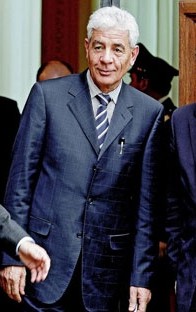
Libya Foreign Minister Moussa Koussa

Libya Foreign Minister Moussa Koussa


ved AU headquarters in Addis Ababa, shortly after the statement on Libya was made. It is believed that the AU chairman will use his stay in Addis Ababa to coordinate an AU campaign against foreign intervention in Libya, and in particular the establishment of a no-fly zone.

The AU resolution indeed could have an impact on developments in Libya. The UN Security Council currently is split on a possible no-fly zone over Libya, which would imply a limited military intervention. France and Britain have strongly promoted such an intervention, with other Western countries somewhat cooler but not completely against the idea.

Russia and China, two veto powers at the Council, have for now turned down the proposal, however saying that a strong desire for a no-fly zone by the Arab League, European Union and African Union would mean that China and Russia would not veto such a decision.

The Arab League seems favouring a no-fly zone. But the AU, under direct influence of the Libyan Foreign Minister, now may have put an end to international efforts to implement a UN-led no-fly zone.

Iran, Syria continue to destabilize the region a U.S. terror report says

Iran, Syria continue to destabilize the region a U.S. terror report says

Iran, Syria continue to destabilize the region a U.S. terror report says

A report released by the U.S. State Department on terror activity in the Middle East and North Africa in 2009, says Iran and Syria continue to play destabilizing roles in the region.

"Iran continued its financial, material, and logistical support for Hezbollah, Hamas, and other terrorist and militant groups throughout the Middle East and Central Asia" along with Syria who "continued to provide safe-haven as well as political and other support to Hamas, Palestinian Islamic Jihad, the Popular Front for the Liberation of Palestine-General Command, and a number of other designated Palestinian terrorist groups.

In the Mideast-North Africa Overview report, the State Department mentioned the Iraqi government’s "significant strides in mitigating the threat posed by Sunni militant organizations, including Al-Qaida in Iraq." Iraq was able to achieve a "sharp reduction in the number of security incidents...including a decrease in civilian causalities, enemy attacks, and improvised explosive devices (IEDs) attacks in the last quarter of the year" explained the report. Yet, "Iran and Syria, both state sponsors of terrorism, continued to play destabilizing roles in the region" said the US.


On Israel, the report states, "while Israel remained vulnerable to rocket and mortar attacks launched from inside Gaza, it continued to be largely successful in confronting the threat posed by suicide bombers and rockets from the Palestinian territories." The transfer of some control of the West Bank to the Palestinian Authority is also cited in the report, which was allowed by the Israeli government as security improved in the area.

"Hezbollah continued its acquisition of smuggled arms, primarily via Iran and Syria, in violation of UN resolution 1701," said the Overview report about Lebanon’s terror activities. "Sporadic rocket fire from southern Lebanon into Israel did occur throughout the year, with select Sunni militant groups responsible for most of the attacks."

The version of the

The version of the

Mateo Mathaus Mateo Mathaus
The "others".

Saudi Arabia: Free Cleric Who Backs Change
Three Petitions for Constitutional Monarchy Attract Almost 2,000 Signatures
February 28, 2011
...


The Saudi government should listen to the demands of its citizens, not seek to stifle them. Calling for equal rights for an oppressed religious minority should not be a reason for harassment and arrest.


Christoph Wilcke, senior Middle East researcher at Human Rights Watch

(Munich) - Saudi authorities should immediately release a Shia cleric apparently arrested on February 27, 2011, for calling for a constitutional monarchy and equal rights for Shia in his Friday sermon, Human Rights Watch said today.

The domestic intelligence agency, the General Directorate for Investigations, summoned Shaikh Tawfiq al-‘Amir to Hofuf in the al-Ahsa district of the Eastern Province and then arrested him, according to family members. No official reason was given for his arrest.

"The Saudi government should listen to the demands of its citizens, not seek to stifle them," said Christoph Wilcke, senior Middle East researcher at Human Rights Watch. "Calling for equal rights for an oppressed religious minority should not be a reason for harassment and arrest."

The arrest comes amid mounting pressure for political reform in Saudi Arabia as pro-democracy demonstrations sweep through the Middle East. A total of close to 2,000 Saudis have put their names to three separate petitions calling for a constitutional monarchy. The government so far has not arrested any of those who signed the petitions, which were made public last week.

However, the authorities have reportedly blocked access within the kingdom to the website http://www.dawlaty.com/ ("My Nation"), where one of the petitions appeared.

On February 16 the authorities arrested a group of people who had announced their intention to found the country’s first political party, the Islamic Nation Party (Hizb al-Umma al-Islami).

One petition, the so-called "youth" petition, signed by more than 40 people and initiated by young journalists, was made public on the day of King Abdullah Bin Abdul-Aziz’s return to Saudi Arabia on February 23, following a three-month absence for medical treatment. The petition called for an elected parliament, a separation of powers, a review of the Basic Law, and a basic administrative law, among other demands.

A second petition, "Toward a State of Rights and Institutions, " calls for an elected parliament with full legislative powers, a separation of the offices of king and prime minister, and the release of political prisoners, among other demands. Over 1,550 people have signed it, including some high-profile Islamist clerics who had vehemently opposed King Abdullah’s promotion of women in the public sphere.

The third and latest petition, released on February 26 under the title, "National Declaration for Reform," was signed by more than 330 people, including leading liberal reformers, and includes the most detailed reform program. It calls for elections to decision-making bodies on the local, provincial, and national levels, as well as a review of the Basic Law to include rights protections, true separation of powers, and the release of political prisoners, among other demands.

Various internet sites have called for a Saudi "Day of Rage" on March 11 and March 20, with nationwide demonstrations. Public protests are banned by the authorities in Saudi Arabia. Publicly identifying with demands for political reform remains risky in Saudi Arabia and can lead to harassment or detention.

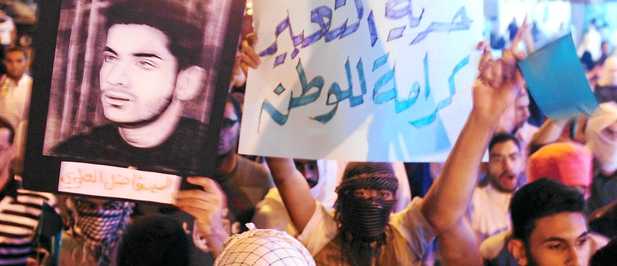
On February 25 there were peaceful marches in the Shia towns of Safwa and Qatif in the Eastern Province. Residents of al-‘Awwamiyya, an adjacent small Shia town, held a silent vigil the same day calling for the release of the so-called "Forgotten Prisoners," nine Shia Saudis detained without charge or trial for over 12 years over unproven allegations of their involvement in the 1996 attacks on US military targets in Khobar that killed 19 Americans.

"The Saudi government risks being overtaken by history," Wilcke said. "Throughout the region citizens are demanding their rights. Persisting with outdated authoritarian ways is a recipe for instability."
Ver más
Hace 18 minutos · Me gustaYa no me gusta

Adi Ben-Israel The "Day of Rage" in Saudi Arabia was organized by the Iranians, as they did in Bahrain, trying to capitalize on the grievances of the Shi’a sizable minority. Bad as the Saudis are, the situation will be infinitely worse with the Iranians in control

Saudi Arabian security forces quell 'day of rage' protests

Saudi Arabian security forces quell day of rage protests.

Saudi Arabian security forces quell 'day of rage' protests

Heavy police presence and official warnings deter protests in Riyadh and result in small demonstrations in eastern provinces

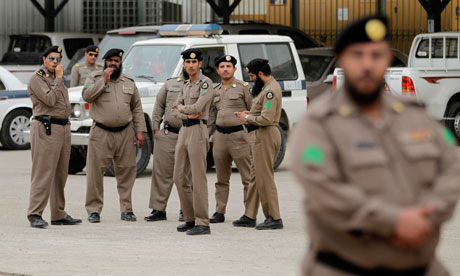
    Saudi Saudi policemen form a check point near the site where a demonstration was expected to take place in Riyadh on Friday. Photograph: Hassan Ammar/AP

    Saudi security forces came out in strength in Riyadh on a "day of rage" organised by pro-democracy campaigners who managed only small demonstrations in the eastern provinces.

    Expectations that the unrest sweeping the Arab world in the last few weeks would spread to its most conservative kingdom appeared to have been dashed by pre-emptive security measures and stern official warnings against any protests.

    Far larger demonstrations rocked Yemen, where tens of thousands of pro and anti-government protesters took to the streets as President Ali Abdullah Saleh struggled to maintain his grip.

    Clashes broke out in the nearby island state of Bahrain, where Shia protesters were confronted by riot police guarding the royal court in Manama. Demonstrations were also held in Kuwait by stateless people demanding their rights.

    The calm in the Saudi capital may have been achieved partly by an incident on Thursday in the eastern city of al-Qatif, where police shot and wounded at least two protesters. Unconfirmed reports described trouble there again.

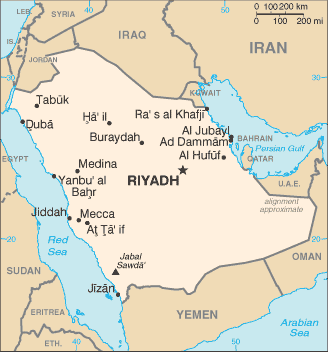
    Protesters rallied in Hofuf, close to the eastern Ghawar oil field and major refinery installations. The city has seen scattered protests by Shias who complain of discrimination by the Sunni majority.

    Saudi sources also reported marches involving hundreds of people in al-Ahsa and Awwamiya near al-Qatif.

    Security in Riyadh was high-profile and intense, with helicopters hovering overhead and police checks on cars and individuals heading for mosques, where protests were expected after prayers.

    "Police cruisers were given orders to pull over any car," tweeted Mohammed al-Qahtani, president of the Saudi Civil and Political Rights Association. "I saw several cars being searched by officers, and they checked IDs."

    Disappointed activists counted more policemen and journalists than demonstrators. "Where were all these policemen and helicopters when Jeddah was drowning?" asked one Saudi — a sardonic reference to the floods that devastated the Red Sea coastal city twice in the last two years and fuelled anger and resentment at government incompetence.

    Last week Saudi Arabia banned public protests following demonstrations by Shia groups in the eastern areas during which 22 people were arrested and later freed.

    Activists had used a Facebook page to call for protests but many reformist Saudis said they did not know who the organisers were and raised concerns of a possible provocation by the secret police in a country where demonstrations are rare.

    Characteristically, the government mobilised religious leaders to speak out. "Islam strictly prohibits protests in the kingdom because the ruler here rules by God's will," Sheikh Abdel Aziz Alasheikh told worshippers in Riyadh's central mosque. Leading scholars had earlier issued a fatwa banning protests.

    Rumours were rife in Riyadh, with anonymous text messages carrying dire warnings of huge fines, loss of nationality and expulsion from the country. "The messages are not coming from official channels, and are obviously scare tactics employed to discourage large numbers from showing up and adding to the tensions," one resident told the Guardian.

    Last month King Abdullah, who is 87, sought to defuse opposition demands for change by unveiling an unprecedented package worth about bn (£23bn) to pay for unemployment benefits, education and housing subsidies the day after he returned from three months of medical treatment in the US and Morocco.

    But critics said he was resorting to a familiar tactic of throwing money at a problem and not addressing its root causes — a lack of significant political reform.

    Since then the streets of Riyadh have been festooned with flags and large green posters of a smiling King Abdullah welcoming him home.

    "If you are well, we are all well," one read. "Welcome king of humanity," said another. Before a soccer match on Thursday, a message was circulated among fans urging them not to wear their team's colours but the green of the Saudi national flag.

    For some Middle East analysts the extent of unrest in Saudi Arabia has been seen as a possible indicator of whether the popular unrest across the region will begin to ebb or continue to intensify. But a low turnout in protests may lead the king and his advisers to conclude that internal pressure for reform can be ignored.

    A special correspondent in Riyadh contributed to this report
Saudi Arabia: One country with many risks.

Saudi Arabia: One country with many risks.

SAFETY AND SECURITY: In the most recent Travel Warning for Saudi Arabia, the Department of State urges U.S. citizens to consider carefully the risks of traveling to Saudi Arabia. The last major terrorist attack directed against the civilian population was an attack against French nationals in 2007. Significant enhancements in the capacity and capability of Saudi security and intelligence forces have greatly improved the security environment. Although much improved, the changes remain fragile and reversible.

The Department of State has authorized the return of all family members to the U.S. Consulate General in Dhahran and the return of adult family members and non-school-age children to the U.S. Embassy in Riyadh. The U.S. Consulate General in Jeddah remains an unaccompanied post.

While these changes reflect the continued improvement in the security climate in Saudi Arabia, particularly in the Eastern Province and Riyadh, it is important to note that there remains an ongoing security threat due to the continued presence of terrorist groups, some affiliated with al Qaida, who may target Western interests, housing compounds, hotels, shopping areas and other facilities where Westerners congregate. These terrorist groups may employ a wide variety of tactics and also may target Saudi Government facilities and economic/commercial targets within the Kingdom.

American citizens who choose to visit Saudi Arabia are strongly urged to avoid staying in hotels or housing compounds that do not apply stringent security measures, and also are advised to be aware of their surroundings when visiting commercial establishments frequented by Westerners. American citizens also are advised to keep a low profile, vary times and routes of travel, exercise caution while driving, entering or exiting vehicles, and ensure that travel documents and visas are current and valid.

From time to time, the U.S. Embassy and Consulates in Saudi Arabia may restrict travel of official Americans or suspend public services for security reasons. Whenever threat information is specific, credible, and non-counterable, this threat information will be made available to the American public. In those instances, the Embassy and Consulates will keep the local American citizen community apprised through the Warden system and make every effort to provide emergency services to U.S. citizens. Warden messages for Saudi Arabia are available at the U.S. Embassy Riyadh website.

For the latest security information, U.S. citizens traveling abroad should regularly monitor the Department of State’s Bureau of Consular Affairs’ website. It contains current Travel Warnings and Travel Alerts, including the Travel Warning for Saudi Arabia, as well as the Worldwide Caution.

Up-to-date information on safety and security can also be obtained by calling 1-888-407-4747 toll-free within the United States and Canada or, outside the United States and Canada by calling a regular toll line, 1-202-501-4444. These numbers are available from 8:00 a.m. to 8:00 p.m. Eastern Time, Monday through Friday (except U.S. federal holidays).

The Department of State urges American citizens to take responsibility for their own personal security while traveling overseas. For general information about appropriate measures travelers can take to protect themselves in an overseas environment, see the Department of State’s extensive tips and advice on traveling safely abroad.

State intervention and corruption are killing Africa, focus of new riots.

State intervention and corruption are killing Africa focus of new riots.


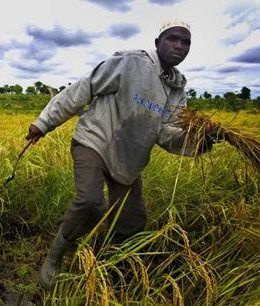
Rice cultivator in Bagré, Burkina Faso

Rice cultivator in Bagré, Burkina Faso


9 March - A new study into current land lease and sale contracts in Africa shows how local land users are mostly not even consulted in the process. When consulted, they are often tricked.

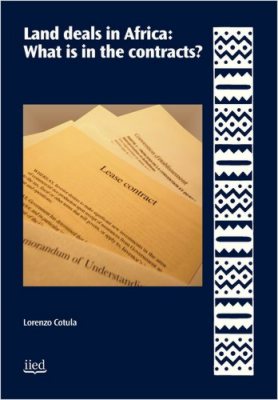
Over the past few years, agribusiness, investment funds and government agencies have been acquiring long-term rights over large areas of land in Africa. A new 56-page report from the International Institute for Environment and Development (IIED) looks at the contractual terms of 12 land deals all over Africa.

Land contracts are typically signed between two parties, mostly not including local land users. In most of the deals reviewed by IIED, land was allocated by a central government agency. While in many cases government responded to requests for land from outside investors, in others such as Mali it reportedly played a proactive role in seeking out investors.

"The central role of the state in land allocations reflects trends in national law," according to author Lorenzo Cotula. In most African countries, land is owned by the state. For instance, land is nationalised in Ethiopia, where private land ownership is outlawed and only long-term land leases may be acquired.

Countries such as Mali and Cameroon do allow private land ownership, which may be acquired through land registration procedures. "But even in these cases, costly and cumbersome procedures mean that very few rural people hold ownership rights," according to Mr Cotula.

Where customary tenure systems are perceived as legitimate, local resource users feel they have sufficient tenure security under these systems without needing to seek formal title. In Cameroon, for example, only about 3 percent of the land has been formally registered and is held under private ownership, mainly by urban elites such as politicians and businessmen.

"As in many jurisdictions all untitled land is owned by the state, governments end up controlling much rural land even where the statute books devote numerous provisions to regulating private ownership," according to the report.

Although the land is formally owned by the state, there are of course local people - farmers, herders, hunter-gatherers - that often used it for generations and see the land as theirs.

Mr Cotula warns that "there are widespread perceptions in government and investor circles that much land in Africa is empty or underutilised," based on statistical databases and satellite imagery. "But much of this data goes back to the mid-1990s and does not fully factor in intervening changes such as land degradation; and satellite-based studies seriously underestimate the land areas used by shifting c

IIED report on the African land grab

IIED report on the African land grab

ultivation and pastoralism," he adds.

"In practice, very large land deals are bound to involve some squeeze on existing rights, even where the intensity of current resource use is low. This is particularly so where agricultural investments target higher-value lands," the IIED report says.

"The problem is that the customary rights of local people may have no or little recognition under national law. This circumstance is historically rooted in the colonial experience," Mr Cotula explains.

In countries like Cameroon and Ethiopia, where customary rights are not legally recognised, and even in countries like Mali, where customary land rights enjoy some protection, national law considers most rural people as having qualified use rights on state-owned land. As a result, the government has sole legal authority to sign off transactions.

Governments and investors may still undertake local consultations, "but in many publicly reported deals local people are not party to negotiations affecting their land, have little say in decision-making and are therefore vulnerable to dispossession," the study found.

Also, negotiations tend to happen behind closed doors and the contracts are rarely publicly available. "Lack of transparency and public scrutiny creates the breeding ground for corruption and deals that do not maximise the public interest," Mr Cotula warns. Liberia was an example of better practice, as land contracts are ratified by parliament and posted online.

But the IIED study also looks into examples where lands are mostly in the hands of local land users and contracts typically are made directly between investors and associations of local landholders. Mr Cotula found examples of this in Madagascar - which in 2006 abolished the presumption of state ownership over untitled land - and Senegal and Sudan.

Mr Cotula in these examples noted the very fast negotiation processes over large tracts of lands. "Also, in Africa there are usually limited local capacity to access and analyse information - for example, about the revenues that are likely to be generated by the project - and major asymmetries in negotiating power between investors and local people. As a result, unless local people are properly supported, they are vulnerable to exploitation," he concludes.

The "riots people" will destroy Morrocco like all Magreb.

Calls for new Morocco protests on Sunday

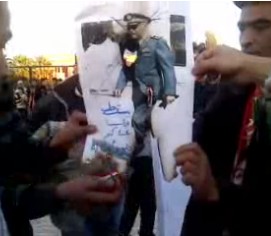
In Berkane, Morocco, pro-democracy protesters burn a photo of gendarme chief Hosni Benslimane

In Berkane, Morocco, pro-democracy protesters burn a photo of gendarme chief Hosni Benslimane

 3 March - Despite a police crackdown on protesters last weekend, the organisers of the pro-democracy protests in Morocco urge to create a new momentum by taking into the streets each Sunday.

After mass demonstrations on Sunday 20 February, the Moroccan pro-democracy protest movement seemed to lose momentum last weekend. To some degree, the calls for protests for both Saturday and Sunday (26 and 27 February) had caused confusion, as an unclear and uncoordinated protest leadership was unable to communicate to Morocco’s many cities when the "big" protest was to be held.

But the loss of momentum also came as consequence of government suppression. While the 20 February protest marches had been allowed, local authorities and police on short notice forbade all protest marches last weekend. Attempts of gathering crowds were brutally dispersed in a large number of cities, except in Rabat, the capital.

But one of the main groups behind the protest movement, the Moroccan human rights association AMDH, already on Saturday last week made an urgent appeal to Moroccans to keep on the protests. "From now on, we will organise protests every Sunday," AMDH leaders announced in Rabat.

But the protest movement in Morocco faces serious communication challenges. Moroccan media, after the 20 February marches that caused six deaths and 140 injured, have been ordered a complete news blackout on any follow-up protests and protest calls. Only the Casablanca-based online media ’Yabiladi’ has dared to break the silence.

Even on an international basis, the Moroccan regime is close to win the propaganda war over the protests. The official version of "looting criminals" causing trouble on 20 February and of a subsequent end to the protest movement has been accepted by most international media as the Moroccan protest movement is doing a poor communications job.

Among exiled Moroccans, however, the debate about new protests is vivid, using social media like Facebook and YouTube to spread the message to Morocco.

Interestingly, the regime has already launched its anti-protest campaign in the same social media, asking the Diaspora to shut up as they don’t know about the large progresses noted back home, thanks to King Mohammed VI. The anti-protest campaigners even dug into the private life of several of the original organisers of the pro

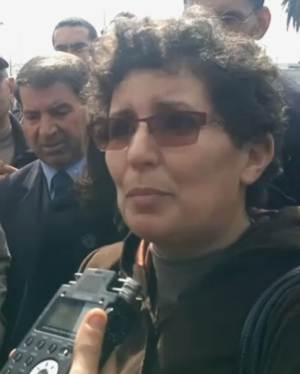
Khadija Riyadi, President of Morocco’s human rights group AMDH

Khadija Riyadi, President of Morocco’s human rights group AMDH, during the 20 February protests in Rabat

test call, publishing discrediting videos, private photos and statements about them.

Meanwhile, sources among the protest movement within Morocco told afrol News about a "climate of fear and intimidation" spreading in the country. Especially in the north of the kingdom, where the gravest confrontations between protesting youths and police forces were noted, had been "scared into silence," the sources added.

But the 20 February movement remains alive and motivated. Especially the AMDH and the Moroccan Forum for Truth and Justice (FMVJ) say they are determined to keep on protesting for more democracy and human rights in the kingdom.

In a letter to Interior Minister Taieb Cherqaoui, the two human rights groups now demand a credible investigation into police violence during the 20 February and following protests. AMDH President Khadija Riyadi herself was beaten and hospitalised by "pro-government thugs" on 20 February in Rabat.

In the letter to Minister Cherqaoui, the human rights groups demand the immediate freeing of the many protesters arrested in Rabat, Kenitra and other Moroccan cities. AMDH and FMVJ threaten to break the ongoing dialogue with the Ministry, which has served the regime to legitimise its claims that progress is being made regarding the human rights situation in Morocco.

But for now, the Interior Ministry remains stubborn in its attempts to repress further protests, not allowing any of the planned marches.

Reports from the Moroccan city of Fez today say that five students have been sentenced to 3 and 4 years of prison for "participating in an unauthorised demonstration and theft and destruction of property and disruption of the public order." Around 10 more students are held by the police in Fez, awaiting trial. Similar trials are being held all over Morocco.

The AMDH meanwhile maintains its calls for protests every Sunday to the keep the protest movement warm. Human rights activists will gather in central Rabat on Sunday 5 March. Exiled Moroccans meanwhile are calling for "a break" in order to regroup, calling for renewed nation-wide protests on Sunday 20 March through a new Facebook campaign.

Axel Weber gives us the reason ..

Axel Weber gives us the reason ..

Axel Weber gives us the reason ..

DUSSELDORF, Germany - bailouts
Greece and Ireland have damaged the foundations of monetary union
Europe, said Monday Bundesbank President Axel Weber.
In a speech to businessmen and academics, Weber said it
essential not to allow the resolutions adopted to maintain
financial stability in the eurozone will become the norm.
"We must strengthen the pillars again, " he said. Highlighted
risk of eurozone countries with high
debt trying to pressure the European Central Bank to keep
rising interest rates, as this could increase the cost
payment of his debt to unsustainable levels, and said he does not want
be subjected to such pressure.

Website: http://www.bundesbank.de