Blogia

MATEO MATHAUS: THE WORLD NOW

Imagine, who have such exquisite taste to live in such opulence?.What does the UN?

Imagine, ¿Quién tendrá tan exquisito gusto para vivir en semejante opulencia?

¿Quizá un billonario americano? ¿O un Príncipe árabe, o Luis XIV de Francia?

Observe bien estos cuadros, luego recorra la página hacia abajo para ver quien es el dueño de esta "exquisita" obra de Arte.


Esta mansión está en Harare y pertenece a:

The President of Zimbabwe - Robert Mugabe -


Mientras su pueblo muere de hambre, sin comida ni asistencia médica.
Y mientras a nosotros se nos pide ayudar a su pueblo una y otra vez,
Él y su familia vive así... Su AVARICIA está matando a su pueblo...

Si manda esto a todos sus contactos, y ellos hacen lo propio; pronto el mundo entero sabrá lo que este hombre le está haciendo a su pueblo.


Miren los ciudadanos que se supone que él está sirviendo...


Para que la maldad florezca, sólo hace falta que la gente buena no haga nada.


Edmund Burke

Imagine, who have such exquisite taste to live in such opulence?.What does the UN?


Imagine, who have such exquisite taste to live in such opulence? Maybe an American billionaire? Or an Arab Prince, and Louis XIV of France?


Observe these pictures, then scroll down the page to see who is the owner of this exquisite piece of art.


>  

>
>

>
>

>
>

>
>

>
>

>
>

>
>

>
>

>
>

>
>

>
>

>
 
 
Esta mansión está en Harare y pertenece a:    
 

The  President of Zimbabwe  - Robert  Mugabe -

Mientras su pueblo muere de hambre, sin comida ni asistencia médica.
Y mientras a nosotros se nos pide ayudar a su pueblo una y otra vez, 

Él y su familia vive así...    Su AVARICIA está matando a su pueblo... 


This mansion is in Harare and belongs to:
 
The President of Zimbabwe - Robert Mugabe -
While his people starve without food or medical care.
And while we are asked to help his people again and again
He and his family live well ... Their greed is killing its people ...


Look at the people it is supposed that he is serving ... 


For evil to flourish, it only takes good people do nothing.


                             Edmund Burke


Positions of leadership - the Koran and his examples to encounter enemies

Positions of leadership - the Koran and his examples to encounter enemies


Positions of leadership - the Koran and his examples to encounter enemies

The huge wave of Islamic awakening, which has recorded in a unique form of the Islamic world, is a vivid example of how people rise up in anger to protest against the oppressors, the dominate force their people to oppose.
Suppressors interfere in the whole life of the population, from politics to culture and Wirtschaft.Sie ​​evoke a sombre atmosphere, which is contrary to the inner Seelenurgrund of the people. If this inner nature of man finally wakes up, we meet its salutary effect. This shows itself first in the horror of the arrogant world powers and their vassals in the Middle East.

Some time ago, Ayatollah Khamenei, Supreme Leader of the Islamic Republic of Iran at a meeting with several Islamic thinkers, the 24th at the participated in international conference for Islamic unity, had called the current period of history as very significant as the political and revolutionary movements, if they are correctly identified and directed to solve the problems of the Islamic world. He also said that if these events are not properly used, could, however, added new problems. He stressed that create that the correct understanding of time and strengthen the faith of the population, the preservation of the unity and the fearlessness of the enemy and trust in God's help, the conditions for the success of Extraordinary million movement in the Islamic world.

Ayatollah Khamenei called in this context, examples from the early Islamic suitable as a model. He said that one can get into the details of what's happening in the early days of Islam to the present day.

The head of the Islamic Revolution pointed to the events in the history of Islam and said the firm belief in the divine help was a prerequisite for victory. He continued: "There are two types of people in the encounter with the enemy. Some say the sight of the enemy: God and His Prophet have made us only false promises and a few others that are devoted to God, saying: This is exactly what God and His Prophet promised us and God and his prophet have said the truth. "

(See Surah 33, verse 22)

These two groups, one weak in faith, and the other with an alert heart, there is always and everywhere. The encounter with enemies is a great test for all men and makes the degree of their faith and sincerity recognizable. Some people with weak character go under the pretext of the fight out of his way. As long as they adhere to the religion as they are safe and it is for their benefit. God has condemned such people at many Koran and described as weak. The other group consists of those who believe firmly and believe in the promises of God and trust in His help.

In the words of Ayatollah Khamenei, there are now some who fear the sight of the United States. They see their military power and diplomacy apparatus, its propaganda power and money and have to deal with fear. In the words of Ayatollah Khamenei, they say, "We can not do anything. Why should we waste our energy pointless? There are such people today and during our revolution, it has also given them. "

Ayatollah Khamenei said of the other group of people: "There are others who see the power of the enemy in comparison to the divine power, and find that they - the U.S. and other arrogant powers - are absolutely insignificant that they are nothing are. Furthermore, they consider the divine promises to be right and trust in them. This is important. God the Highest Habene has promised us (in Sura 22, verse 40): God is to those who help him (and defend his religion) can help. God is powerful and invincible. "

Ayatollah Khamenei said that arises from trust in God, the steadfastness and the further development, while the result of skepticism about God, to intimidate and surrender to the enemy out. He continues: "We (Iran) - has faith in God and God the Almighty treats us according to our confidence. In the course of about 30 years (after the victory of the revolution) we had many problems and we were able to overcome all victorious. "

The founder of the Islamic Republic of Iran, Imam Khomeini can be a good role model for a man of solid faith and trust in God. It based on the infinite power of God over the foreign-based regime of the Pahlavi and his foreign backers USA won. The Iranians have of her late revolutionary leader learned to trust in God, and learned not to fear before the enemy.

The Holy Koran warns people that they pay attention to the enemy and must remain vigilant. Therefore, the head of the Islamic Revolution in his meeting with the scholars from the Islamic world has said: "The most important problem in the Islamic world is the USA. The presence of the arrogant imperialists in the Islamic world, the Islamic identity and the national character of nations hurt the most. From the east of the Islamic world from Indonesia, Malaysia and India - to Africa: Everywhere it was the presence of the imperialists, which has weakened the nations. Today the U.S. is the wicked imperialist power. The presence of the U.S. is the biggest problem. This has to change something. The U.S. must be suppressed and weakened. Fortunately, they are already weakened. The United States today are no longer the United States, which they used to be 20 or 30 years. The United States have become very weak. This must remain so. You must not give up hope! "

Ayatollah Khamenei has reduced the specificity of the popular movement in Egypt, Tunisia, Libya and other countries that the population has come to the scene and said that the victory will come guaranteed, even if that presence will be strengthened with the Islamic faith. He said: "The presence of millions of people is possible only through the inner faith. They should first come forth, remain second to achieve the result on the scene, and, third, protect the results. This requires the Islamic faith, religious faith. ... The French Revolution was a popular movement, and won, but the victory was not maintained ... We could get our revolution, by the blessing of faith, by the blessing of Islam, by the blessing that the spirit of the Koran to the body of this man and the hearts of these people was breathed. This is what can guarantee the survival of the movements and their persistence and victory. This is what must be done! "

The current developments in the Middle East will pave living by following the teachings of the Koran the way for the formation of an Islamic Middle East and this will change the international equations.

COVERT OPERATIONS OF THE CIA IN LYBIE?.

Covert operations of the CIA in Lybia?.

The White House denied the president has signed an order authorizing the development of covert operations of the CIA. This initiative comes amid an intense debate between the White House, the State Department and the Pentagon on whether or not to arm the rebel forces, given the suspicions about them being linked to Al Qaeda Network, openly raised by senior administration officials.
The order issued now is similar to that Obama signed in 2009 to give the green light to covert operations against al-Qaida in Yemen. Since then, either this time the White House has confirmed a move that, if anything, gives legal cover but does not involve interventions that are to be carried out. According to ABC News. For its part, the newspaper ’The New York Times published yesterday that the Central Intelligence Agency (CIA) and has spies in Libya
Fear of Al-Qaida
The White House declined through spokesman Jay Carney discuss "matters of intelligence," limited to ensuring that "there has been no decision about providing arms to the opposition ’in Libya. "Not ruling it out, but neither have approved," he said. The key to this uncertainty lies in the growing concern among a section of the Administration that a step of this caliber would deepen U.S. involvement in a civil war that neither you nor he is going with the difficulty that many of these fighters to which it is intended to help may have ties to al-Qaida.
Although comparisons were not disclosed, the situation is so poisoned as when Washington opted to support other rebel movements in Angola, Afghanistan and Nicaragua, with disastrous consequences for peace and U.S. interests. The race to avoid a false move would only complicate the Allied strategy in the Arab country spends on intelligence agencies to identify the "ragged bands," as the military command called-to harass the troops and find Muammar Gaddafi some certainty that their ranks are fed by potential terrorists. With all the eastern region still become a sort of ’terra incognita’ in the eyes of the U.S., "the presence of Al-Qaida there is the greatest concern we have," admitted to ’The New York Times’ a representative of government.
Just the day the artillery of the army in Tripoli successfully countered the insurgency advancing toward the city of Sirte, fears about supporting rebels huddled in Congress when the NATO military commander, Admiral James Stavridis, testified at a hearing that began to drive intelligence tests on the presence of al-Qaida and Hezbollah among the anti-Gaddafi. "Unfortunately, we have no clear idea about the opposition," said the senior official.
Indoors, the Pentagon remains as the most reluctant to expand the scope of U.S. involvement. Especially once the U.S. has ceded the leadership of operations to the NATO structure.

USA SHOWS TO THE NON-COMPETITIVE EUROPE ZONE THE PATH OF COMPETITIVENESS.

USA SHOWS TO THE NON-COMPETITIVE EUROPE ZONE THE PATH OF COMPETITIVENESS.

USA SHOWS TO THE NON-COMPETITIVE EUROPE ZONE THE PATH OF COMPETITIVENESS.

The first world power just made a commendable self-criticism. Washington recognizes that the U.S. must accelerate the design of a strategy to generate greater degree of competitiveness. A challenge that Barack Obama described in his speech on the State of the Union, vividly: "If we win the future, if we want innovation to create jobs in America and beyond our borders, we need to innovate, educate and make more the rest of the world. " In just one month after the annual address of the current White House occupant, the challenge of competitiveness and has-armed the tactical parameters of a call to strengthen technology leadership he has shown the United States in the last two decades.

This initiative called Start America and has been able to bridge immediate between the public and private resources coincides with a new European attempt to dust the laudable mission statement of the Lisbon Agenda (2000) to convert the Old global technological leadership and a space for sustainable growth, full employment and the green economy. The difference is that, this time, the Obama Administration has not even looked at the extraordinary summit of Heads of State and Government on 11 March in Brussels in which the Pact for Competitiveness, chiseled by the Franco-German axis (the hottest point is the linking of wages to productivity rather than inflation), gave way to the so-called Pact of the Euro, further proof that the urgency of the debt crisis in the currency area leaves relegated sine die the translation of a genuine European competitiveness agenda.

China moves to Europe as U.S. rival

Consequently, the lost decade in search of El Dorado technology for much of the EU partners, with the notable exception of Germany and the Nordic countries, has certified that U.S. rival in this field also is ... China. Obama had no hesitation in pointing in this direction from the podium of the U.S. Congress: "China is educating its children from an early age and for longer, with special emphasis on math and science," he admitted they are investing in new technologies and are building faster trains and most modern airports. " The U.S. president's words hint at a new realpolitik. He explains Sean Pool, an analyst at Center for American Progress think-tank close to the Democratic Party. "The days of China as an economy of low cost, low-technology manufacturer and supplier of quality components of the industrialized powers have passed into history," he says. Now, qualifies Pool, Great World Factory not only leads the production of manufactured consumer goods with minimum standards of quality, but also the supply of high technology, developed massively in the U.S. and other innovation centers, and dot . com generate jobs in the Asian giant and start competing with ease in the lucrative overseas market.

But, on what foundation rests Startup America, the strategy launched last day of January by the White House and government agencies with innovative technology firms in one of the public-private projects more ambitious? Pool Start clarifies that combines the presidential campaign America Education for Innovation, with another project of the White House, called Change Equation, "nonprofit organization dedicated to mobilizing the business community in order to improve the quality of science, technology, math and engineering education in the United States, and specific commitments of companies and institutions to "free private capital to achieve these social and technological goals."

Objectives of American strategy

The days of China as an economy of low cost, low-technology manufacturer and supplier of quality components of the industrialized powers have passed into history

This initiative has a triple focus. First, in education, to broaden the impact of private sector in educational programs, institutes, universities and other educational bodies and cover, with its financial coverage, thousands of new students. Second, in trade, to clarify the ways of transition to market research from a larger number of universities, innovation centers and state and municipal programs of technological development. And third, pressing the accelerator driven successful programs to attract business from experienced mentors and donors to promote innovation.

However, unlike in Europe and especially Spain, the theoretical component was reflected almost immediately in specific commitments by major U.S. corporations. So, Intel Capital, the venture capital arm of the international technology company, has released an immediate check of $ 200 million to invest in American firms, in addition to moving the program Startup America know-how on best investment practices. IBM will allocate 150 million this year to a fund to promote new partnerships and business opportunities in America. The list is long: Hewlett Packard fatten your online learning why companies moved their technological knowledge and education to owners of SMEs in order to increase their market niches; Facebook organized between 12 and 15 events this year throughout the country, within the federal initiative, in which engineers, computer scientists and prestigious academic formulas moved business to gain size, and 55 million Blackstone expands its programs to firms in higher education.

Institutional and public support to SMEs

The strong support not only America Startup firms. Business Network Technology (NFTE, according to its acronym in English) provide business education to students from low income households. Besides involving several of its partners into concrete plans. For example, the Pearson Foundation will build a digital platform for teachers that aims to be an online community for sharing ideas, collaboration and improvement of teaching methods, which not only can access the 5,000 associate professors, but the NFTE any teacher interested in the business world. Google, meanwhile, will sponsor two programs this network: one that stated, in real time, any doubts raised by local teachers to a group of experts from the association and another, for which this institution is committed to improving business , with courses in engineering and innovation, the curriculum of the candidates who so request.

In parallel, the Obama Administration has begun to act on several fronts. In the budgetary field, with a proposal to make permanent the exemptions in the income tax for strategic investments in small businesses, in effect, on an interim basis since September 2010, or by creating new tax breaks and financial information about private capital flows aimed at SMEs in low-income levels.

Similarly, the SBA, a federal agency for small businesses, will, for the next five years, a credit line of $ 2,000 million for investment in the private sector, otherwise than 1,000 million for projects that contribute to balance inequalities in some regions and a third, also of 1,000 million in support of technology companies that decide to cross the valley of death called up to the commercial grade. In addition to resources from the departments of Energy, to create a hundred new high-tech companies, Trade-to accelerate the placing on the market of technological instruments, creating new clusters of innovation and boost mergers, project that involved six agencies are federal-and the commitment of the Treasury to ease regulatory requirements on relief to small businesses that, together, totaled 5,000 million dollars.

Contrast to Spain

In the U.S., the immigrant population was responsible for 25% of new-tech companies and made in U.S. patents between 1995 and 2005. USA welcomes its universities to 57% of foreign students who achieve post-doctoral degree in the world

This battery-specific plans to which we must add sketches that are on the table for negotiation between the White House and Congress on technology in education quality, renewable energies, new funds and federal standards to spur innovation levels, raising highly skilled immigrants and the establishment of composite indicators to measure reliably the competitiveness in all EU Member States contrasts with the absence of concrete measures in the newly begotten Business Council for Competitiveness Spanish. The G-17 of the major Spanish companies, presented to society last month Moncloa just sent his first contribution to the recovery of Spain: his recipe to add flexibility to the labor market, the perennial Achilles heel that hinders productivity.

A very scarce and anecdotal background compared to the arsenal of measures to boost competitiveness, name this select club that leads the U.S. Spanish-raised in unison from their public and private, with technology as a flag . Although Spain has only two companies, Telefónica and Amadeus, among the hundred European (and 15 among 1,000) with increased spending on R & D that already in 2007, the last year of the fifteen uninterrupted prosperity, accumulated a two-year delay in meeting its objective of the Lisbon Agenda to dedicate 2% of GDP on R + D + i (one point less than their more advanced partners) in 2010, or that has not been able to include any company in the annual rankings of the World Economic Forum (WEF) which set the hundred firms to acquire technological potential in the medium term, the status of multinational companies that dominate American, European and major emerging markets.

American economic future

United States, however, has begun its journey towards the new economy, in its version 2.0, after a thorough examination of conscience to maintain unchanged despite global supremacy in labor productivity. This is attested by two reports, one of the McKinsey Global Institute, published in Foreign Policy, and one of The Conference Board, an institution of economic analysis related to the Federal Reserve. The latter found that this parameter increased by 2.8% last year compared to 1.6% in Europe, and managed to restore the pulse, even during the two years of recession and despite the marked decrease in the number of hours worked by the massive expulsion of active labor market. However, the warning signs of the study are clear and point to productivity rates of 8.7% in China, India 5.4%, 4% in Brazil and 3.1% in Russia. For its part, the consulting firm McKinsey calls for structural reforms not only SMEs but also for large companies. In particular, tax cuts in companies more freedom to hire foreign talent and reduction of bureaucratic obstacles. Not for nothing, "recalls this study," American multinationals totaled 23% of GDP in the private sector contributed 31% to the growth of the economy and the 41% productivity gains since 1990.

Sharmin Mossavar-Rahmani, head of investment of private equity investments of Goldman Sachs, called attention, in a report entitled Stay the course on the competitive advantages of U.S. compared to Europe and other parts of the planet. And in particular, two. On the one hand, its market unit, which provides budgetary discipline to the problems facing Germany is to instill fiscal discipline in the peripheral economies of the currency area and the Federal Reserve policy, which began in early 2008 cuts types compared to the ECB's decision increasing the price of money a month before the bankruptcy of Lehman Brothers. On the other, its social fabric and culture of extracting various data: the immigrant population was responsible for 25% of new-tech companies and made in U.S. patents between 1995 and 2005, welcomes its universities to 57 % of foreign students who achieve post-doctoral degree in the world and its expenditures on R + D + i, estimated at 396,000 billion, accounting for 34.4% of the global total, only three percent less than the cost of Asia, including Japan, China and India.

No doubt all this make more sense if Obama's words in his speech on the State of the Union, when he said, to call for increased competitiveness, improved technology infrastructure, a new leap in innovation and highly skilled workers from an educational system even more efficient to maintain its global hegemony, at heart, "this proposal is the same as the Americans have been doing the last 200 years, reinvent ourselves."

* Ignacio J. Sunday is a journalist.

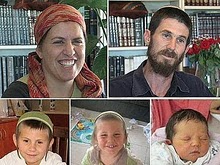
LETTER of Chalom WACH, brother-YEHUDA BEN Ichay FOGEL FAMILY

LETTER of Chalom WACH, brother-YEHUDA BEN Ichay FOGEL FAMILY

LETTER of Chalom WACH, brother-YEHUDA BEN Ichay FOGEL FAMILY
ALL of you who have been so close to us these days, thanks for your presence and support.
Had wanted to write a long letter, not to answer you, rather that compartiesemos those mo ...ments, those who have come to Israel and is abandoned to the cruelty of those around us, or disgusted by the silence of the media in France ... Also for those preparing to come and are detained for their next, assaulted by dudas.Nosotros we discussed in the yeshiva and remembered the miracle that one day the man goes and finds that ... is what I want pueblo.Es tell, the story of people who found it to be ONE!
Ministers and generals in a circle with artisans and scholars ... old, young, with kipots of all colors, tamaños.Religiosos, atheists, believers ... Some brought pizzas, other pastries, other soup pots, toys, packages ...
Buses full of children, whole classes, students yeshivots, carloads of laborers at the port of Ashdod, down with his hands full of drinks ... a Hasidic family "came to console you ... this summer our minibus shattered as a train, we lost our little girl, life has begun again and we had a girl and a boy ... "
Then came an old Druze in the Galilee, with his hands full of cakes (we said he had been careful to buy kosher!) And spoke thus: "I needed to come to give you my blessing," ... And it was the owner of a supermarket, You have free food in my shop every week as you want to. "And there came a Hasid who told us, I have a party room, your children will have the free wedding when casen.Y phoned Jonathan Pollard’s wife to tell her husband joined us and supported us, "You have a father there ... in America." And this young teenager who came to Dimona (180Kms) `to say one sentence ... a ... comfort to Tamar, which only has 12 years, and then returned to Dimona ... and the friend he called France and spoke the thus: "We offer a sefer and do aliyah ..."
Let me share with you the following thought ... I’ve heard those seeking an explanation for this drama "The Eternal, quote, is hard on their next and punishes for them away from sin", the tzaddikim atone for them and for their neighbors and not His sacrifice is in vain dijeron.Pero these explanations were too logical, intellectual, have been reluctant to hear it ... This week I saw a family that wanted to know what was the purpose or why it happened ... a family that came to the limit I had questions, but next to it was all the people of Israel.Y by such love and unlimited free this town appeared to me ... without máscara.CON transformed all its beauty and delicacy. COURAGEOUS AND HEROIC THAN EVER!
In both sensitive and humble, so humble that he could protect the Eternal Gd .. Thanks for making me my Jew and Gd let me be worthy.

Chalom Wach

Why the islamish riots cannot to have the triumph in Lybie.

Why the islamish riots cannot to have the triumph in Lybie.

The Libyan rebel fighters sheltering behind sand dunes near the government-held town of Ajdabiyah are full of bravado but they appear to lack leadership, soldiering experience and any clear plan of action.

The volunteer force comes from all walks of life — engineers, taxi-drivers and the jobless — united in their hatred of Muammar Gaddafi.

Whether their zeal is enough to capture towns and push through to the capital Tripoli and topple him is highly questionable.

That poses a dilemma for foreign governments who have weighed in on their side with strikes from air and sea against Gaddafi’s forces.

The eastern front in the five-week-old insurrection is at a stalemate since Gaddafi’s troops, pulverised by French war planes, broke off an assault on the rebel capital Benghazi on Saturday and pulled back to Ajdabiyah, 150 km (90 miles) to the south near the Gulf of Sirte.

On Tuesday morning, groups of fighters lounged on the protective dunes about 5 km (3 miles) from the town, chatting and smoking cigarettes. This was the spearhead of the counter-offensive.

“THERE IS NO PLAN”

When asked who was in command, one fighter, Mohamed Bhreka, shrugged and said: “Nobody is. We are volunteers. We just come here. There is no plan.”

There was little sign of the soldiers who had defected from the government army in the early days of the uprising and joined forces with the volunteers.

But there were hundreds of unarmed bystanders, who raised cheers of “God is Greatest” when the occasional round of tank fire from Ajdabiyah thudded into the desert sand behind them.

They were a colourful crew, looking like extras in a “Mad Max” movie. Some had items of camouflage uniform, others wore leather jackets or soccer shirts. Headgear ranged from Arab scarves to motorcycle crash helmets. One man wore his grandfather’s medals from serving alongside the British Army here in World War Two.

Their heavy machine guns were bolted to the back of pick-up trucks and there was a good supply of assault rifles. But some just had knives or iron bars. Field radios were not to be seen.

Some said they were awaiting leadership from Benghazi, others more foreign action. They welcomed the air strikes as essential to knock out Gaddafi’s heavy weapons but said their needs went further.

“We thank the West for what they have done till now. But to move ahead, we need weapons, we need ammunition,” said Fawzi Buktif, an oil project engineer who now runs a training base outside Benghazi. “We would like western trainers.”

But analysts said the West is unlikely to send trainers or weapons due to the potential political and legal fallout. Washington has already indicated it wants to scale back its role while its troops are still involved in two other Muslim countries, Afghanistan and Iraq.

“We have got to be hugely careful about determining just how far the coalition can go,” said British military expert Richard Holmes.

“Look at the American commitment to Vietnam. It starts with advisers and finishes with ground troops. Once you’ve got anyone on the ground, you’ve got the corner of your coat caught in the machine,” he told Reuters in London.

With Gaddafi’s opponents hampered by limited planning , apparent lack of coordination and poorly trained troops, Western governments may find that any expectations their air strikes will provide the vital spark to the rebels are over-optimistic.

SPONTANEOUS REVOLUTION

Back in Benghazi, in the dilapidated court house that serves as their headquarters, rebel officials played down the concerns about a lack of organisation.

“This is a very spontaneous revolution. There was no preparation. People are saying ‘where are your troops?’. Our troops are my son, my doctor, the social worker, the people,” rebel spokesman Essam Gheriani said. “Now it’s more organised. The forces at the front are making some structure,” he added.

A member of the rebel National Council, Abed Al-Hafeez Ghoga, said the rebels had advanced to within 150 km (95 miles) of Sirte on the way to Tripoli in the early days of the uprising without foreign help and were only beaten back by Gaddafi’s artillery and air power.

Asked about the whereabouts of the defecting soldiers, he said that Gaddafi had never properly built up the army, pouring resources instead into his special brigades.

“So we never counted on them anyway,” he said.

Some of the rebel fighters said the officers and defecting soldiers who were at the front in the earlier battles for Ras Lanuf, Brega and Ajdabiyah may have gone back to Gaddafi. Others said they are still in Benghazi making a plan.

The previous day, Ghoga said the rebels had received some military and communications equipment from foreign governments. The air strikes must continue to “level the playing field” for a rebel advance, he said.

Most of the rebels’ weapons and ammunition were taken from captured military arsenals. But that may not be enough for the long haul. Rebels on the frontline also said they had lost the heavy weapons needed to take on Gaddafi’s tanks.

Izzeldin al-Baraki, cleaning a machine gun on a pick-up truck, said he had had one day of training. He did have a commander but he was not at the front, he said. He received any orders by word of mouth rather than by radio.

In the meantime, the motley rebel fighters camp out in their cars, in tents, in abandoned houses or on the ground, relying on their supporters to provide them with food and drinking water.

Ethiopia crackdown on opposition to prevent protests.

Ethiopia crackdown on opposition to prevent protests

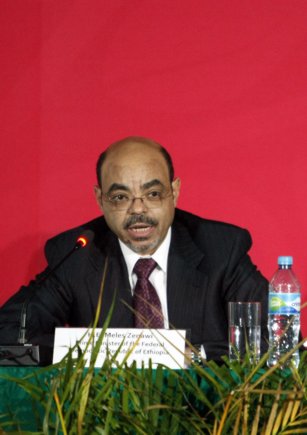
Ethiopian Prime Minister Meles Zenawi is accused of another crackdown on the opposition

Ethiopian Prime Minister Meles Zenawi is accused of another crackdown on the opposition

© Paulo Filgueiras

20 March - The Ethiopian opposition reports that over 250 of its central members have been arrested during the week. The arrests are seen in connection with a planned mass protest.

According to Ethiopia's main opposition coalition Medrek - composed of eight mostly regionally-based parties - several of its member parties have experienced a wave of arrest this week. At least 250 opposition members remain in detention, they claim.

Most of the detainees were said to be from the Oromo People's Congress (OPC) and the Oromo Federalist Democratic Movement (OFDM), two Medrek coalition partners. The OPC and OFDM are from Ethiopia's central Oromia region, which surrounds the capital, Addis Ababa.

The Medrek leadership reports that at least 217 OFDM members and 40 OPC members have been arrested during the week and that the whereabouts of most of them still were unknown.

At the same time, there are unconfirmed reports that at least 150 key members of the Oromo People's Democratic Organization (OPDO), a member of Ethiopia's ruling coalition, have been arrested on corruption charges during the same time.

Ethiopian opposition figures put all these arrests in connection with the repeated calls for Egypt-like mass protests and riots. Many of these calls have come from the key Oromia region, with the outlawed Oromo Liberation Front (OLF) repeatedly calling on Ethiopian to unite and overthrow the government of Prime Minister Meles Zenawi.

Oromia is Ethiopia's most central, largest and most populated region. Discontent with the Meles regime in Oromia is reportedly increasing, also in Addis Ababa, as many see his government as a kind of "foreign rule" insofar that Mr Meles' power base is in the northern region of Tigray.

Potentials for a popular rising against the authoritarian Meles regime are therefore seen as greatest in the Oromia region. At the same time, the Ethiopian government is struggling to keep control in other provinces, in particular the vast Somali region, also called Ogaden, in the south-east.

Also socio-economic developments in the urbanised Oromia region seem to prepare the ground for a protest movement. While the Meles government has brought Ethiopia a booming economic development with record GDP growth over years, social differences remain enormous. Currently, food prices are skyrocketing, with some basic items out of supply, causing further frustration.

Indeed, there is a growing movement calling for mass protests in Ethiopia, inspired by the North African revolutions. Two youth groups are calling for nationwide protests on 20 May.

These protests movements are still mostly based in the large Ethiopian Diaspora, using Facebook and other social media to prepare for protests and revolution. While it is expected that Ethiopia-based opposition groups sympathise with the protest call, they have shied away from openly supporting it.

Medrek leaders recently assured they would not take a leading role in any possible mass protests, saying that popular democratic revolutions did not need the leadership of an opposition party, but rather the strong organisation of local youths. This had been the lessons from Egypt.

Experience from Ethiopia's two last elections further had shown how exposed the national opposition was to a government crackdown, as their protest marches were violently suppressed. As Medrek party officials again are being detained, the opposition therefore leaves the revolutionary initiative to the Ethiopian youth.

Meanwhile, the Ethiopian government has noted the increased anti-government activities among Ethiopians in the Diaspora. Foreign Affairs Minister Berhane Gebrekirstos this week therefore announced an outreach programme to the Diaspora, to engage them in discussions about "the ongoing democratisation, development and peace endeavours of the country."