Blogia

MATEO MATHAUS: THE WORLD NOW

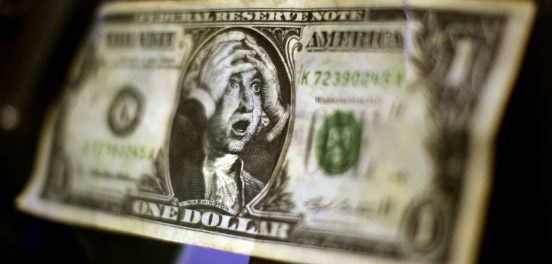
The next stage of the financial crisis......

The next stage of the financial crisis......

The next stage of the financial crisis
What opportunities does the policy still to be Lord of the financial system? The solution to the debt crisis is a distribution issue: Who pays for what has long been spent?

By Jens Beckerth, Mateo Mathaus and Wolfgang Streeck

20th August 2011

The financial crisis is now in its third phase. In the first banks fell because of high depreciation of mortgage-backed bonds into difficulty and were rescued by Lehman Brothers, by pooling their losses. In the second phase of the European periphery countries were drawn into a downward spiral, because the level of their debt could no longer expect that they would be able to repay their loans. Stabilization was attempted by rescue packages, which are respective of the pensioners and other state-based groups and funded by the economically stronger countries in the north and were €. In the third phase have now cast doubt on the solvency of state also extended the core countries of the world economy, particularly the United States, but also Italy, France recently. So that these countries fall into the vortex.

The various stages of crisis management can recognize a system of trust in which the loss of confidence by stakeholders at a level higher trust level guarantees from other players or to be compensated. But instead of calming the situation, followed by the guarantees of the doubts about the trustworthiness of the helpers. Meanwhile, the Trust reserves are depleted.
Losses deepen the crisis of confidence in its third phase. Particularly dramatic is the doubt about the safety of American Treasury bonds
© dpa
Losses deepen the crisis of confidence in its third phase. Particularly dramatic is the doubt about the safety of American Treasury bonds

Particularly dramatic is the doubt about the safety of American Treasury bonds, not only because the size of U.S. government debt market makes this essential, but also because of the total uncertainty induced by them in the financial markets. This is evident immediately after the downgrade by rating agencies onset of speculation against the French. Germany will also be affected if it takes more guarantees that lead to additional debt and joint liability for the debts of the other European countries. The purchase of government bonds by the European Central Bank and the discussion about a German Euro Bonds ready to step in front already.
Four solutions for addressing the debt crisis

Four years after the onset of the crisis seems to be no instrument found to contain them. Rather, it spreads to more and more states, with depleted resources of the trust. The policy makes one feel overwhelmed. A new regulation of financial markets has largely failed, the banking system is still vulnerable to flagging economic development. This raises the question of the next stage of the financial crisis. We do not share the hope of an early end to the crisis. This would require a credible consolidation of public budgets in terms of enduring privileging the claims of creditors as well as a resurgence of growth in the European countries and the United States. This is not in sight. Instead, it must be envisaged that will arise from the unresolved financial crisis in a social and political crisis.
About

    
€ crisis: FDP members to reject Euro Bonds
    
Middle-class values: "I am beginning to believe that the Left is right"
    
A conversation with Peer Steinbrück: Now you do not always pass out!
    
Debt Crisis: The late victory for terrorism

For addressing the debt crisis, in principle, there are four solutions. (1) By reducing government spending and economic growth will reduce the debt and thus restore the confidence of investors in the credit rating of sovereigns in the long term. (2) By raising taxes is the income situation of the state budgets are improved and the debt reduced. (3) The public debt set to service the debt and negotiate with creditors on a payment decree. (4) states the goal to provide monetary stability and pursue an inflationary policy by which their debts are deducted. It can now show that all four strategies would have consequences that are not confined to the financial and economic system and very likely lead to the next stage of social and political destabilization.

One solution, spurring economic growth by reducing government spending, is currently the preferred strategy. Your success is unlikely. Through austerity measures, as it was countries such as Ireland, Greece and Portugal decreed that fall from important demand stimulus. The consequences can be read in Greece to the declining economic performance. Fail because of the shrinking economy tax revenue remains the reduction of public debt.
Deep cuts in the welfare state

We can only hope to improve medium-term economic competitiveness through structural reforms in the countries concerned. The success of such reforms seems more than doubtful - just study only the failure of the decades-long, extremely costly efforts of the Italian State to modernize the Mezzogiorno. Without a top layer that is willing to take entrepreneurial risks at home, rather than investing their money abroad, a country can not develop. Ireland has no structural reform of its banking system needed outside. Britain and the United States suffer from the consequences of their long-term policy goal of de-industrialization and its concentration on those services in which capitalism had almost collapsed in 2008. In both countries would require a restructuring of the industrial competitiveness comprehensive long-term public investments in education and infrastructure, for which there is no money available.

In all affected countries, it's about deep cuts in the welfare state, to cuts in education and health spending and public investment. This policy applies in the United States has long been stagnating real wages and a situation in which the standard of living had to go through private debt and a steady increase to be defended by the families of hours worked. In Greece, Spain and now in England can imagine the social conflicts that will arise from the austerity measures. In those countries, the bailout have claimed, there is also a very far-reaching restrictions on their sovereignty. Central democratic institutions of economic and fiscal policy will be neutralized in the long term. As a result can not exclude that more and more of the population to turn away from the constitutional ways of political and economic interest articulation.

The second solution would be to increase tax revenue. In fact, this might be the only remaining viable option - he would not be blocked politically. The debate about the U.S. debt limit has made it clear that the mantra "no new taxes" so solidified that tax increases have become politically impossible, even if the U.S. tax levels are still relatively low.
Avoidance strategies of those affected

It seems to be enough property owners as the brothers manage to cook, organize populist movements (Tea Party Movement), which prevents them especially the Republicans to engage in higher taxes or even the withdrawal of temporary tax cuts originally. In fact, tax increases would, if it should go relatively equitably, are paid substantially from the top income and wealth groups. This group has focused on the tax cuts of recent decades and benefits, not least from the interest income from investments in government debt securities and most of all income gains to themselves.

But an increase in excise taxes of declining living standards of the great mass of Americans appear half unimaginable. The general principle is that tax increases to pay off debts can never be popular because they are used to pay for goods and services already consumed. Not least, can offer theoretical Down On fears that harm according to which tax increases, especially at higher income growth. Even with avoidance strategies of those affected would be expected, especially in the taxation of wealth.

The third solution, setting the repayment and partial debt forgiveness, was recently followed by Argentina, where he led to a temporary relief. Greece has with the recent decisions of the EU actually receive a partial waiver. This is however a relatively small economy, where the debt in proportion to the economy, but not absolutely high. The average cost of debt can therefore be borne by other States and, to a lesser extent, the private creditors. This does not apply to the major European economies and the U.S.. An inability to pay these countries would not only ruin their banking system, but also that of other countries. A rescue operation as of 2008 would allow the depleted state budgets no longer good.
Adventurous social costs

However, even if a complete economic collapse as a result of a new banking crisis could be prevented would have an unprecedented social crisis can be expected. Large parts of the state debt that is held by pension funds or insurance companies, which make such capital from pension payments and life insurance pay out. The reorientation towards capital-based pension during the last decades has brought a growing number of pensioners in dependence on the capital market. Not least, even though the bankruptcy of a state to secure a result that the refinancing costs would rise for most States. Given the enormous amount of public debt must be present but any increase in spending for debt service to increase the budget deficits and further exacerbate the need to economise. This is the reason why the previously less-affected countries do everything possible to countries like Ireland and Greece to avoid state bankruptcy.

Fourth would be possible to reduce unwanted by inflation the real value of debt. For this purpose, the government can borrow from the central bank, thus increasing the money supply growth also. Also, this option is associated with adventurous social costs. A devaluation of assets reduces the pension groups today continue the population. In addition, reduced by inflation, real income of those who receive a fixed income as employees or as recipients of transfer income. This means that almost the entire population would be affected. Would be expected with social protests and demands for indexation of wages and benefits. This would result in a potentially "galloping" rise in inflation. In addition, any devaluation leads to higher refinancing costs of government debt in the markets.
A question of distribution

The current crisis management was trying to crises by shifting the problem to a higher level with greater confidence reservoir "cancel". The banks were rescued by the states, and the small states of the big ones. This strategy is now at an end. The loss of confidence has now reached everywhere. In the next stage of the crisis will spread to the social system. Signs are already found in rising unemployment, emigration and violence in high burden countries. Whether through austerity measures, cutting debt and inflation, the upcoming massive reduction of assets and income will cause conflicts. These have the potential to achieve the political system, at first instance by increasing the feed to populist movements like the National Front or the Tea Party.

It turns out that solving the debt crisis is essentially a question of distribution. Who pays for expenses that were made long ago, without ever having been settled, in a situation in which the creditors lose confidence and have to reclaim their money? What is missing there is the economic performance of an entire year in some countries even far more. After the growth of GNP during the last thirty years mainly benefited the upper strata of the population, was raised in the debt crisis of the question, try whether and by what means the wealthy will defend its position, even at the cost of massive social and political crisis. We can not exclude that the writing on the wall, they also do not wish to continue

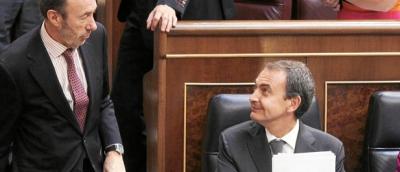
Socialist Spain: The decision to reduce ¿? the public deficit at 5,000 million euros will not serve to reassure the markets.

Socialist Spain: The decision to reduce ¿? the public deficit at 5,000 million euros will not serve to reassure the markets.

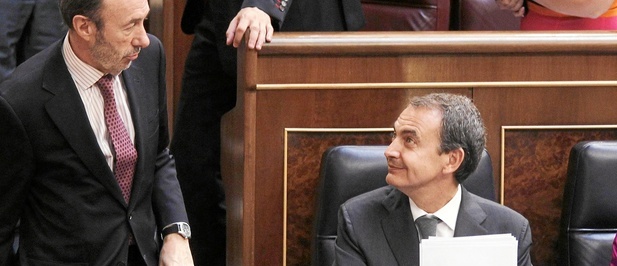
The decision of RubalcabaZapatero government to reduce ¿? the public deficit at 5,000 million euros will not serve to reassure the markets. Be seen that this additional adjustment in public finances alone to calm investors. It is much more likely, however, that emphasizes the explicit and sluggish economic growth and difficulties in reducing unemployment. Are actually measures against the use porue if pressed to companies in difficulty, fiscally or otherwise, they will cut templates. There are, therefore, measures the position requires very delicate, almost comatose in the Spanish economy.

Regardless of the fact that tax collection has finally, the anticipation of income tax is not conducive to most companies. That is a tax that rotates about the benefits and whose effective tax rate and allowances attend several of which draw more from the larger companies. The difficulties encountered by companies with lower revenue, resulting from a depressed demand and a persistent credit crunch, add this form of additional grant funding to the state. This is a blatant attack against the legal certainty and thus dispels the already low domestic and foreign investment.In the end more unemployement and more deficit..

CONDOLEEZZA RICE TO LETTER OF HUGO CHAVEZ

CONDOLEEZZA RICE TO LETTER OF HUGO CHAVEZ


President Chávez:

He had been waiting for my departure from government, that after a reasonable time to send you this letter. Although from a geopolitical standpoint inconsiderate expressions against me were brittle, and therefore were not answered officially, I can not deny that I produced discomfort. No human can stop to get upset when someone refers to him or her in terms scurrilous and inconsiderate. In the present case this was magnified by the fact that: (1) you were the president of a country with which my country has diplomatic relations (2, you broke the old Spanish saying that goes: "women or with a rose petal "and (3), his comments were a racist element in my country is already defined as" politically incorrect "but you still practice with complete impunity in his.

You mentioned my little culture and a so-called attraction I feel for you. First, I must say that last night I had the honor of playing with the Philadelphia Symphony Orchestra, as soloist, the concert number 20 for piano by Wolfgang AmadeusMozart, K.466 (you know the meaning of K. do not think so). I am one of the most outstanding non-professional concert of the United States. I studied piano at the same time I graduated from a political scientist at the University of Denver. And you, Mr. Chavez? I say apart from being a mediocre student of the Military Academy of Venezuela, apparently the refuge of those who do not measure up in college, you had no formal education. It seems that this is the reason insists that 8x7 = 52 and that the man came to Earth 2000 years ago. Not to mention that his spelling seems to leave much to be desired. Their appointments are cursilonas pompous and often inaccurate. Note that it is only now that I say this because it would never have thrown you in your ignorance and patanería face, not been for his attack on me.

Secondly, I do not feel attracted to someone like you. I do not mean her appearance, which certainly is not competition but, say, simply sub-standard. I refer to his ways, the poor quality of their language and showing aggression toward females. I informed her approach to his ex-wife, even in public, sexist television offerings on 'give himself "and you used violence against women who had intercourse in the past. Fortunately today there is no known relationship with any female other than the odd occasional flattery made to any Brazilian transvestites. Therefore I could not feel unattractive by anyone, rather, I aversive. Nor do I feel very comfortable with any of his acolytes, be it hair or Istúriz, only marginally more acceptable.

You made fun of my name, Condoleezza, relating condolences and sadness. No such thing, Mr. Chavez. My name is derived from the Italian musical expression "with dolcezza," that is, with sweetness. I explain it is evident that without such an explanation you would have no idea of ​​its true meaning. Languages ​​are not your forte, as I remember it well from his attempt to insult President Bush in a curious version of the English language, something that sounded like "a donki iu ar."

I was lucky enough to reach the highest levels of government of my country because my intellectual formation. I did not become noticeable leading a bloody coup that left more than 200 Venezuelans died, something of which you boasted, saying "if I were in a coup, lead casting of truth." In my country generally (there are exceptions) people intellectually sound enters the government seeking recognition and has no need to steal. I understand that systems like yours, you come to power without much intellectual credentials and use it to enrich themselves or, as some say, "to eat altogether." Note that we do not share philosophies of life and while I play Mozart with the Philadelphia Symphony Orchestra you sing a capella Mexican rancheras, ie, a capella. While I give lectures at universities peristaltic you have his adventures, his cramps in a tunnel.

Well, I have put things in place. You have chosen their way, along with rogue states and terrorist groups and drug traffickers in the world. That was his decision. But she carries responsibility delegated. You have been a disciple of Mandela and chose to be a disciple of Mugabe. It could be proud of Jose Maria Vargas and decided to be proud of Ezequiel Zamora. You chose your way. His regime will end, as TS Eliot said (a poet of my country, Mr. Chávez) about the end of the universe: "not a shock but a whisper." No need to hide.

(Translation and free version of Gustavo Coronel)

Sr. Presidente Chávez:

Había estado esperando mi salida del gobierno, a que transcurriese un tiempo prudencial para enviarle esta misiva. Aunque desde el punto de vista geopolítico sus expresiones desconsideradas contra mi persona fueron deleznables, por lo cual no fueron respondidas oficialmente, no puedo negar que me produjeron malestar. Ningún ser humano puede dejar de molestarse cuando alguien se refiere a él o ella en términos procaces y desconsiderados. En el caso que nos ocupa ello estaba magnificado por el hecho de que: (1) usted era el presidente de un país con el cual mi país tiene relaciones diplomáticas; (2, usted violó el viejo dicho español que reza: “a la mujer, ni con el pétalo de una rosa”y, (3), sus comentarios tenían un componente racista que en mi país es ya definido como “politicamente incorrecto”, pero que usted aún practica con entera impunidad en el suyo.

Se refirió usted a mis escasa cultura y a una pretendida atracción que yo sentiría por usted. En primer lugar, debo decirle que anoche tuve el honor de tocar con la Orquesta Sinfónica de Filadelfia, como solista, el concierto número 20 para piano de Wolfang AmadeusMozart, K.466 (sabe usted el significado de K.? No lo creo). Soy una de las más destacadas concertistas no-profesionales de los Estados Unidos. Estudié piano al mismo tiempo que me graduaba de politóloga en la Universidad de Denver. Y usted, Sr. Chávez? Me dicen que aparte de haber sido un estudiante mediocre de la Escuela Militar de Venezuela, aparentemente el refugio de quienes no dan la talla en la universidad, usted no tuvo otra educación formal. Parece ser que ello es la razón por la cual insiste en que 8x7=52 y que el hombre llegó al planeta Tierra hace 2000 años. Sin olvidar que su ortografía parece dejar bastante que desear. Sus pomposas citas son cursilonas y con frecuencia inexactas. Fíjese que solo es ahora que le digo esto, ya que jamás le hubiera echado a usted en cara su incultura y patanería, a no haber mediado su agresión a mi persona.

En segundo lugar, no creo que sentiría atracción por alguien como usted. No me refiero a su aspecto físico, el cual ciertamente no es de concurso sino, digamos, simplemente sub-standard. Me refiero a sus maneras, a la pobre calidad de su lenguaje y a la agresividad que muestra hacia el sexo femenino. Estoy informada de su manera de tratar a su ex-esposa, hasta en público, de sus ofertas machistas por televisión acerca de ‘darle lo suyo” y de la violencia que usted utilizó contra las mujeres con quienes tuvo relación en el pasado. Afortunadamente hoy no se le conoce relación con fémina alguna, excepto alguna que otra zalamería ocasional hecha a algún travestís brasileños. Por ello no podría sentir atractivo alguno por alguien que, más bien, me causa repulsión. Tampoco me sentiría muy a gusto con alguno de sus acólitos, llámese Cabello o Istúriz, apenas marginalmente más aceptables.

Usted se mofó de mi nombre, Condoleezza, relacionándolo con condolencias y tristeza. No es tal cosa, Sr. Chávez. Mi nombre es derivado de la expresión musical italiana “con dolcezza”, es decir, con dulzura. Se lo explico porque es evidente que sin esa explicación usted no tendría la menor idea de su verdadero significado. Los idiomas no son su fuerte, como lo recuerdo bien de su intento de insultar al Presidente Bush en una curiosa versión del idioma Inglés, algo que sonaba como “iu ar a donki”.

He tenido la suerte de llegar a los más altos niveles del gobierno de mi país debido a mi formación intelectual. No me hice notoria liderando un golpe de estado sangriento que dejó más de 200 venezolanos muertos, algo de lo cual usted se ha jactado, al decir “yo si estuve en un golpe, echando plomo de verdad”. En mi país generalmente (hay excepciones) la gente intelectualmente sólida entra al gobierno buscando reconocimiento y no tiene necesidad de robar. Entiendo que en regímenes como el suyo, ustedes llegan al poder sin muchas credenciales intelectuales y lo usan para enriquecerse o, como dicen algunos, “para comer completo”. Fíjese que no compartimos filosofías de la vida y que mientras yo toco a Mozart con la Orquesta Sinfónica de Filadelfia usted canta rancheras mexicanas a capella, es decir, a palo seco. Mientras yo doy conferencias en las universidades usted cuenta sus peripecias peristálticas, sus retortijones en un túnel.

Bien, creo haber puesto las cosas en su sitio. Usted ha elegido su camino, junto a los estados forajidos y grupos terroristas y narcotraficantes del planeta. Esa ha sido su decisión. Pero ella lleva consigo responsabilidad indelegable. Usted ha podido ser un discipulo de Mandela y eligió ser un discípulo de Mugabe. Ha podido sentirse orgulloso de Jose Maria Vargas y decidió sentirse orgulloso de Ezequiél Zamora. Usted eligió su camino. Su régimen terminará, como decía T.S. Eliot (un poeta de mi país, Sr. Chávez) acerca del fin del universo: “no con una conmoción sino con un susurro”. No tendrá donde esconderse.

"To be successful you have to do extraordinary things. Do ordinary things extraordinarily well."

L’escalade du Front Sud ou la nouvelle guerre Gaza-Sinaïtique.


Aschkel & Gad (avec agences)


Pour © 2011 lessakele et © 2011 aschkel.info 


L’escalade du Front Sud ou la nouvelle guerre Gaza-Sinaïtique


Aschkel & Gad (avec agences)


Pour © 2011 lessakele et © 2011 aschkel.info 


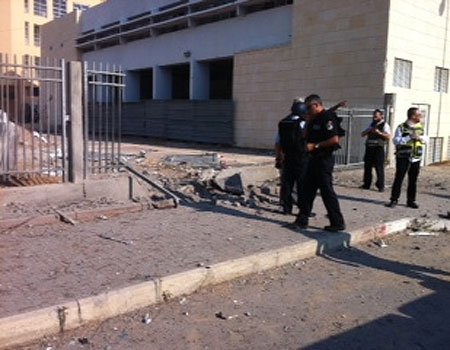
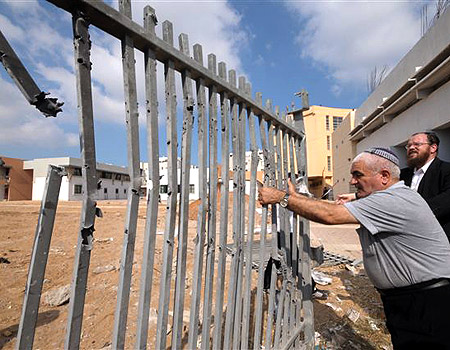
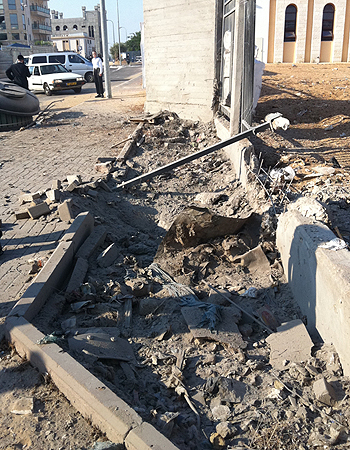
D’heure en heure, l’escalade s’étend sur le front-sud. Au matin, vers 8h 10, la yeshiva d’Ashdod est gravement touchée et les sirènes couvrent la ville, ainsi que Gedera : on dénombre au moins 10 blessés  par les éclats de missiles, dont deux très sérieusement à l’abdomen et des destructions matérielles. Les victimes ont été évacuées vers le Centre Médical Kaplan de Rehovot.


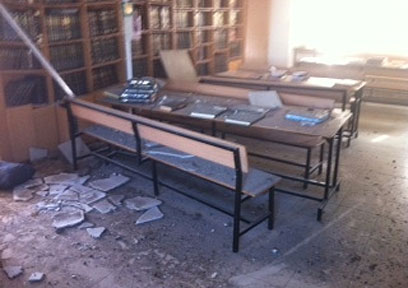
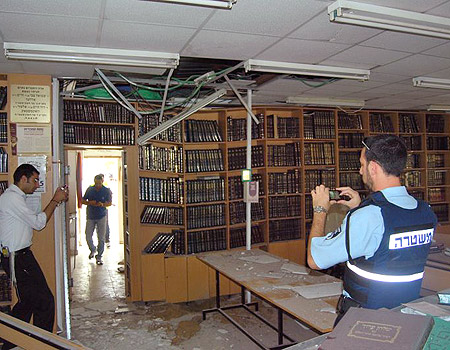
Damage to yeshiva building (Photo: Avi Rokach)


Les frappes terroristes s’effectuent en, au moins deux coups, d’où la nécessité de rester à couvert. A la première explosion, les jeunes en prière sont partis se mettre à l’abri, mais c’est lorsqu’ils sont ressortis des lieux sécurisés pour constater les dégâts et reprendre l’office que la majorité a été fauchée par une deuxième salve. Ces tactiques destructrices sont mûrement planifiées, comme l’a démontré l’attaque complexe d’hier à Eilat : elles sont fondées sur l’enchaînement de situations pour faire le maximum de victimes, après repérages des comportements-réflexes, d’éléments psychologiques, tels que se lancer à la rescousse d’un groupe sous le feu, envoyer une unité ou des secours en direction de tel site…


Damage caused to Ashdod yeshiva (Photo: Avi Rokach)


Au moins douze roquettes et missiles ont explosé durant la nuit. La sécurité intérieure a dû interdire les rassemblements de plus de 500 personnes au même endroit, à Ashkelon, Netivot, Ashdod, BeerSheva et Ofakim. D’autres explosions ont frappé des terrains vagues au sud de Gedera, et les Conseils de Shaar Haneguev et d’Eshkol.


Le Dôme de Fer a repris du service à Ashkelon et Beer Sheva, où le maire a appelé à suivre scrupuleusement les instructions de la sécurité civile. Deux missiles, cadrés sur les centres résidentiels, sur quatre ont été interceptés par celui d’Ashkelon. Les deux autres ont explosé dans des terrains vagues, sortant de l’objectif du système anti-missiles.


Les forces aériennes de Tsahal ont répliqué, tout au long de la nuit par des frappes extensives, sur au moins 7 cibles identifiées comme des centres d’entraînement, des installations et des quartiers généraux du Hamas et de ses prête-noms du Jihad islamique ou des Comités Populaires. Si les groupes d’Al Qaeda revendiquent la responsabilité des tirs de missile, rien n’échappe à la supervision de la milice terroriste dominant la bande de Gaza. Sa branche armée des brigades Ez-Al-Din al Qassam revendique sa participation, pendant que la prétendue « vitrine politique » d’Haniyeh nie toute implication. Le double-langage permanent légitime les frappes à deux impacts pour tenter de brouiller ou de confondre la détermination de la réplique.


La fameuse « Route Philadelphie » évacuée par les forces israéliennes, en accord avec l’armée égyptienne, à l’époque du retrait de Gaza, est devenue le nouvel axe de connexion entre le Jihad du Sinaï et les terroristes gazaouïs. Une bombe humaine a, ainsi fauché plusieurs membres d’un groupe des forces de sécurité d’Egypte. Le problème stratégique ne concerne pas uniquement des « Palestiniens », et les attentats du jeudi 18 relèvent d’une internationalisation du conflit et de tactiques transfrontalières, s’appuyant sur la valeur symbolique forte des cibles israéliennes.


Techniquement, l’identification des assaillants se complique encore, lorsqu’on sait que plusieurs témoins ont mentionné des hommes armés en uniforme égyptien, à l’origine des attentats d’hier. De fait, la traque devient plus imprécise, au risque de confondre des forces de sécurité de l’autre côté de la frontière avec les terroristes recherchés.


Al Jazeera a signalé un incident de ce type, lors duquel un avion de chasse israélien aurait abattu (par erreur) des officiers égyptiens, effectuant le même travail de l’autre côté de la ligne de séparation entre les deux pays. Seule une investigation précise pourra faire la lumière sur ce qui s’est passé et recadrer les estimations, des deux côtés. En effet, il est de la plus haute urgence que les bases arrière du terrorisme de Gaza dans le Sinaï soient rapidement identifiées et neutralisées si on veut stopper leur rayonnement tranversal.


Le Hamas a révélé son vrai visage : celui d’une tête de pont du Jihad mondial. Il n’a qu’un rapport indirect avec des causes nationalistes servant uniquement de prétexte à l’édification du Califat de la Péninsule Sinaïtique, dont la capitale administrative serait Gaza-City.


Socialist Spain: The financial situation is precarious, everywhere.

Socialist Spain: The financial situation is precarious, everywhere.

The seventeen Spanish "Comunidades Autónomas", the autonomous regions are sitting on a mountain of debt of 121.000 millions of euros, which is a quarter more than a year ago. And in March, they had maxed out the deficit target for the full year in half.

The empty cash register also affect the payment practices of the municipalities. Since the outbreak of the crisis, have quadrupled and the outstanding amount according to the newspaper "El País" as 50.000 millions of euros. Affected by the lax payment practices are mainly private providers, which are in Spanish municipalities for street cleaning and waste disposal charge now and pay their employees no longer can.

Euro-Bonds
Definition

Euro bonds are bonds that are issued jointly by the countries of the Euro-zone. It does not exist yet. Germany rejects it. For the repayment of these papers all countries would jointly liable.
Advantage

The advantage is that in this way, countries like Greece could come in fresh money, without having to pay higher interest rates because of their bad credit rating need.

Disadvantage

The disadvantage is that pay cash Powerful countries like Germany and France would have higher interest rates than before - which would cost taxpayers billions. In Germany alone, it would be up to 25 billion € per year, the Ifo Institute has calculated. In the longer term could lead to pooling of debt also means that countries enter under the security seal of the euro zone more debt than they can bear. fwi

"In the coming months to many communities to be prepared for harsh cuts," says Francisco Jardon, president of the Confederation of waste companies Aselip. In Castilla La Mancha 700 pharmacists already on strike because they are from the state government has long received no money for prescription drugs. But not only the citizens are concerned, may also sit in the ministries of crisis teams.

Spanish media reported at the weekend that the Defense Department lacks € 26 billion for arms contracts signed. Topping the shopping list are the Leopard tank (2.4 billion euros) and the Eurofighter EF-2000 Euro (EUR 9.3 billion), now would be the deferred liabilities and renegotiated.

More than a few Spaniards give the Germans the blame for the dire situation. "The main enemy of the euro zone are not about the rating agencies, but Angela Merkel," said Gonzalo Bernardo, vice rector and professor of economics at the University of Barcelona. The Chancellor did not have shown the need for solidarity with the Mediterranean countries in order to later recover the appropriate reward in spades.

The hope of the Regions, the Central Government in tackling them may assist the budgetary problems is likely to prove illusory. The Zapatero government has reduced the pension benefits and will now also reduce the unemployment benefit, says Pedro Schwartz, president of the Madrid court competition.

"Is the welfare state under these circumstances, how to know him, the Spaniards, has become untenable." The rating agency Standard & Poor’s believes, however, that the government would have to transfer in Madrid this year at least 3.4 billion to the regions to the biggest gaps . close Then it would be difficult to reduce the budget deficit as planned, from 9.2 to six percent of GDP.

Las bolsas se hunden ante las "palabras de madera" de la UE.

  18/08/2011 09:02h      Actualizado: 18/08/2011 15:30h

IBEX 35

15:45:48 - 18/08/2011

(I :IB )

8.328,50

-399,70 €

-4,58%

Fin del respiro, los bajistas dominan de nuevo el mercado y las bolsas europeas caen con fuerza, lastradas por la banca. El Ibex pierde más de un 4% y se aleja de los 8.400 puntos. El Dax cae casi un 5%, el Cac 40, más de un 4% y el FTSE 100, un 3,4%. El Eurostoxx50 se deja casi un 3%.

Tras la tregua de los últimos días, hoy se pone de manifiesto que la tormenta no ha pasado, la tendencia sigue siendo bajista y la renta variable seguirá sufriendo las incertidumbres que pesan sobre la economía.

Los inversores han aprovechado la revisión a la baja de las previsiones económicas mundiales de Morgan Stanley -tras los malos datos en Europa del martes- y la falta de concreción sobre cómo se aplicaría el impuesto a los bancos o qué sucederá con el fondo europeo de estabilidad, para dejarse llevar, de nuevo, por el pesimismo.

La prima de riesgo de España y de Italia ha empeorado en los dos últimos días. La española supera los 280 puntos básicos y la italiana avanza por encima de los 270 puntos básicos.

Valores de la jornada

El sector financiero cae con fuerza hoy y pesa sobre el selectivo. Santander cae más de un 4%, BBVA, más de ,5%, Popular, un 4,5%, Sabadell, un 3,6%, Bankinter, más de un 4% y CaixaBank, un 3%. Hoy se han publicado las cifras de la morosidad de la banca, que se redujo tímidamente en junio tras los incrementos de abril y mayo y que se sitúa en el 6,41%.

Los nubarrones sobre la banca no se han despejado y las entidades francesas e italianas son los valores más castigados en Europa. Hoy se ha conocido que los reguladores estadounidenses están intensificando el escrutinio sobre los mayores bancos europeos. por la preocupación que genera que la crisis de deuda soberana provoque problemas de financiación

Société Générale lidera las pérdidas del Eurostoxx50 con una caída del 8,4%, BNP Paribas pierde un 4,4%, Credit Agricole, un 5,9%, Intesa San Paolo, un 7,4% y Deutsche Bank, más de un 2%.

Además, el impuesto sobre las transacciones financiera prupuesto por Francia y Alemania plantea interrogantes y preocupación entre algunos profesionales del mercado y ayer los operadores bursátiles sufrieron ventas por este motivo.

Los expertos temen que se produzca una caída de los volúmenes en los mercados, como sucedió en Suecia en la década de 1980, cuando la introducción de una tasa similar causó la reducción de las operaciones en Estocolmo y la caída de los mercados. Un analista consultado por Cotizalia señalaba que habrá que esperar a ver cómo se materializa, "aunque no es positivo para la operativa".

Hoy Deutsche Boerse retrocede un 2,6% y BME, un 0,8%.

Mapfre es el único valor que cotiza en verde en el Ibex, gana medio punto porcentual.

Los grandes valores también se desploman con el regreso del miedo al mercado: Telefónica pierde más de un 3%, Inditex, un 3,5%, Iberdrola, un 5,5% y Repsol, más de un 4%.

Purchasing Managers' Index: Rubalzapiana Spain is "kaput" ...

Purchasing Managers' Index: Rubalzapiana Spain is "kaput" ...

Purchasing Managers' Index: Rubalzapiana Spain is "kaput" ...

17/08/2011 19:35 A. Anchuel

Evidence is accumulating that our country may be about to suffer a relapse in the downturn. If such a thing happen, would lead to dramatic consequences. Government revenues are tied to economic activity and suffer. Lower income than anticipated would force more drastic cuts in public spending to meet the deficit target. These effects, to be serious, would be only the most immediate.

They would join the strengthening of the perception that Spain is on track to reduce its high debt problems of private and public in terms of GDP by growing it. The situation of the banks also worsen, the prospects of default deteriorate and the value of the Spanish public debt accumulated in their balance sheets. This in turn unleashed the fear of an abrupt increase in debt, with the greatest needs to recapitalize banks. Therefore, the issue of a possible relapse into recession, however slight or temporary it might be, is not trivial.

The alarm light that is kindled more strongly was that of the Purchasing Managers Index (Purchasing Managers' Index - PMI). This is a monthly indicator developed by surveying the leading private companies in manufacturing and services. Their results are very accurately anticipate the behavior of GDP. Recent data for July are very striking.

An index value of 50 means that production is expected to vary, higher values ​​indicate lower growth and contraction. The value for Spain in July of 46'1 was the lowest for 19 months, which warns of the danger of recession. For all the euro area, the index is 51'1. This is the lowest in 22 months and indicates the stagnation of production, after four months of significant declines. Values ​​for Germany (52'5) and France (53'2) do expect a slowdown in growth, they are in minimum of 21 and 23 months respectively. Italy's third largest economy in the eurozone, also suffers risk of relapse into recession, with an index of 49.1.

It can be argued that this indicator is not infallible (none is), but their results do not contradict the most elementary common sense. There are already credible reports of the behavior of the Spanish economy in the first half of 2011. The more complete the quarterly report of the Bank of Spain. The picture presented is that of a stagnant economy, which grows only minimally due to the external sector. In the second quarter, activity has weakened further.

The GDP has registered a variation of 0.2% QoQ, which reduces the annual rate to 0.7%. This result is the sum of a national demand fell by 1.9% (stronger than in the first quarter) and net external demand which increases its positive contribution to the 2.6 points. Translated into Castilian: the only thing that lets the Spanish economy minimally head hovering above the recession is the pull outside. This is based on the growth of our neighbors and the good performance of tourism (helped by the instability in North Africa).

Moreover, all major problems are still alive. The adjustment of the construction is not finished. Continue to fall as sector employment as the apparent consumption of cement, recorded purchases and the price of housing (a one year rate of 5,2% in April-June period). The private sector deleveraging has barely started. The ratio of household debt has fallen slightly since the beginning of the crisis (see Figure 24 on page 66), and the current context is the decline in the value of household wealth. This will weigh on consumption. For example, registrations of passenger cars between April and June fell 35%, three points higher than in the first quarter. The drought of credit to households and businesses is maintained (as stated in the figure 4 on page 16).

Now consider the effects they may have on this economy, almost stagnant during the first half, the latest developments. Recently, the sovereign debt crisis has hit full in Spain. So much so that our economy is now in the ICU. Only sustained artificially assisted respiration by the ECB, which provides liquidity to the Spanish financial institutions (for which markets are closed) and buy Spanish public debt in the secondary market. The negative impact of these events are broadcast on various channels.

The conditions of access to finance by households and firms will experience a further tightening. Do not forget that national needs for external financing remain net 4% of GDP. The confidence of consumers and businesses will suffer. The need for further fiscal consolidation plans also adversely affect domestic demand.

To top this crisis of Spanish sovereign debt occurs in a broader context of international economic slowdown, which we announced in an article in early June. Some neighboring countries (Portugal, Italy and France) are being affected by the debt crisis and had to implement further cuts. These countries with growing problems are the main destinations for our exports, which will be affected accordingly. The 8.9% of Spanish exports goes to Portugal, 8.8% to 18.3% Italy and France.

Meanwhile, the PSOE is fully immersed in an election campaign that sells the message that economic recovery has already occurred (because of its policies), it remains to consolidate and that allows the candidate to promise little joys RbCb so far were not possible. But these people what world you live? The truth is that the crisis continues roaring and Spanish society is still not psychologically prepared to make front. Nobody has ever said from the various authorities the truth about what is happening or how to fix it.

Europe can not afford a disaster as the unemployement in the socialist Spain (25%) because affect to all Eurozone.

Europe can not afford a disaster as the unemployement in the socialist Spain (25%) because affect to all Eurozone.

Europe can not afford a disaster as the unemployement in the socialist Spain (25%) because affect to all Eurozone: not only the GDP data is bad. INE made ​​public yesterday other data  that no are for optimism and which confirm the slowdown in activity. Among the more negative the service sector figure recorded in June, down 5.9% on turnover, nearly six points below that recorded in May (-0.2%) due to the fall sale and repair of vehicles and motorcycles.

The services sector continues and the negative path for the fourth consecutive month, after falling also in April (-0.8%) and March (-0.9%), after breaking a positive start of the year, with increases of more 1% in its turnover during January and February.

In addition, industrial new orders rose 4.9% in June over the same month last year, almost four points lower than the increase recorded in May. Another slowdown stems from the slowdown in consumption so far is still the main drag on Spanish growth. The cause: More of 5.000.000 of unemployed..