Blogia

MATEO MATHAUS: THE WORLD NOW

Viernes negro en verano negro: El Ibex cierra el peor trimestre desde 2002, con una caída del 17%..

Viernes negro en verano negro: El Ibex cierra el peor trimestre desde 2002, con una caída del 17%..

El Ibex cierra el peor trimestre desde 2002, con una caída del 17%

El verano negro protagonizado por las bolsas, ante los rumores de una bancarrota griega y un regreso a la recesión, ha tenido por consecuencia el peor trimestre para el Ibex 35 desde el año 2002. El selectivo se ha dejado un 17% de su valor desde el 1 de julio hasta la jornada que hoy termina.

Los inversores han estado atentos a las palabras del Director del Banco de España, el socialista Fernández Ordóñez sobre mas hundimientos en el sector de las cajas de ahorro españolas.

En el mercado de divisas, el euro cae a plomo y a la hora del cierre se cambiaba a 1,3444 dólares, frente a los 1,3639 de las últimas horas de la negociación europea de ayer. El Banco Central Europeo fijó hoy el cambio oficial del euro en 1,3503 dólares. 

En el mercado de deuda, la prima de riesgo española se incrementó hasta los 325 puntos básicos. 

The absolutist features of democracies in Europe...

The absolutist features of democracies in Europe...

The absolutist features of democracies in Europe..The civil rule over because he's not always understood - that seems to be the motto. With her playful one Europe, his reputation, his future, his legitimacy.
Europe is, no doubt, in danger. Not because the citizens of Europe do not like, but because they do not understand. Because they can not recognize it. Because no one explains why it is good, what shape it should have one day and like the way there - stage to stage - could look like. Europe must be to have an alternative does not, it sounds from the room alleuropäischen of those responsible. And: Since the multi-hazard, who names it, it would be better to silence about it.
Euro bonds are bonds that are issued jointly by the countries of the Euro-zone. It does not exist yet. Germany rejects it. For the repayment of these papers all countries would jointly liable.
Advantage
The advantage is that in this way, countries like Greece could come in fresh money, without having to pay higher interest rates because of their bad credit rating need.
Disadvantage
The disadvantage is that pay cash Powerful countries like Germany and France would have higher interest rates than before - which would cost taxpayers billions. In Germany alone, it would be up to 25 billion € per year, the Ifo Institute has calculated. In the longer term could lead to pooling of debt also means that countries enter under the security seal of the euro zone more debt than they can bear. fwi
No, that's wrong, has always been wrong and there is still much more. There are good reasons to keep the ever-exciting rescue systems is inevitable - even if it is to succeed anyone to make it plausible, if they ever reach the set goal. It is currently about winning in a hectic race against time to buy time. But even then, when this happens successfully, the causes of the crisis is not resolved at €.
Embarrassment for German parliamentary
Although politicians have been trying for days, almost all political parties to raise a reasonable seriousness of the situation, the debate has unfortunately shown in the Bundestag, is played with such hateful and small coin on. That a hair beyond the dissenters of the Left Party would not have come to speak, is an embarrassment for the German parliamentary system.
How the rescue systems
There are two €-rescue systems - the modified preliminary and its permanent successor mechanism EFSF ESM, the middle of 2013 enters into force.
Both instruments should be able to ailing euro-zone nations to better assist in an emergency, without new, irritating the financial markets rescue of the 17 euro countries are needed.
An overview of the key elements of both mechanisms ...
WHAT IS THE EFSF?
The European Financial Stability Facility (European Financial Stability Facility, EFSF) was on 10 May 2010 as interim euro rescue of an EU summit launched. They will be replaced in mid-2013 from the permanent bailout ESM, which should have the same opportunities. EFSF is run by the German officials Klaus Regling.
WHEN WILL BE HELPED?
Prerequisite for the help of both institutions is that the stability of the Euro-zone as a whole is endangered and is a recipient of a hard country undergoing economic reform program.
Must also be clarified in advance whether a country receives aid credits, can repay them.
For the disbursement of loans, a unanimous decision by the donors is necessary.
VOLUME OF EFSF
The recently approved revised EFSF contract provides that the volume of credit for troubled states to effectively € 440 billion euro rises.
So take the EFSF such a sum in the financial markets at low interest rates and then can forward at a premium of States, the euro-citizens in accordance with their share of the European Central Bank is now up to 780 billion euros.
Germany is liable for a share of 211 billion euros.
As a precaution, the hedge has been calculated that even without a contribution from Greece, Ireland and Portugal, the full loan amount would come together.
Unlike before, the future may EFSF loans in the primary market, then buy directly from states - along with the ESM from 2013.
This new instrument can provide a kind of parachutes jump start, if they participate in a new bond issue in the country, the returns on the capital markets.
WHAT GETS THE NEW INSTRUMENTS EFSF?
The euro-zone countries on 21 July, the guarantee-extension and four new instruments for the EFSF and decided to adapt their EFSF Framework Agreement. The four instruments are:
- The primary market purchases of bonds: The future EFSF can buy from the newly issued government bonds directly.
- Bonds in the secondary market: Even bond purchases on the stock exchanges are possible, but only in exceptional cases.
- Contingent Credit Lines: Euro countries can assure themselves of the EFSF a credit line that they must not use. This is to reassure the financial markets.
- The EFSF countries may in future give special loans to enable them to recapitalize their banks.
THE VOLUME OF ESM
From mid 2013 to replace the long-term euro rescue ESM EFSF.
It can make loans up to 500 billion €.
For a good credit rating, he still needs "only" a hedge of 700 billion €, because he's different from the EFSF a capital stock of 80 billion euros in cash.
The German share of the total liability thus falls in the transition from EFSF on the ESM 190 billion €.
Germany must ensure that amount of nearly 22 billion euros into the capital stock.
Joint liability PRIVATE CREDITORS
The ESM contract stipulates that from 2013 all included in the euro-zone government bonds issued with a maturity of more than one year, the clause that private investors are involved in a crisis resolution.
In Article 12, two scenarios are defined: If a country only in a temporary liquidity crisis, private creditors should be encouraged to keep their loans longer.
In the bankruptcy case, the Member State must necessarily negotiate with the creditors - the private sector would be involved if necessary, such as on an average debt.

Both cases, however, refer only to the mid-2013 issued new bonds with the so-called collective action clauses CAC.

Details of the CAC rules should be clarified by year end.

PREFERRED CREDITOR STATUS

The ESM is similar in its outstanding loans as a preferred creditor status of the IMF.

In the bankruptcy case, these loans take precedence over those of taxpayer money in private hands will be served.

An exception is made only if utilities are started prior to ESM and then transferred - then waived the ESM on a preferred status it today for the EFSF are not.

The federal government emphasized that this restriction can apply only for a transitional phase in cases such as Greece, Ireland or Portugal.

Margin calls and DEVELOPMENT

At least every five years should be checked whether the ESM framework should be changed.

There may be an additional funding requirement for countries, if loans are not repaid.

In any case, as for Germany, but the limit of liability of 190 billion euros.

From the existing EU Finance Ministers Council may also amend the purchase of financial instruments such as the primary market or established at 200 basis point premium for loans contracted and set up a reserve fund and other funds.

UNANIMITY AND CONSENT

Important decisions can make the Board of Governors unanimously.

In many technical questions of a qualified majority shall be 80 percent.

Because Germany holds about 27 percent of the shares it has in these cases as a de facto veto.

It is not clear how the nation states to take the decision of their representatives on the Board of influence.

Many federal MPs claim that the German position is set before important decisions by parliamentary approval - unlike the EFSF, in which the government must establish only one agreement with the Budget Committee.

The scheme will be regulated in the fall in its own national interest law.

Source: Reuters, as of September 2011
Ad

For it is not about to somehow make ends meet - the point is to establish new and clear, what we have in the EU. This was (perhaps) not necessary as long as Europe felt a new promised peace and prosperity dividend and sufficient contrast to the old Europe of nationalism and war as a justification. On the way from this early stage, in which pathos and pragmatism went hand in hand, something is out of control.

Alienation in the EU

There were new, contemporary justifications must be replenished. But in a strange mixture of confidence in Europe's self-run and arrogance towards the chronically disoriented sovereign in this matter has let things go easily. It is what it is, it comes as it comes: That was the tune that was sent from Brussels and the seats of government.
Video

* Continue browsing

Economists reject Euro-Bonds

Alienation was the result. It disturbed anyone, that the EU is a secret language grew. No commission will start to wonder if his policy speeches are almost no public attention. Hardly anyone bothers it, that literally no one under the operational command staff, the manager or who has at least half of the continent in a name.

And nobody has a problem so, a much-needed tool to the rescue - to give the name "European Financial Stability Facility" - absolutely correct. Because no one remembers that no one understands that fires the imagination no? Pointed that this vocabulary can not be thinking of something saving, but to something dangerous, which is to be avoided?

Europe - an elite project

Certainly, one can not evade the realization that Europe is an elitist project. Visionary and a pragmatic sense, there have been launched - and it has become such a complex project of the century, only the elite can push it. The EU can not be fully transparent base project, which is in Lapland as clear as in Malta or in the Masurian lakes. That is why we need experts - specialists but who are willing and able to penetrate the political theory of the historical content Novum EU to explain and make it appealing.
Video

* Continue browsing

Greece - which can now help?

The EU must be seen more as an appliance. If it's the United States of Europe, if it be the European federal state can not or should - then what? What is the objective, the finality of the EU? When is enough? And how they can be designed so that they can be felt even in not so easy times as a port, a haven, as a good place?

One can understand Ms. Merkel, if she dismisses it all as a spinning mill. She has enough other things to fumble. Any reasonably observant citizen suspects but that two events are currently taking place. One plays on the stage visible to the public - here in a quick stroke totals, proclaimed language rules. On the other, it is secluded place behind the stage, one is already two, three, four steps ahead and handled with even more adventurous-sounding hum, levers, instruments. Again, this may be necessary - creates not trust you with security.

Absolutist democracies

Democracy can have many faces. Even an absolutist. Such features take the democracies in Europe now. Because the rulers of Europe to keep the titanic work for so many of them have let go of the hope to convey it to the sovereign still. The civil rule over because he's not always understood - that seems to be the new motto. With it you may buy time, with their playful but also to Europe, his reputation, his future, his legitimacy.
Book Tip display
Buy now from Amazon.de:
Europe before the crash

It needs to stand up anywhere in Europe, someone who explains the purpose of those bureaucratic battle gelderhäufenden material, because the EU states. When he last week as a surprise to many on this side of the Bundestag spoke, the Pope said: "The culture of Europe from the encounter of Jerusalem, Athens and Rome, emerged from the encounter between the religious faith of Israel, the philosophical sense of the Greeks and the legal thinking of Rome. "That would be even a good historical foundation. It must extend across Europe, but this can say more. Then, after flying high grounds, longs for the citizens, but who would like nothing better than a Europe that he can feel a bit as a home.

El tandem Rubalcaba Zapatero dejará en quiebra la tesorería de la Seguridad Social...

El tandem Rubalcaba Zapatero dejará en quiebra la tesorería de la Seguridad Social. Rubalcaba repite la "hazaña" de dejarla en la ruina en 1996.


La paga extraordinaria de Navidad pone al límite la tesorería de la Seguridad Social

Foto: Seguridad Social

Carlos Sánchez.-  29/09/2011  (06:00h)

La destrucción de empleo comienza a pasar factura a la tesorería de la Seguridad Social. Pero lo peor puede estar por venir. Fuentes solventes del Partido Popular dijeron a El Confidencial que es muy probable que el próximo Gobierno tenga que tirar del Fondo de Reserva para pagar las pensiones.

Los ‘populares’ temen que la paga extraordinaria de diciembre deje exhaustas las arcas de la Seguridad Social y no haya más remedio que utilizar por primera vez  la llamada ‘hucha de las pensiones’. No en vano, el sistema público de pensiones tendrá que hacer frente en diciembre tanto a la paga extraordinaria como a la paga ordinaria, a lo que hay que sumar la desviación del IPC que se aplica a las pensiones mínimas, y a las que el Gobierno excluyó de la congelación. Esa paga se abona a finales de mes, y la orden de pago tendrá que hacerla el Gobierno saliente, ya que el entrante no tomará posesión hasta la última semana de diciembre, en el mejor de los casos.

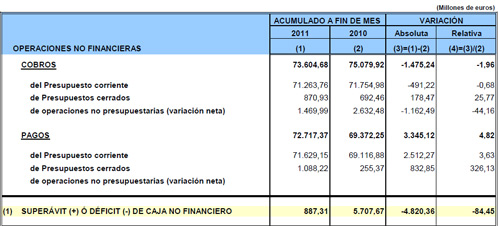
Hay que tener en cuenta que cada paga de Seguridad Social equivale a algo más de 7.130 millones de euros, a lo que hay que sumar otros 1.500-2.000 millones de la desviación del IPC. En total, alrededor de 16.000 millones de euros.

Los últimos datos de la Seguridad Social reflejan una tesorería equivalente a 15.505 millones de euros, pero hay que considerar que figura una partida de 1.850 millones de euros depositados en la cuenta del Banco de España abierta para la gestión del Fondo de Reserva, y dado el “carácter restringido y exclusivo de estos fondos respecto a su afectación al Fondo de Reserva”, la normativa reguladora del mismo establece que ese saldo tenga la consideración de activo fijo.

Igualmente, en las cuentas de tesorería, figura incluido el saldo por importe de 1.016 millones de euros que registra la cuenta del Banco de España abierta para el Fondo de Prevención, donde se acumulan los excedentes de las mutuas de trabajo.

Esta doble paga es la habitual, pero ahora coincide en el tiempo con unos momentos especialmente delicados desde el punto de vista de la tesorería.  No hay que olvidar que la nómina mensual de pensiones ha crecido durante este año en torno al 5%, muy por encima de lo que están aumentando los ingresos por cotización debido a un doble efecto: la moderación salarial derivada de la crisis económica y la destrucción de empleo, que es la clave de bóveda de un sistema de reparto como es el español.

Y hay que tener en cuenta que en términos de media anual, el sistema público de protección social ha perdido desde la crisis 1,74 millones de puestos de trabajo. Por decirlo en la jerga de la Seguridad Social, el llamado ‘efecto sustitución’, la diferencia entre las nuevas pensiones y las que causan baja, se ha disparado. En concreto, las ‘nuevas’ pensiones son un 28,6% más elevadas que las ‘viejas’. La tercera parte de lo que suba este año el gasto en pensiones será, precisamente, por el efecto sustitución.

Sólo en casos extremos

La utilización del Fondo de Reserva de la Seguridad Social para pagar las pensiones sería un hecho extraordinario, toda vez que nunca se ha utilizado esta vía. Hasta el punto de que la propia normativa que lo regula establece condiciones para su uso.  En concreto, la ley dice que el Fondo se destinará “con carácter exclusivo” a la financiación de las pensiones de carácter contributivo y a los gastos derivados de su gestión, “y sólo será posible en situaciones estructurales de déficit por operaciones no financieras del sistema de la Seguridad Social”.

Al próximo Gobierno le corresponderá definir qué entiende por “déficit estructural, pero hay que tener en cuenta que ya el año pasado el ejercicio se cerró con un desequilibrio equivalente a 2.588 millones de euros. O lo  que es lo mismo, el 0,2% del PIB. Sólo los rendimientos de la deuda pública permitieron mejorar la situación. Y este año, nada indica que las cosas vayan a mejorar. Al contrario, la economía española continúa destruyendo empleo.

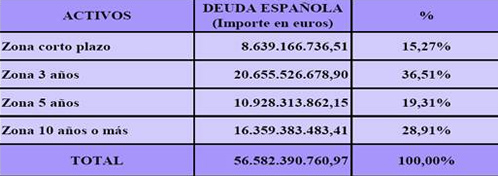
El problema que se le plantea al próximo Gobierno es todavía más peliagudo habida cuenta que casi el 90% de los 64.375 millones con que cerró el año pasado, están invertidos por el tandem Rubalcaba Zapatero en deuda pública española. Como se sabe, en medio del huracán de la deuda soberana, por lo que una venta masiva sólo hundiría el precio de los bonos y dispararía la rentabilidad, con todo lo que ello supone para la financiación del Estado.

Otras fuentes consultadas por este diario, dijeron que tal vez la única opción sea enajenar deuda triple A de Alemania y Holanda, la más demandada por los inversores. La otra posibilidad es colocar parte de esa deuda en el BCE en el marco de su Programa de Adquisición de Bonos, el instrumento que utiliza para frenar las tensiones en los mercados de deuda.

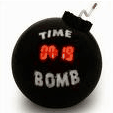
En palabras de un dirigente del PP, “estamos ante una bomba de relojería diseñada para que estalle en diciembre”. Algo que, en su opinión, recuerda a lo que sucedió en 1996, cuando el Gobierno entrante tuvo que pedir un crédito extraordinario para pagar las pensiones.

Obama dice que la crisis de Europa está «asustando al mundo»....


El presidente de EE.UU. dice que las medidas anticrisis europeas «no han sido todo lo rápidas que debieran»

Día 26/09/2011 - 19.23h
Obama dice que la crisis de Europa está «asustando al mundo»
AP

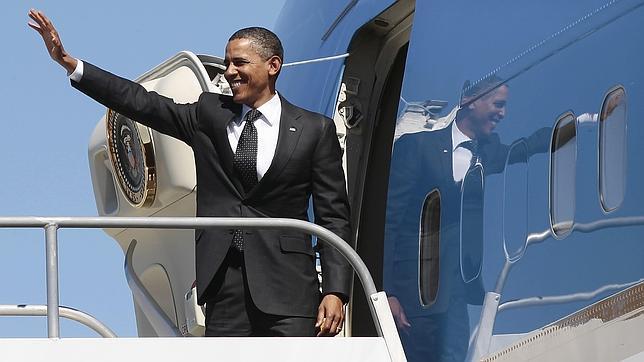
Las medidas de los líderes europeos para combatir la crisis de la deuda «no han sido todo lo rápidas que deberían», afirmó el presidente de EE.UU. Barack Obama, que consideró que la situación «está asustando al mundo».

En un encuentro con votantes a través de Internet desde Silicon Valley, Obama indicó que en Europa «nunca se recuperaron completamente de la crisis en 2007 y nunca resolvieron por completo todos los desafíos que su sistema bancario encaraba».

La crisis, agregó, se ha visto agravada por los acontecimientos en Grecia, donde los mercados temen que el país se acabe declarando en bancarrota. Por ello, Europa «atraviesa una crisis financiera que está asustando al mundo», según el presidente estadounidense.

«Intentan adoptar medidas responsables, pero esas medidas no han sido todo lo rápidas que deberían», explicó Obama, que se lamentó de que en parte debido a la crisis en Europa y a la subida de los precios de la energía por los levantamientos en Oriente Medio, «las economías de todo el mundo no crecen tan rápido como debieran».

Las declaraciones del presidente estadounidense se producen entre temores de una suspensión de pagos de Grecia y el efecto dominó que provocaría una quiebra en toda la zona euro. Los inspectores de la «troika» -formada por el Fondo Monetario Internacional, el Banco Central Europeo y la Comisión Europea- que pretendían regresar este mismo lunes a Atenas para reanudar la quinta revisión del programa de ayudas a Grecia, han retrasado su visita, según la Comisión.

Y aunque volviesen esta misma semana a la capital griega, la CE descarta ya que la eurozona pueda decidir sobre el desembolso del sexto tramo de la ayuda -8.000 millones de euros- el próximo 3 de octubre, cuando se reúne en Luxemburgo de nuevo el Eurogrupo.

Esta semana también varios parlamentos nacionales, entre ellos el alemán, deberán pronunciarse sobre el Fondo Europeo de Estabilidad Financiera (FEEF), la gran herramienta de la UE contra la crisis. En sus declaraciones, el presidente se abstuvo de repetir sus comentarios de hace dos semanas, cuando en una mesa redonda con medios de habla hispana, entre ellos Efe, indicó que uno de los problemas en la zona euro es la diferente política fiscal de los países.

Entonces, afirmó que «al final los países grandes en Europa, los líderes en Europa, tendrán que reunirse y tomar una decisión sobre cómo pueden conjuntar la integración monetaria con un conjunto más efectivo de políticas fiscales coordinadas».

Rehn admite la posibilidad de que sean posibles mas rescates...

PARA LOS PAÍSES CON PROBLEMAS FINANCIEROS

Rehn admite la posibilidad de que sean posibles mas rescates...


Olli Rehn, comisario europeo de Asuntos Monetarios Olli Rehn, comisario europeo de Asuntos Monetarios 
Berlín  | Actualizado el 26/09/2011 a las 20:06 horas

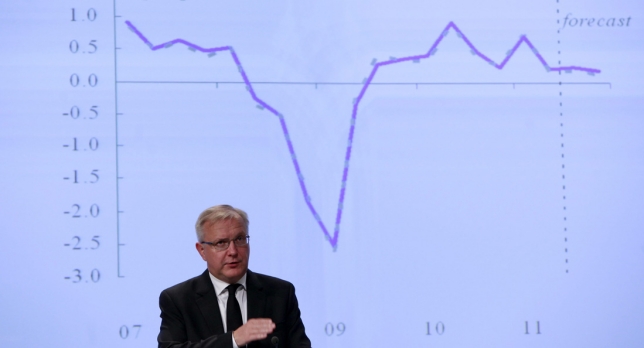
El comisario europeo de Asuntos Monetarios, Olli Rehn, admitió que se está reflexionando sobre la posibilidad de fortalecer el fondo europeo para el rescate del euro.

En unas declaraciones que publica la edición digital del diario 'Die Welt', Rehn afirma que "Reflexionamos sobre la posibilidad de dar al Fondo Europeo de Estabilización Financiera (FEEF) atribuciones suplementarias para concederle más fortaleza".

Olli Rehen, que no entró en detalles, destacó que esa medida complementaría la ampliación del paraguas de rescate decidida el pasado julio. El comisario advirtió también contra una nueva crisis bancaria en el Viejo Continente y subrayó la necesidad de intensificar la recapitalización de las entidades financieras.

"Sería muy difícil evitar contagios. La riqueza de Alemania se basa en un euro estable y socios estables", subraya Rehn, quien confirma que los países del euro trabajan en nuevas modificaciones del Fondo Europeo para la Estabilización Financiera.

"La crisis actual es una grave combinación de una crisis por la deuda estatal y las debilidades del sistema bancario. No se puede resolver lo uno sin lo otro. Debemos resolver ambas cosas", afirma Rehn.

En cuanto a la necesidad urgente de recapitalizar los bancos, Rehn se muestra convencido de que se llegará a un acuerdo en breve en el seno de la UE y comenta "estar seguro de que los ministros de Finanzas abordarán el tema en su cita dentro de una semana".

Tras recordar que los países del euro han tomado medidas para proteger a sus bancos mas débiles ante la crisis, destaca que, sin embargo, "ha quedado claro que hay que hacer más".

"Debemos ampliar los trabajos de reparación en el área financiera mediante una más fuerte recapitalización de los bancos para reducir los riesgos de un atasco del crédito y con ello un mayor enturbiamiento de la coyuntura como se está mostrando en Europa y EEUU", agrega el eurocomisario. En cuanto al caso heleno, comenta que "Grecia no tiene que caer y no va a caer en la insolvencia.

Aunque ahora ha llegado el momento de la verdad para el país y se trata de la última oportunidad para evitar el colapso de la economía griega". Asimismo señala que "una insolvencia desordenada provocaría daños económicos y sociales muy dolorosos" y tendría graves consecuencias políticas y económicas para Europa.

EE.UU. alerta de una cascada de moratorias de deuda en Europa..."Hay que proteger a España, o si no, el pánico se va a extender"........

EE.UU. alerta de una cascada de moratorias de deuda en Europa..."Hay que proteger a España, o si no, el pánico se va a extender"........

EE.UU. alerta de una cascada de moratorias de deuda en Europa

Lagarde pide más recursos para el FMI, pero los emergentes recelan de poner más dinero | Alemania recela de ampliar el Fondo Europeo con el apoyo del BCE | Las declaraciones al final de la reunión del FMI revelan la gravedad de la crisis | Para el FMI, "existe un peligro real de un largo periodo de estancamiento" | Hay serias dudas de que Europa sea capaz por sí sola de solventar la situación | "Ya habéis tenido vuestra oportunidad; dejad que el FMI gestione la crisis" | "Hay que proteger a España e Italia; si no, el pánico se va a extender"

Economía | 26/09/2011 - 10:00h

Andy Robinson | Washington

Terminadas las respectivas cumbres del G-20 y del Fondo Monetario Internacional (FMI) este fin de semana, crece la preocupación en Washington de que la parálisis política ante la crisis de la zona euro pueda estar sembrando la semilla de una segunda fase de turbulencias financieras globales y, hasta una década perdida a la japonesa en las economías occidentales. Para evitarlo, hay consenso en movilizar urgentemente billones de euros de manera preventiva para convencer a los mercados de bonos de que no hay riesgo de una cadena de insolvencias en la zona euro.

Pero crecen las dudas en Washington de si existen las condiciones políticas, e incluso la capacidad económica, para que Europa pueda asumir este papel, mediante la ampliación del Fondo de Estabilidad Financiera, sin un mayor apoyo del FMI.

Las declaraciones oficiales al término de la asamblea del FMI eran de una gravedad desconocida desde la crisis del 2008. "La economía mundial ha entrado en una fase peligrosa con (...) riesgo de deuda soberana, fragilidad en el sistema financiero, desaceleración del crecimiento económico y elevado paro", resumía el comunicado del FMI, en el que el Fondo se compromete a "hacer lo necesario para prevenir un deterioro de la crisis de la zona euro".

El secretario del Tesoro estadounidenses, Tim Geithner, utilizó un lenguaje aún más dramático en su discurso ante los delegados de los 187 países representados en el FMI : "Existe la amenaza de una cascada de moratorias, salidas masivas de depósitos de los bancos y riesgo de catástrofe" declaró a los reunidos.

Es un indicio de la alarma que se percibe en la Administración de Obama y en la cúpula del FMI, que ha instado a la zona euro a poner en práctica con la mayor brevedad los acuerdos de julio para "flexibilizar y maximizar el impacto" del Fondo de Estabilidad Financiero Europeo. "Tenemos una confluencia de deuda soberanas y riesgo bancario; existe un peligro real de un largo periodo de estancamiento", dijo al terminar la asamblea Harman Shanmugaratnam, presidente singapurense del comité del FMI.

Aunque la posición oficial sigue anclada en una ampliación del Fondo de Estabilidad, algunos economistas señalan que el peligro de una crisis sistémica ya es tan significativo que hace falta elevar el papel del FMI. "Ha llegado el momento de decir a los europeos: ya habéis tenido vuestra oportunidad, ahora dejad que otra institución dirija el rescate, el FMI", declaró Raghuram Rajan, ex economista jefe del Fondo. "Hay que proteger a España, o si no, el pánico se va a extender", manifestó. El FMI está acostumbrado a actuar en crisis de economías emergentes, como América Latina en los ochenta y Asia en los noventa. "La crisis europea ya es igual que una de los mercados emergentes", dijo.

El Tesoro estadounidense ha instado a los europeos a ampliar drásticamente el Fondo de Estabilización utilizando el Banco Central Europeo para garantizar un apalancamiento de hasta tres o cuatro billones de euros, necesarios para proteger a las dos grandes económicas mediterráneas. Aunque al final del G-20 el viernes, el ministro de Finanzas francés, François Baroin, se limitó a repetir el comunicado del G20, según el cual se hará lo necesario para "optimizar el fondo estabilidad", la delegación francesa se ha mostrado receptiva al plan americano de apalancar el fondo.

Pero existen recelos en los países germanos. Como advirtió Axel Weber, ex halcón del Bundesbank que asiste a título personal a la reunión, jamás se diseñó el BCE para actuar como prestamista de último recurso a los países miembros. Antonio Borges, responsable de Europa del BCE, coincidió con esta línea ayer.

Preguntada por si el FMI puede aumentar el apoyo financiero a los países del euro, Lagarde dijo que "da la casualidad de que el epicentro de este acontecimiento global está en la zona euro" y que "el Fondo está dispuesto a entregar todos los recursos necesarios". Pero hay reticencias entre muchos accionistas del FMI a que el Fondo sea utilizado para rescatar la zona euro. Esto es problemático, ya que hacen falta inyecciones de capital en el Fondo procedentes de los emergentes –con más de tres billones de euros de reservas–. Lagarde reconoció: "Nuestras capacidades de préstamo son casi 400.000 millones de dólares y son suficientes en estos momentos, pero no para las necesidades potenciales de financiación para las víctimas colaterales de la crisis".

La Quinta Columna de Rubalzapa: Cine español: 121 millones en ayudas... y recaudó en taquilla 85..

Ricos, ricos ellos y además con el dinero de sus impuestos, ciudadano, no se le olvide. Millones de euros donados al clan de la Zeja por Rubalzapa y sus mariachis..

E-mail Imprimir

bardem-1

Increible pero cierto: estas cosas sólo pueden pasar en España. El Instituto de la Cinematografía y de las Artes Audiovisuales ha publicado en el BOE sus cuentas anuales correspondientes al ejercicio de 2010. Del examen de su contabilidad, resulta que el cine español consumió recursos públicos por importe de 120.698.560 euros.

La participación subvencionada de la cinematografía española en festivales internacionales –fueron 148 los certámenes que contaron con alguna película española-, costó a las arcas del ministerio de Cultura 3,2 millones de euros. Por su parte, las subvenciones directas al cine español consumieron 95,5 millones de fondos públicos, repartidos entre los 250 largometrajes y los 251 cortos que finalmente resultaron beneficiarios de la ayuda estatal.

A pesar de la importante aportación de dinero público, los resultados de nuestro cine fueron peores incluso de lo que las autoridades dependientes de González-Sinde habían previsto.  

Así, el cine español recaudó en taquilla 80 millones de euros frente a los 115,5 previstos. Si tenemos en cuenta que todos los españoles hemos aportado a estas mismas películas 95,5 millones, resulta que las películas subvencionadas ni siquiera han sido capaces de recaudar en taquilla la cantidad con que fueron premiadas a costa de nuestros bolsillos.

El número de espectadores que acudió libremente a ver películas españolas arroja también un balance desolador. Mientras que el ministerio de Cultura cifró en 25 millones de espectadores sus previsiones para 2010, finalmente fueron sólo 12,9 millones, poco más de la mitad prevista, los que pagaron su entrada en taquilla para ver las producciones subvencionadas.


· MD, 19 de Agosto de 2011: El último regalito de ZP a La Ceja: 550.000 €uros en ayudas al cine

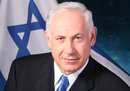
Transcript of Netanyahu's Brilliant Speech Today, September 23, 2011 at the United Nations General Assembly.

Transcript of Netanyahu's Brilliant Speech Today, September 23, 2011 at the United Nations General Assembly.


MR.: The assembly will now hear a statement by His Excellency Benjamin Netanyahu, prime minister of the state of Israel. (Cheers, applause.) I have great pleasure in welcoming His Excellency Benjamin Netanyahu, prime minister of the state of Israel.

PRIME MINISTER BENJAMIN NETANYAHU: Thank you. Thank you.

MR.: I invite him to address the General Assembly.

PRIME MIN. NETANYAHU: Thank you, Mr. President.

Ladies and gentlemen, Israel has extended its hand in peace from the moment it was established 63 years ago. On behalf of Israel and the Jewish people, I extend that hand again today. I extend it to the people of Egypt and Jordan, with renewed friendship for neighbors with whom we have made peace. I extend it to the people of Turkey, with respect and good will. I extend it to the people of Libya and Tunisia, with admiration for those trying to build a democratic future. I extend it to the other peoples of North Africa and the Arabian Peninsula, with whom we want to forge a new beginning. I extend it to the people of Syria, Lebanon and Iran, with awe at the courage of those fighting brutal repression.

But most especially, I extend my hand to the Palestinian people, with whom we seek a just and lasting peace. (Applause.)

Ladies and gentlemen, in Israel our hope for peace never wanes. Our scientists, doctors, innovators, apply their genius to improve the world of tomorrow. Our artists, our writers, enrich the heritage of humanity. Now, I know that this is not exactly the image of Israel that is often portrayed in this hall.

After all, it was here in 1975 that the age-old yearning of my people to restore our national life in our ancient biblical homeland -- it was then that this was braided -- branded, rather -- shamefully, as racism. And it was here in 1980, right here, that the historic peace agreement between Israel and Egypt wasn't praised; it was denounced! And it's here year after year that Israel is unjustly singled out for condemnation. It's singled out for condemnation more often than all the nations of the world combined. Twenty-one out of the 27 General Assembly resolutions condemn Israel -- the one true democracy in the Middle East.

Well, this is an unfortunate part of the U.N. institution. It's the -- the theater of the absurd. It doesn't only cast Israel as the villain; it often casts real villains in leading roles: Gadhafi's Libya chaired the U.N. Commission on Human Rights; Saddam's Iraq headed the U.N. Committee on Disarmament.

You might say: That's the past. Well, here's what's happening now -- right now, today. Hezbollah-controlled Lebanon now presides over the U.N. Security Council. This means, in effect, that a terror organization presides over the body entrusted with guaranteeing the world's security.

You couldn't make this thing up.

So here in the U.N., automatic majorities can decide anything. They can decide that the sun sets in the west or rises in the west. I think the first has already been pre-ordained. But they can also decide -- they have decided that the Western Wall in Jerusalem, Judaism's holiest place, is occupied Palestinian territory.

And yet even here in the General Assembly, the truth can sometimes break through. In 1984 when I was appointed Israel's ambassador to the United Nations, I visited the great rabbi of Lubavich. He said to me -- and ladies and gentlemen, I don't want any of you to be offended because from personal experience of serving here, I know there are many honorable men and women, many capable and decent people serving their nations here. But here's what the rebbe said to me. He said to me, you'll be serving in a house of many lies. And then he said, remember that even in the darkest place, the light of a single candle can be seen far and wide.

Today I hope that the light of truth will shine, if only for a few minutes, in a hall that for too long has been a place of darkness for my country. So as Israel's prime minister, I didn't come here to win applause. I came here to speak the truth. (Cheers, applause.)

The truth is -- the truth is that Israel wants peace. The truth is that I want peace. The truth is that in the Middle East at all times, but especially during these turbulent days, peace must be anchored in security. The truth is that we cannot achieve peace through U.N. resolutions, but only through direct negotiations between the parties.

The truth is that so far the Palestinians have refused to negotiate. The truth is that Israel wants peace with a Palestinian state, but the Palestinians want a state without peace. And the truth is you shouldn't let that happen.

Ladies and gentlemen, when I first came here 27 years ago, the world was divided between East and West. Since then the Cold War ended, great civilizations have risen from centuries of slumber, hundreds of millions have been lifted out of poverty, countless more are poised to follow, and the remarkable thing is that so far this monumental historic shift has largely occurred peacefully. Yet a malignancy is now growing between East and West that threatens the peace of all. It seeks not to liberate, but to enslave, not to build, but to destroy.

That malignancy is militant Islam. It cloaks itself in the mantle of a great faith, yet it murders Jews, Christians and Muslims alike with unforgiving impartiality. On September 11th it killed thousands of Americans, and it left the twin towers in smoldering ruins.Last night I laid a wreath on the 9/11 memorial. It was deeply moving. But as I was going there, one thing echoed in my mind: the outrageous words of the president of Iran on this podium yesterday. He implied that 9/11 was an American conspiracy. Some of you left this hall. All of you should have. (Applause.)Since 9/11, militant Islamists slaughtered countless other innocents -- in London and Madrid, in Baghdad and Mumbai, in Tel Aviv and Jerusalem, in every part of Israel. I believe that the greatest danger facing our world is that this fanaticism will arm itself with nuclear weapons. And this is precisely what Iran is trying to do.

Can you imagine that man who ranted here yesterday -- can you imagine him armed with nuclear weapons?

The international community must stop Iran before it's too late. If Iran is not stopped, we will all face the specter of nuclear terrorism, and the Arab Spring could soon become an Iranian winter. That would be a tragedy. Millions of Arabs have taken to the streets to replace tyranny with liberty, and no one would benefit more than Israel if those committed to freedom and peace would prevail.

This is my fervent hope. But as the prime minister of Israel, I cannot risk the future of the Jewish state on wishful thinking. Leaders must see reality as it is, not as it ought to be. We must do our best to shape the future, but we cannot wish away the dangers of the present.

And the world around Israel is definitely becoming more dangerous. Militant Islam has already taken over Lebanon and Gaza. It's determined to tear apart the peace treaties between Israel and Egypt and between Israel and Jordan. It's poisoned many Arab minds against Jews and Israel, against America and the West. It opposes not the policies of Israel but the existence of Israel.

Now, some argue that the spread of militant Islam, especially in these turbulent times -- if you want to slow it down, they argue, Israel must hurry to make concessions, to make territorial compromises. And this theory sounds simple. Basically it goes like this: Leave the territory, and peace will be advanced. The moderates will be strengthened, the radicals will be kept at bay. And don't worry about the pesky details of how Israel will actually defend itself; international troops will do the job.

These people say to me constantly: Just make a sweeping offer, and everything will work out. You know, there's only one problem with that theory. We've tried it and it hasn't worked. In 2000 Israel made a sweeping peace offer that met virtually all of the Palestinian demands. Arafat rejected it. The Palestinians then launched a terror attack that claimed a thousand Israeli lives.

Prime Minister Olmert afterwards made an even more sweeping offer, in 2008. President Abbas didn't even respond to it.

But Israel did more than just make sweeping offers. We actually left territory. We withdrew from Lebanon in 2000 and from every square inch of Gaza in 2005. That didn't calm the Islamic storm, the militant Islamic storm that threatens us. It only brought the storm closer and make it stronger.

Hezbollah and Hamas fired thousands of rockets against our cities from the very territories we vacated. See, when Israel left Lebanon and Gaza, the moderates didn't defeat the radicals, the moderates were devoured by the radicals. And I regret to say that international troops like UNIFIL in Lebanon and UBAM (ph) in Gaza didn't stop the radicals from attacking Israel.

We left Gaza hoping for peace.

We didn't freeze the settlements in Gaza, we uprooted them. We did exactly what the theory says: Get out, go back to the 1967 borders, dismantle the settlements.

And I don't think people remember how far we went to achieve this. We uprooted thousands of people from their homes. We pulled children out of -- out of their schools and their kindergartens. We bulldozed synagogues. We even -- we even moved loved ones from their graves. And then, having done all that, we gave the keys of Gaza to President Abbas.

Now the theory says it should all work out, and President Abbas and the Palestinian Authority now could build a peaceful state in Gaza.

You can remember that the entire world applauded. They applauded our withdrawal as an act of great statesmanship. It was a bold act of peace.

But ladies and gentlemen, we didn't get peace. We got war. We got Iran, which through its proxy Hamas promptly kicked out the Palestinian Authority. The Palestinian Authority collapsed in a day -- in one day.

President Abbas just said on this podium that the Palestinians are armed only with their hopes and dreams. Yeah, hopes, dreams and 10,000 missiles and Grad rockets supplied by Iran, not to mention the river of lethal weapons now flowing into Gaza from the Sinai, from Libya, and from elsewhere.

Thousands of missiles have already rained down on our cities. So you might understand that, given all this, Israelis rightly ask: What's to prevent this from happening again in the West Bank? See, most of our major cities in the south of the country are within a few dozen kilometers from Gaza. But in the center of the country, opposite the West Bank, our cities are a few hundred meters or at most a few kilometers away from the edge of the West Bank.

So I want to ask you. Would any of you -- would any of you bring danger so close to your cities, to your families? Would you act so recklessly with the lives of your citizens? Israel is prepared to have a Palestinian state in the West Bank, but we're not prepared to have another Gaza there. And that's why we need to have real security arrangements, which the Palestinians simply refuse to negotiate with us.

Israelis remember the bitter lessons of Gaza. Many of Israel's critics ignore them. They irresponsibly advise Israel to go down this same perilous path again.Your read what these people say and it's as if nothing happened -- just repeating the same advice, the same formulas as though none of this happened.

And these critics continue to press Israel to make far-reaching concessions without first assuring Israel's security.

They praise those who unwittingly feed the insatiable crocodile of militant Islam as bold statesmen. They cast as enemies of peace those of us who insist that we must first erect a sturdy barrier to keep the crocodile out, or at the very least jam an iron bar between its gaping jaws.

So in the face of the labels and the libels, Israel must heed better advice.

Better a bad press than a good eulogy, and better still would be a fair press whose sense of history extends beyond breakfast, and which recognizes Israel's legitimate security concerns.

I believe that in serious peace negotiations, these needs and concerns can be properly addressed, but they will not be addressed without negotiations. And the needs are many, because Israel is such a tiny country. Without Judea and Samaria, the West Bank, Israel is all of 9 miles wide.

I want to put it for you in perspective, because you're all in the city. That's about two-thirds the length of Manhattan. It's the distance between Battery Park and Columbia University. And don't forget that the people who live in Brooklyn and New Jersey are considerably nicer than some of Israel's neighbors.

So how do you -- how do you protect such a tiny country, surrounded by people sworn to its destruction and armed to the teeth by Iran? Obviously you can't defend it from within that narrow space alone. Israel needs greater strategic depth, and that's exactly why Security Council Resolution 242 didn't require Israel to leave all the territories it captured in the Six-Day War. It talked about withdrawal from territories, to secure and defensible boundaries. And to defend itself, Israel must therefore maintain a long-term Israeli military presence in critical strategic areas in the West Bank.

I explained this to President Abbas. He answered that if a Palestinian state was to be a sovereign country, it could never accept such arrangements. Why not? America has had troops in Japan, Germany and South Korea for more than a half a century. Britain has had an airspace in Cyprus or rather an air base in Cyprus. France has forces in three independent African nations. None of these states claim that they're not sovereign countries.

And there are many other vital security issues that also must be addressed. Take the issue of airspace. Again, Israel's small dimensions create huge security problems. America can be crossed by jet airplane in six hours. To fly across Israel, it takes three minutes. So is Israel's tiny airspace to be chopped in half and given to a Palestinian state not at peace with Israel?

Our major international airport is a few kilometers away from the West Bank. Without peace, will our planes become targets for antiaircraft missiles placed in the adjacent Palestinian state? And how will we stop the smuggling into the West Bank? It's not merely the West Bank, it's the West Bank mountains. It just dominates the coastal plain where most of Israel's population sits below. How could we prevent the smuggling into these mountains of those missiles that could be fired on our cities?

I bring up these problems because they're not theoretical problems. They're very real. And for Israelis, they're life-and- death matters. All these potential cracks in Israel's security have to be sealed in a peace agreement before a Palestinian state is declared, not afterwards, because if you leave it afterwards, they won't be sealed. And these problems will explode in our face and explode the peace.

The Palestinians should first make peace with Israel and then get their state. But I also want to tell you this. After such a peace agreement is signed, Israel will not be the last country to welcome a Palestinian state as a new member of the United Nations. We will be the first. (Applause.)

And there's one more thing. Hamas has been violating international law by holding our soldier Gilad Shalit captive for five years.

They haven't given even one Red Cross visit. He's held in a dungeon, in darkness, against all international norms. Gilad Shalit is the son of Aviva and Noam Shalit. He is the grandson of Zvi Shalit, who escaped the Holocaust by coming to the -- in the 1930s as a boy to the land of Israel. Gilad Shalit is the son of every Israeli family. Every nation represented here should demand his immediate release. (Applause.) If you want to -- if you want to pass a resolution about the Middle East today, that's the resolution you should pass. (Applause.)

Ladies and gentlemen, last year in Israel in Bar-Ilan University, this year in the Knesset and in the U.S. Congress, I laid out my vision for peace in which a demilitarized Palestinian state recognizes the Jewish state. Yes, the Jewish state. After all, this is the body that recognized the Jewish state 64 years ago. Now, don't you think it's about time that Palestinians did the same?

The Jewish state of Israel will always protect the rights of all its minorities, including the more than 1 million Arab citizens of Israel. I wish I could say the same thing about a future Palestinian state, for as Palestinian officials made clear the other day -- in fact, I think they made it right here in New York -- they said the Palestinian state won't allow any Jews in it. They'll be Jew-free -- Judenrein. That's ethnic cleansing. There are laws today in Ramallah that make the selling of land to Jews punishable by death. That's racism. And you know which laws this evokes.

Israel has no intention whatsoever to change the democratic character of our state. We just don't want the Palestinians to try to change the Jewish character of our state. (Applause.) We want to give up -- we want them to give up the fantasy of flooding Israel with millions of Palestinians.

President Abbas just stood here, and he said that the core of the Israeli-Palestinian conflict is the settlements. Well, that's odd. Our conflict has been raging for -- was raging for nearly half a century before there was a single Israeli settlement in the West Bank.

So if what President Abbas is saying was true, then the -- I guess that the settlements he's talking about are Tel Aviv, Haifa, Jaffa, Be'er Sheva. Maybe that's what he meant the other day when he said that Israel has been occupying Palestinian land for 63 years. He didn't say from 1967; he said from 1948. I hope somebody will bother to ask him this question because it illustrates a simple truth: The core of the conflict is not the settlements. The settlements are a result of the conflict. (Applause.)

The settlements have to be -- it's an issue that has to be addressed and resolved in the course of negotiations. But the core of the conflict has always been and unfortunately remains the refusal of the Palestinians to recognize a Jewish state in any border.

I think it's time that the Palestinian leadership recognizes what every serious international leader has recognized, from Lord Balfour and Lloyd George in 1917, to President Truman in 1948, to President Obama just two days ago right here: Israel is the Jewish state. (Applause.)

President Abbas, stop walking around this issue. Recognize the Jewish state, and make peace with us. In such a genuine peace, Israel is prepared to make painful compromises. We believe that the Palestinians should be neither the citizens of Israel nor its subjects. They should live in a free state of their own. But they should be ready, like us, for compromise.

And we will know that they're ready for compromise and for peace when they start taking Israel's security requirements seriously and when they stop denying our historical connection to our ancient homeland.

I often hear them accuse Israel of Judaizing Jerusalem. That's like accusing America of Americanizing Washington, or the British of Anglicizing London. You know why we're called "Jews"? Because we come from Judea.

In my office in Jerusalem, there's a -- there's an ancient seal. It's a signet ring of a Jewish official from the time of the Bible. The seal was found right next to the Western Wall, and it dates back 2,700 years, to the time of King Hezekiah. Now, there's a name of the Jewish official inscribed on the ring in Hebrew. His name was Netanyahu. That's my last name. My first name, Benjamin, dates back a thousand years earlier to Benjamin -- Binyamin -- the son of Jacob, who was also known as Israel. Jacob and his 12 sons roamed these same hills of Judea and Sumeria 4,000 years ago, and there's been a continuous Jewish presence in the land ever since.

And for those Jews who were exiled from our land, they never stopped dreaming of coming back: Jews in Spain, on the eve of their expulsion; Jews in the Ukraine, fleeing the pogroms; Jews fighting the Warsaw Ghetto, as the Nazis were circling around it. They never stopped praying, they never stopped yearning. They whispered: Next year in Jerusalem. Next year in the promised land. (Applause.)

As the prime minister of Israel, I speak for a hundred generations of Jews who were dispersed throughout the lands, who suffered every evil under the Sun, but who never gave up hope of restoring their national life in the one and only Jewish state.

Ladies and gentlemen, I continue to hope that President Abbas will be my partner in peace. I've worked hard to advance that peace. The day I came into office, I called for direct negotiations without preconditions. President Abbas didn't respond. I outlined a vision of peace of two states for two peoples. He still didn't respond. I removed hundreds of roadblocks and checkpoints, to ease freedom of movement in the Palestinian areas; this facilitated a fantastic growth in the Palestinian economy. But again -- no response. I took the unprecedented step of freezing new buildings in the settlements for 10 months. No prime minister did that before, ever. (Scattered applause.) Once again -- you applaud, but there was no response. No response.

In the last few weeks, American officials have put forward ideas to restart peace talks. There were things in those ideas about borders that I didn't like. There were things there about the Jewish state that I'm sure the Palestinians didn't like.

But with all my reservations, I was willing to move forward on these American ideas.

President Abbas, why don't you join me? We have to stop negotiating about the negotiations. Let's just get on with it. Let's negotiate peace. (Applause.)

I spent years defending Israel on the battlefield. I spent decades defending Israel in the court of public opinion. President Abbas, you've dedicated your life to advancing the Palestinian cause.Must this conflict continue for generations, or will we enable our children and our grandchildren to speak in years ahead of how we found a way to end it? That's what we should aim for, and that's what I believe we can achieve.

In two and a half years, we met in Jerusalem only once, even though my door has always been open to you. If you wish, I'll come to Ramallah. Actually, I have a better suggestion. We've both just flown thousands of miles to New York. Now we're in the same city. We're in the same building. So let's meet here today in the United Nations. (Applause.) Who's there to stop us? What is there to stop us? If we genuinely want peace, what is there to stop us from meeting today and beginning peace negotiations?

And I suggest we talk openly and honestly. Let's listen to one another. Let's do as we say in the Middle East: Let's talk "doogli" (ph). That means straightforward. I'll tell you my needs and concerns. You'll tell me yours. And with God's help, we'll find the common ground of peace. (Applause.)

There's an old Arab saying that you cannot applaud with one hand. Well, the same is true of peace. I cannot make peace alone. I cannot make peace without you. President Abbas, I extend my hand -- the hand of Israel -- in peace. I hope that you will grasp that hand. We are both the sons of Abraham. My people call him Avraham. Your people call him Ibrahim. We share the same patriarch. We dwell in the same land. Our destinies are intertwined. Let us realize the vision of Isaiah -- (speaks in Hebrew) -- "The people who walk in darkness will see a great light." Let that light be the light of peace. (Applause.)